
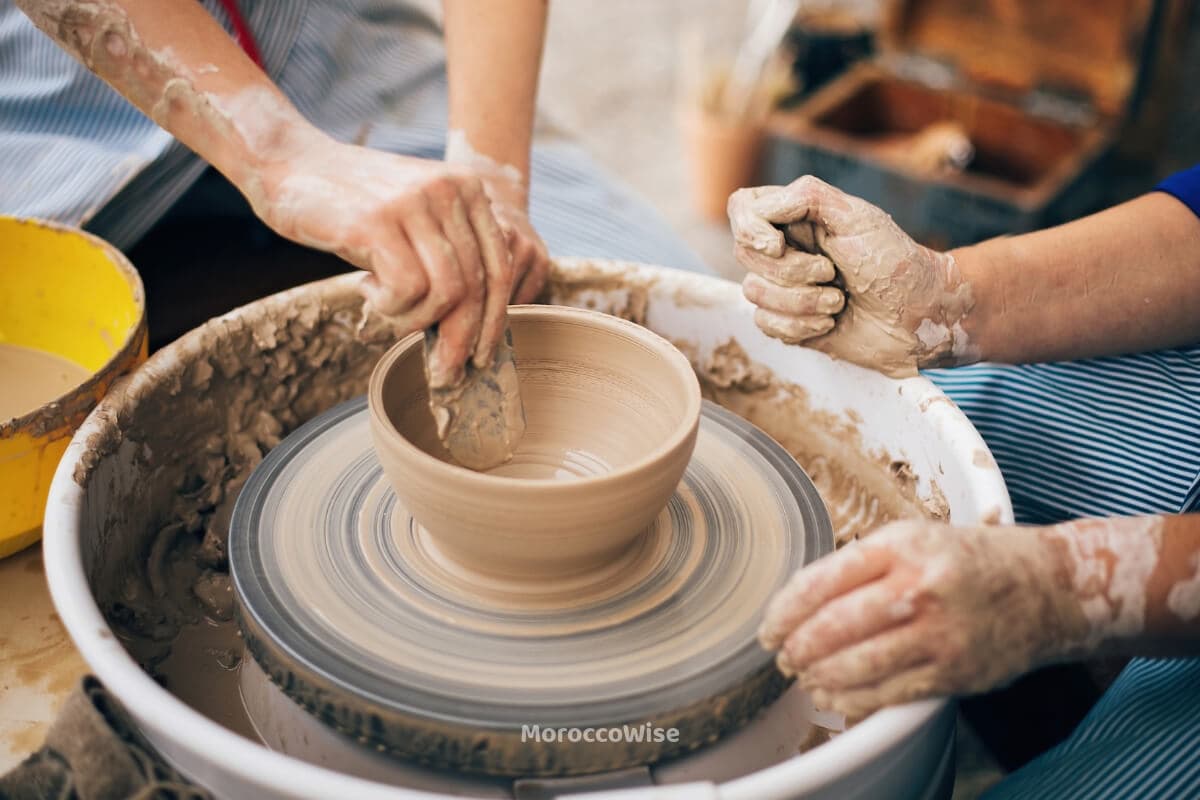
Fes is celebrated for ceramics and zellige, the intricate mosaic tilework found in fountains, courtyards, and historic buildings across Morocco. These crafts depend on patient, practiced hands: clay is shaped and fired, glazes are applied, and geometric pieces are cut and assembled with precision. A visit to a pottery workshop or cooperative can reveal how raw materials become objects that are both useful and ornamental.
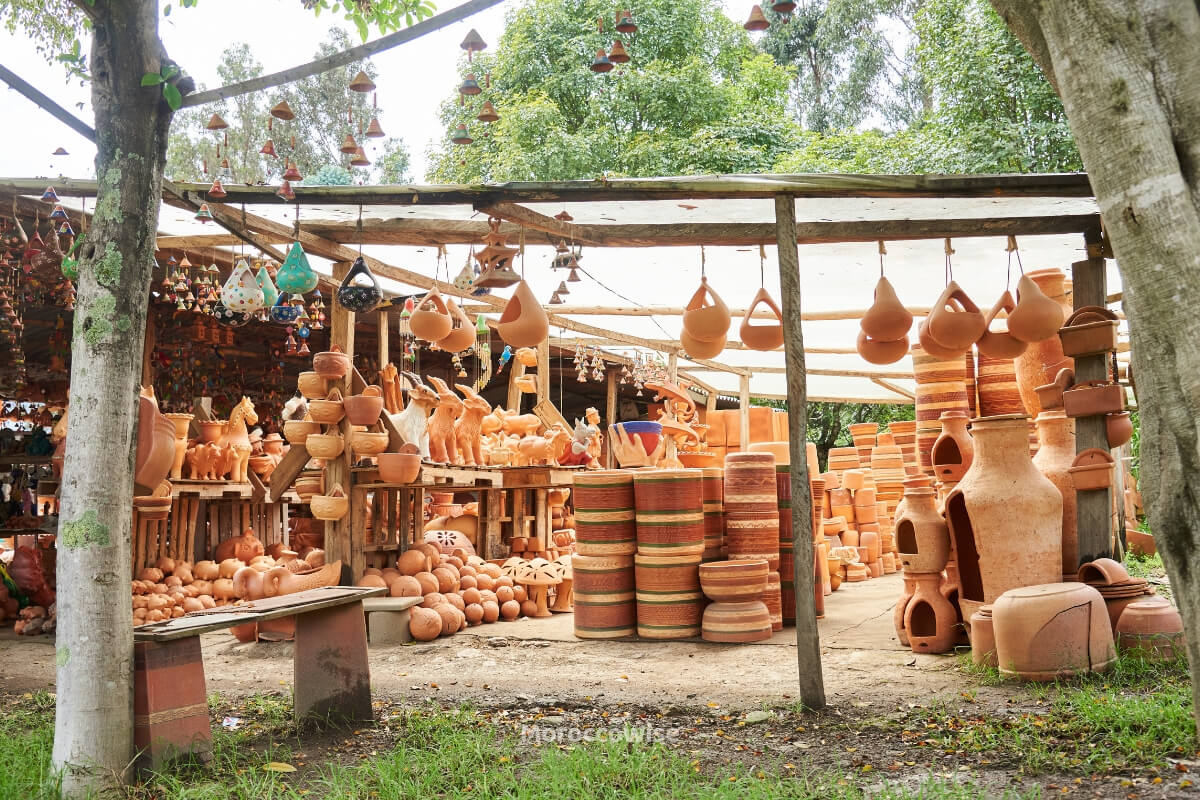
Fes pottery, from clay to finished piece
Pottery production begins with preparing clay, then shaping vessels on a wheel or by hand. Pieces dry before firing, after which artisans apply glazes and decorative painting. The familiar blue-and-white palette associated with Fes is one of several styles; workshops also produce greens, earth tones, and multicolored designs. Patterns may draw on floral forms, calligraphy, and geometric motifs.
Pottery cooperatives and workshops on the outskirts of Fes often demonstrate different stages of production. Visiting can be an opportunity to see the work up close and ask how an item was made. Ask before taking photographs, follow staff guidance around kilns and tools, and confirm whether a demonstration or tour carries a fee.
The precision of hand-cut zellige
Zellige is made from glazed tiles that are cut into small geometric shapes and fitted together to create intricate patterns. Unlike a printed image, the design is built from individual pieces, often arranged in repeating stars, polygons, and interlocking forms. The color and geometry create depth through the subtle variation of glaze and the slight differences between handmade pieces.
In traditional work, a craftsperson cuts glazed tile into shapes and assembles them into a pattern, sometimes working from the reverse side. The process demands accuracy and experience: each piece needs to fit the design while the whole composition remains balanced. Large panels can involve many hours of cutting, sorting, and fitting.
Recognizing workmanship and buying thoughtfully
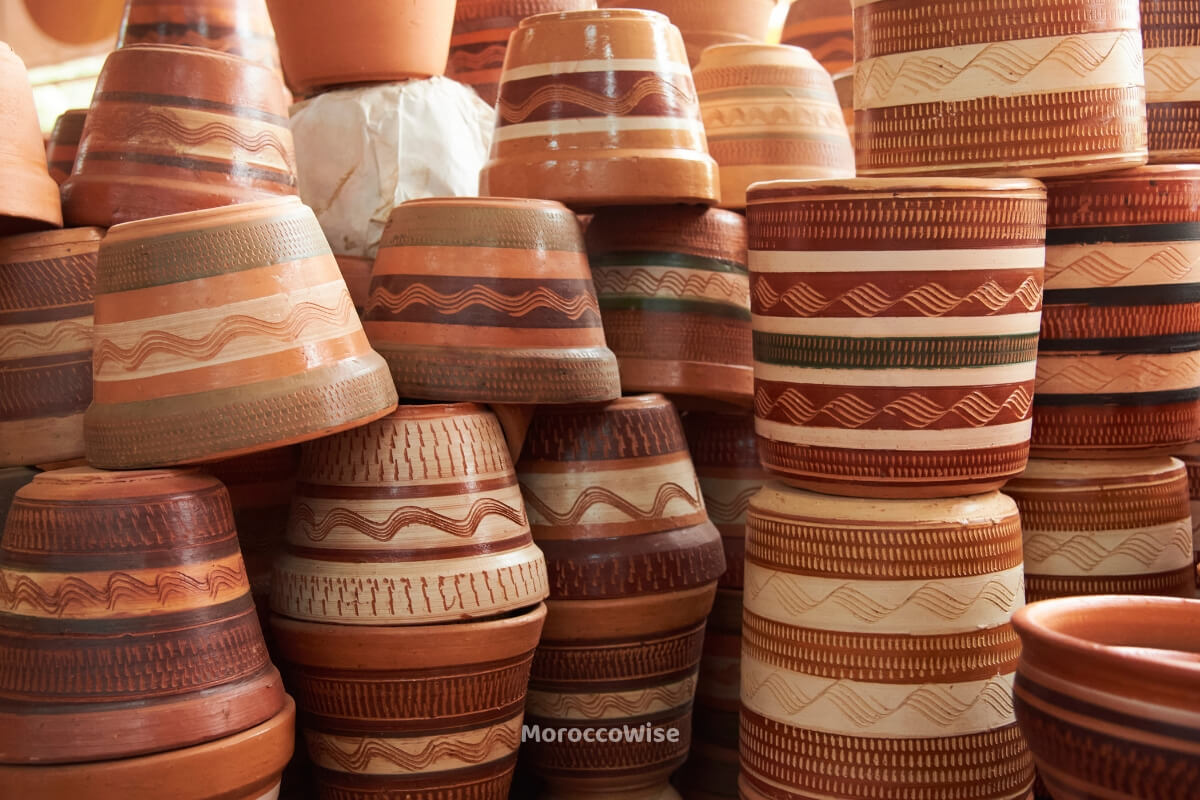
When choosing ceramics, look for an even finish, stable base, and details that suit how you will use the piece. Ask whether an item is food-safe, microwave-safe, or intended for display; decorative glazes and finishes may not be suitable for every use. For zellige, ask whether a product is a handmade mosaic panel, a printed imitation, or a loose tile set. Clear questions help you understand what you are paying for without expecting every shop to provide a full technical history.
Prices vary with the size, complexity, materials, and labor involved. Compare a few pieces, consider the time required to make them, and bargain in a friendly way only if you intend to purchase. If you buy fragile ceramics, discuss packaging and shipping before paying. Photograph or write down the agreed terms, including delivery costs and timing, and check your destination's import rules for any materials that may be restricted.
Visit a workshop with respect
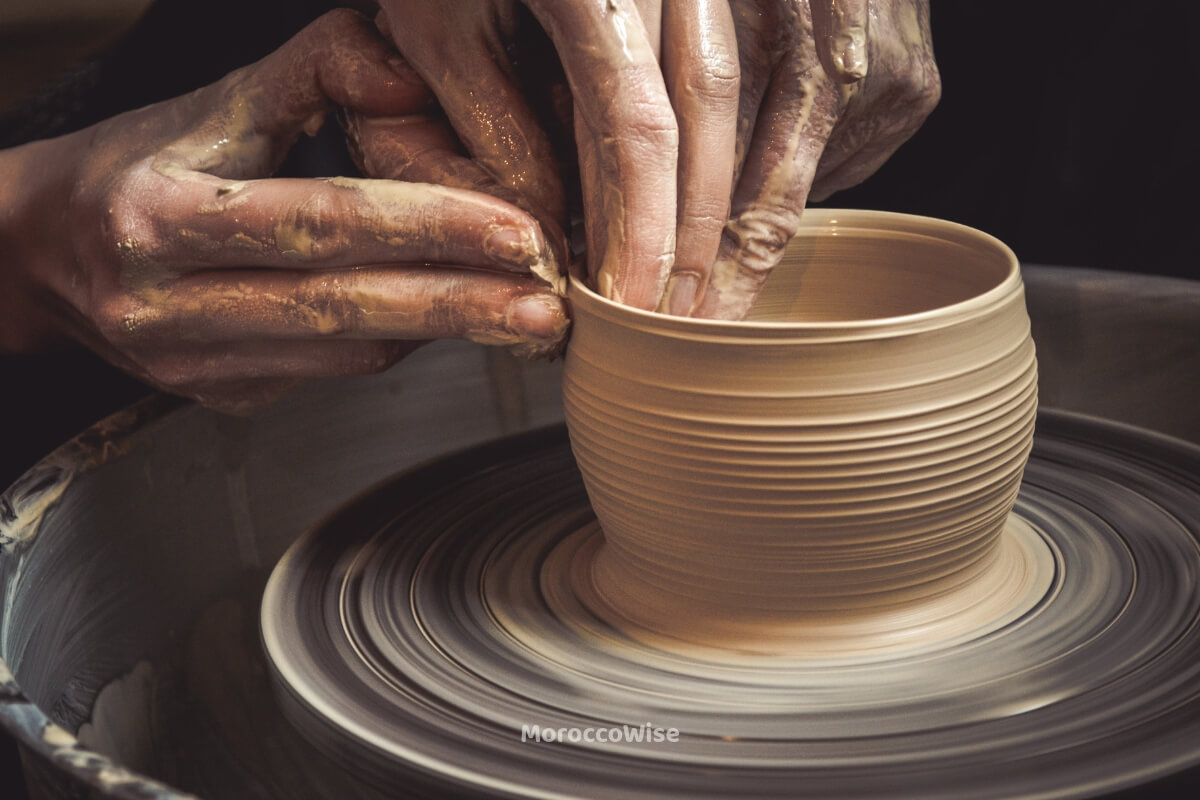
Workshops are places of labor. Stay in areas open to visitors, avoid touching tools or unfinished pieces without permission, and do not interrupt a craftsperson during a delicate task. A guide or cooperative staff member can explain the process and help with translation. If a shop tour includes a sales presentation, you are free to browse and leave without buying.
Travel carefully with your purchase: wrap it securely, keep it in hand luggage if possible, and check airline rules for oversized items. Handmade work may show small variations; these are often part of its character rather than a flaw, though you should still inspect for cracks or damage before payment.
Fes pottery and zellige make the city's artistic heritage tangible. Each bowl or tile carries decisions about color, shape, and pattern made by someone who has learned a demanding craft. Take time to see the process, ask good questions, and choose pieces you will value long after the journey home.