
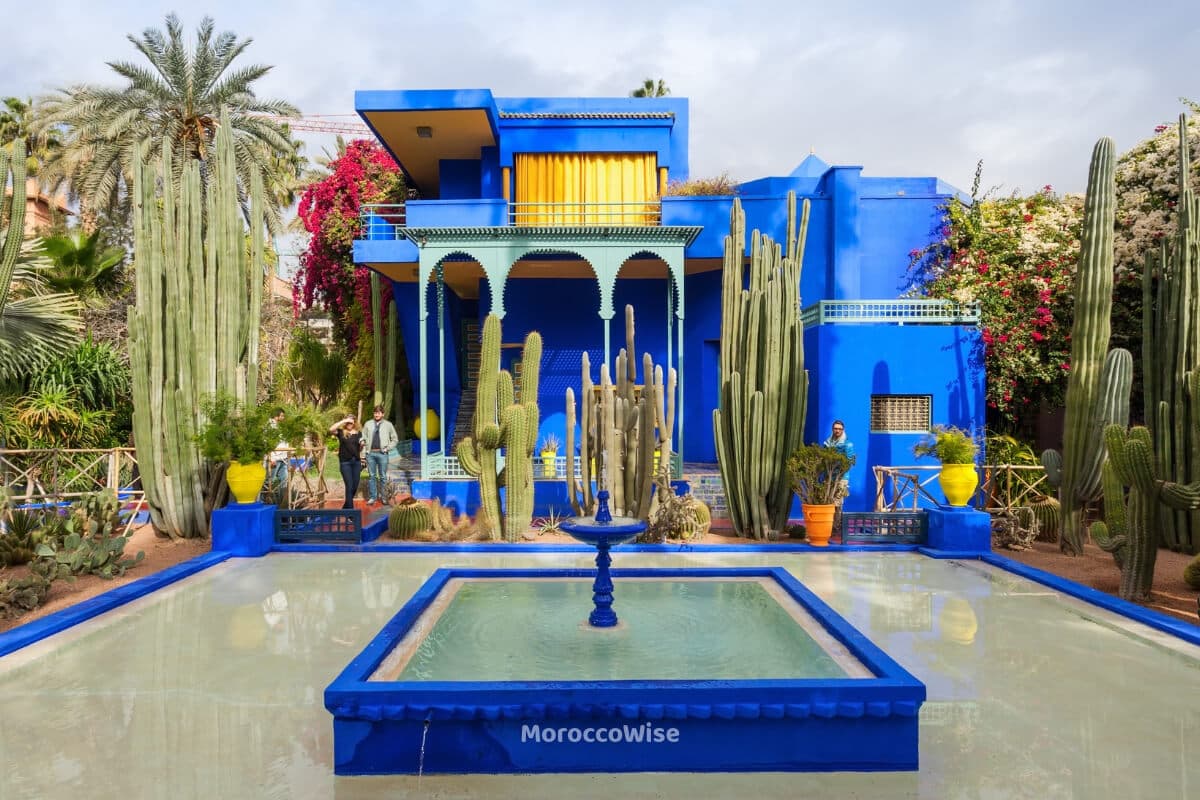
Jardin Majorelle is a walled garden in Marrakech known for saturated cobalt-blue architecture, shaded paths, and a remarkable variety of plants. It is also a place shaped by more than one generation: French painter Jacques Majorelle created the garden, and fashion designer Yves Saint Laurent and his partner Pierre Bergé later helped save and restore it. The result is a carefully composed oasis that brings together art, architecture, and botanical collecting.
Jacques Majorelle's living artwork
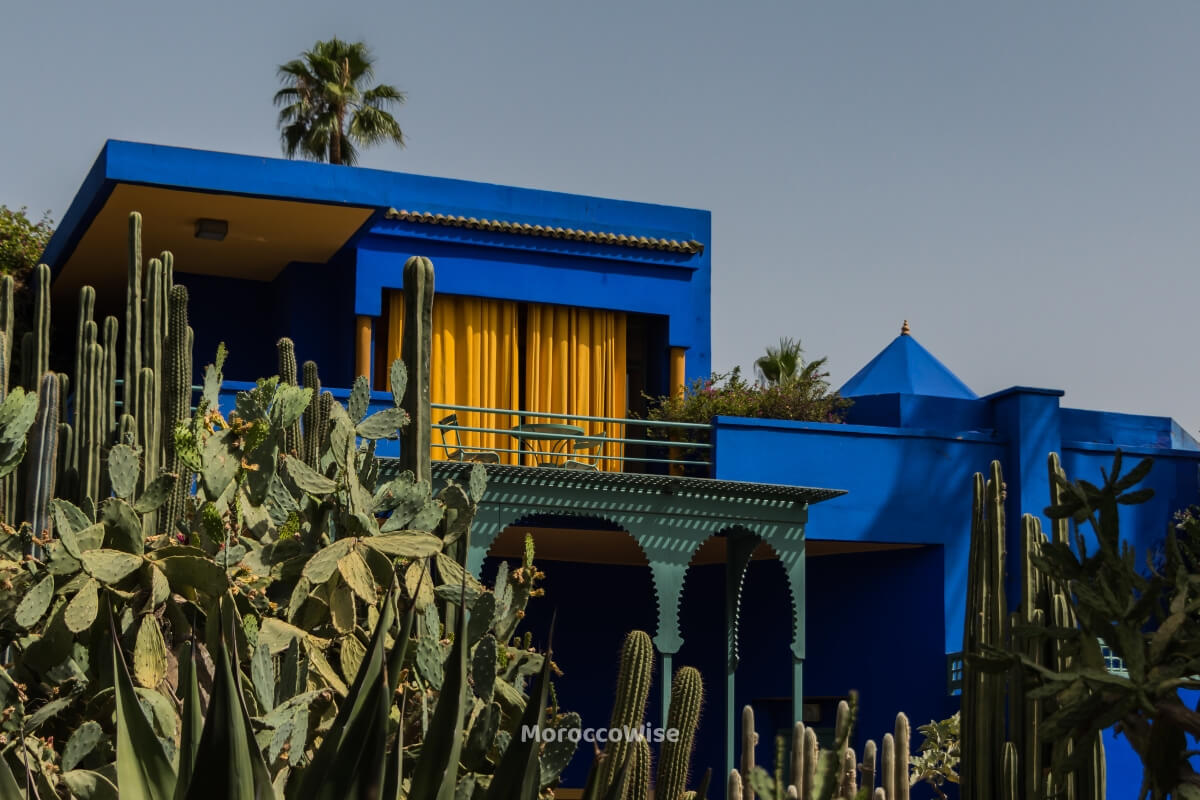
Jacques Majorelle, the son of furniture designer Louis Majorelle, arrived in Morocco in the early 20th century and settled in Marrakech. From 1923, he developed a garden around his villa, bringing together plants collected from arid and tropical regions. Palm trees, cacti, bamboo, water features, and shaded walkways create a sequence of contrasting spaces rather than one open lawn.
Majorelle treated the garden as a work of art. He painted structures in a striking blue that came to be associated with his name, setting it against green foliage, warm terracotta, and bright accents. The villa's bold color is compelling in photographs, but the garden is just as much about texture and shade: leaves overlap, water reflects the architecture, and narrow paths draw visitors from one pocket of calm to another.
The story of Majorelle Blue
The intense blue now known as Majorelle Blue is a signature of the garden. It stands out against Marrakech's earth-toned architecture and the green of its plant collection. The shade frames doorways, planters, and decorative details, giving the garden a strong visual identity without overwhelming its botanical character. Look for how the blue changes beside sunlit leaves, dark shade, and reflective water.
Yves Saint Laurent and the garden's preservation
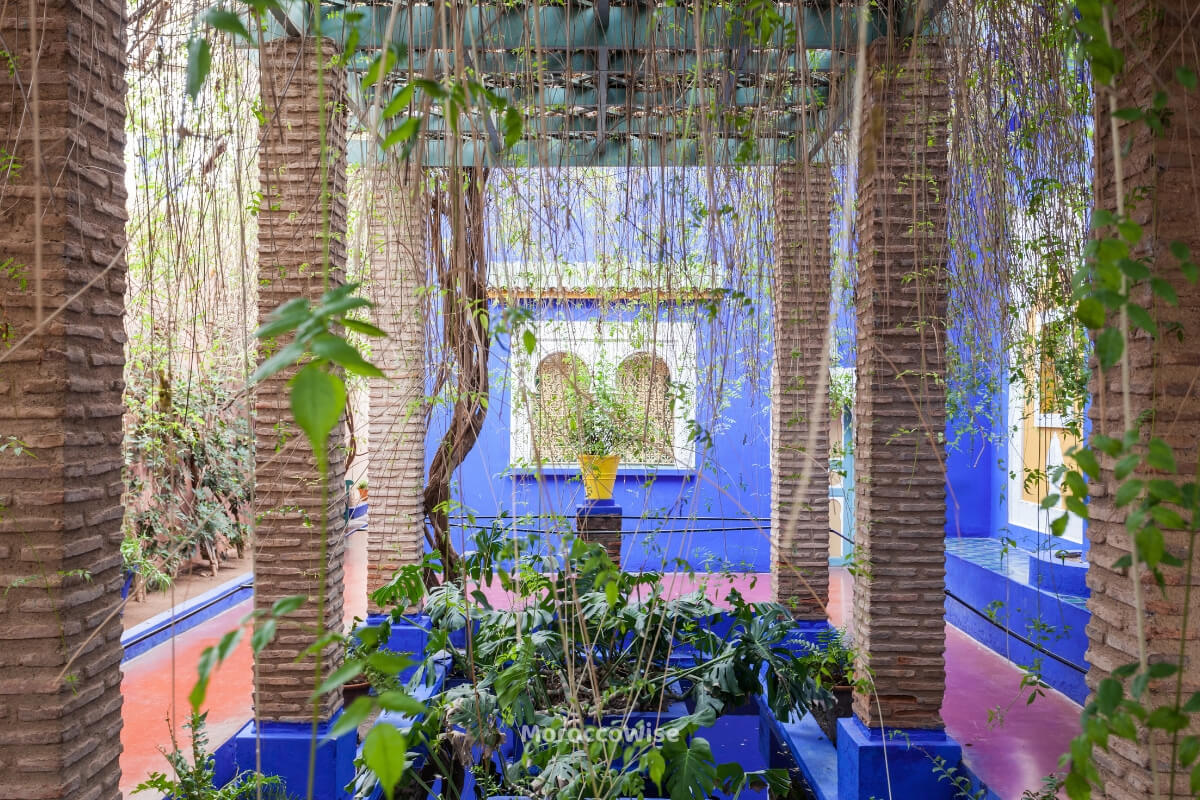
After Majorelle's death, the garden faced the possibility of redevelopment. Yves Saint Laurent and Pierre Bergé acquired the property in 1980 and undertook restoration work, preserving its plants and architecture. Saint Laurent was closely connected to Marrakech, and the garden became a place of retreat and inspiration for him. After his death in 2008, his ashes were scattered in the garden's rose garden, according to the wishes of his partner.
The garden is now part of a broader cultural experience that includes the nearby Berber Museum within the complex and the separate Yves Saint Laurent Museum in Marrakech. Check current opening arrangements and ticket information from official sources before planning your visit; entry can be timed and advance booking is often wise during busy periods.
A botanical collection made for slow looking
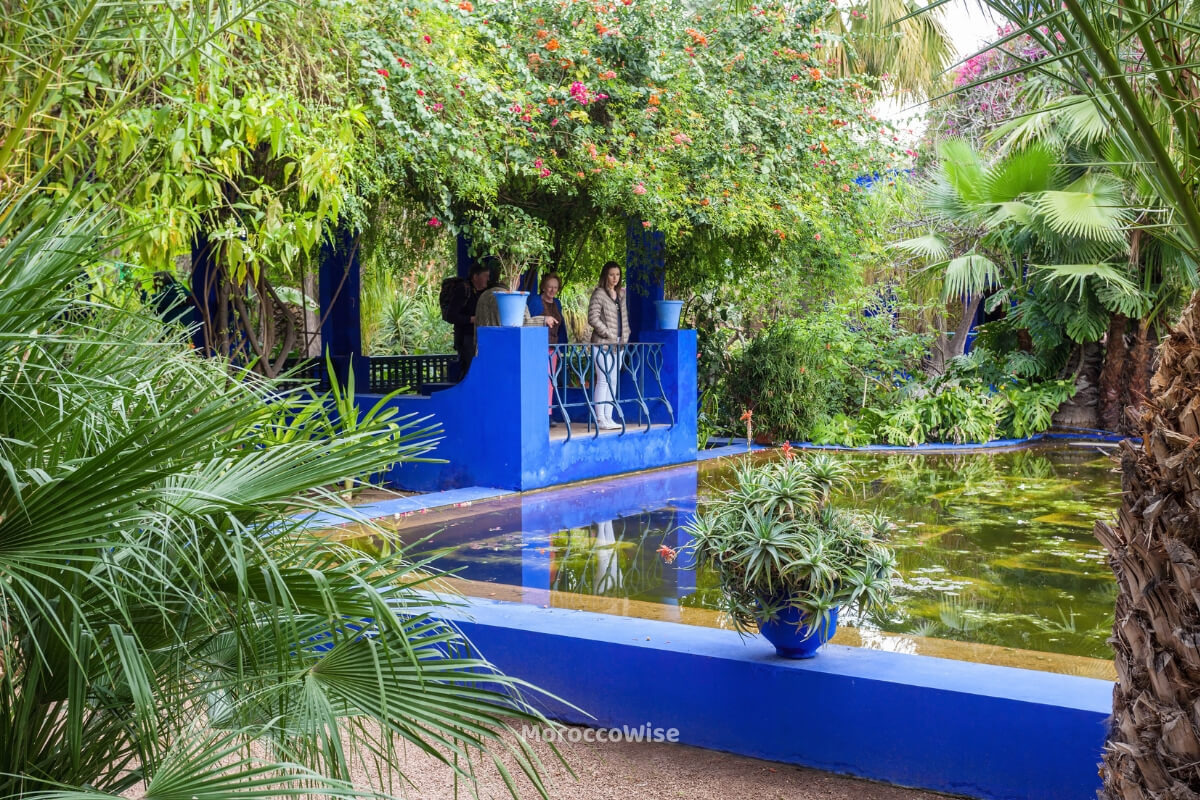
The plant collection reflects the garden's dry climate and its history as a collector's garden. Cacti and succulents hold their shapes in the sun, while palms and bamboo bring height and shade. Water basins create cooler microclimates and mirror the surrounding colors. Resist the urge to hurry from one photo spot to the next: pause to study the contrast between a sculptural plant and the ornate details of a nearby building.
Planning a visit
Arrive at your booked time and expect a popular, carefully managed site. The pathways are beautiful but can be narrow, so be considerate of other visitors and follow staff instructions about photography. Comfortable shoes are useful, and a morning visit can be cooler than the middle of the day. Pair the garden with another nearby attraction rather than trying to rush through several parts of the city at once.
Jardin Majorelle is more than a famous blue wall. It is a layered story of artistic ambition, botanical curiosity, and conservation. Take time to experience the changing light, the varied plants, and the sheltered paths; the quiet details are what make the garden linger in memory.