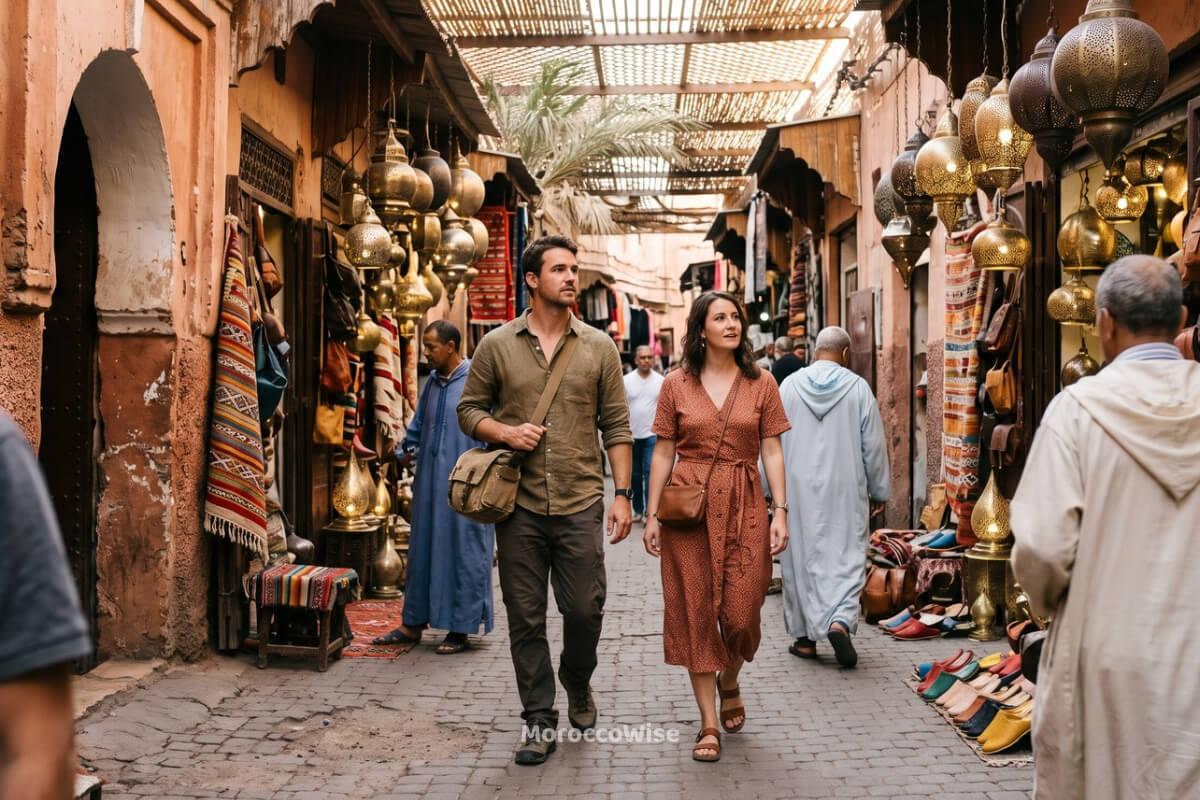
Most of the common scams in Morocco cost you a few dollars and a sour mood. Morocco is safe, and violent crime against visitors is rare. The problem sits in the medinas, where touts and fake guides work crowded lanes and can spot a first-timer in seconds.
Nearly every trick follows a script. Once you recognize the lines ("the road is closed," "I'll show you the way," "it's a gift"), you can step around them without raising your voice. Below are ten scams in Morocco, each with the setup and a safe exit.
Is Morocco safe, or are scams everywhere?
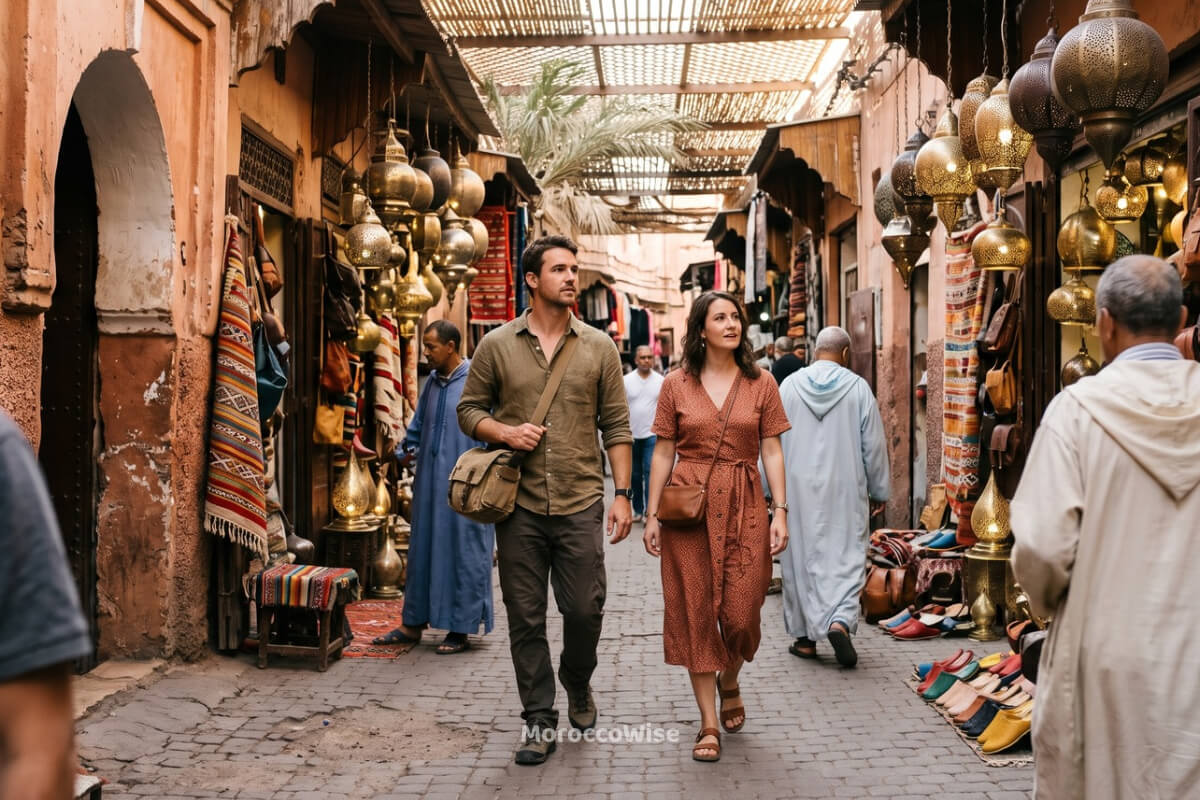
Both statements are true, at different scales. Violence against tourists is uncommon, and most visitors never meet anything worse than a pushy sales pitch. Petty hustle is another matter: in the busiest parts of the old cities, you will probably be approached several times a day.
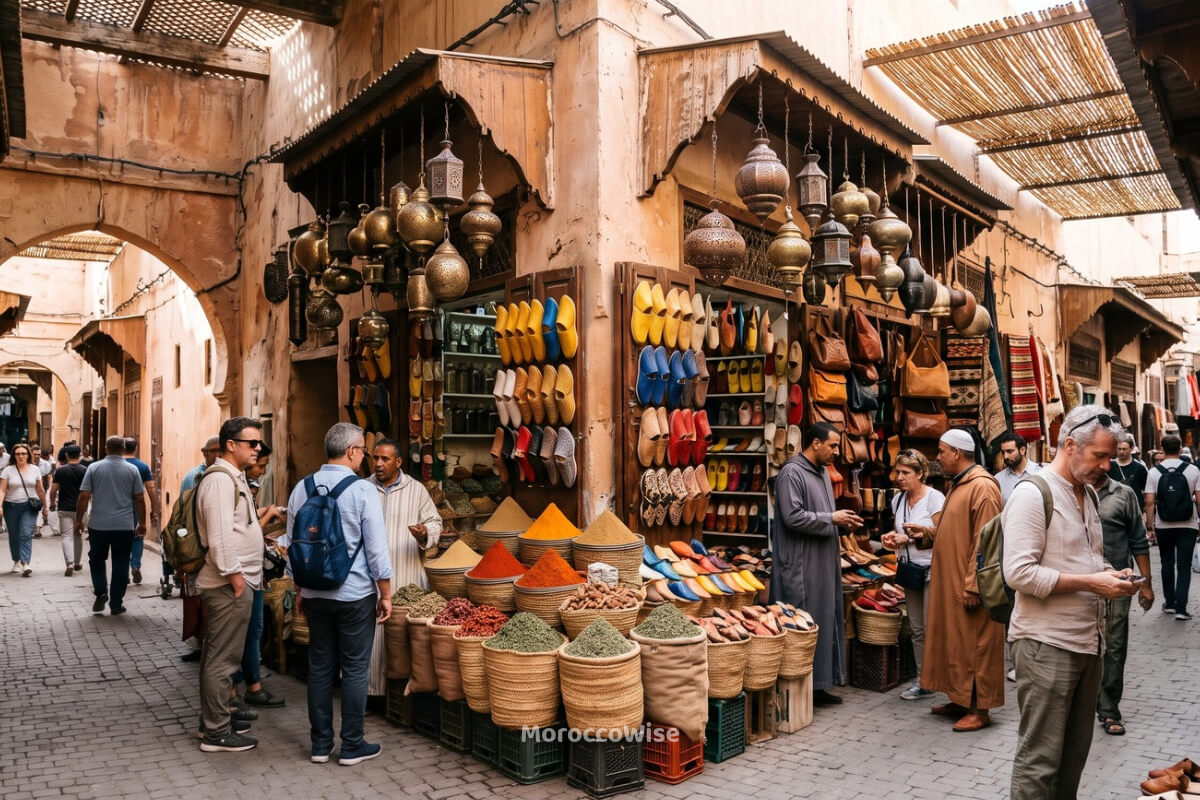
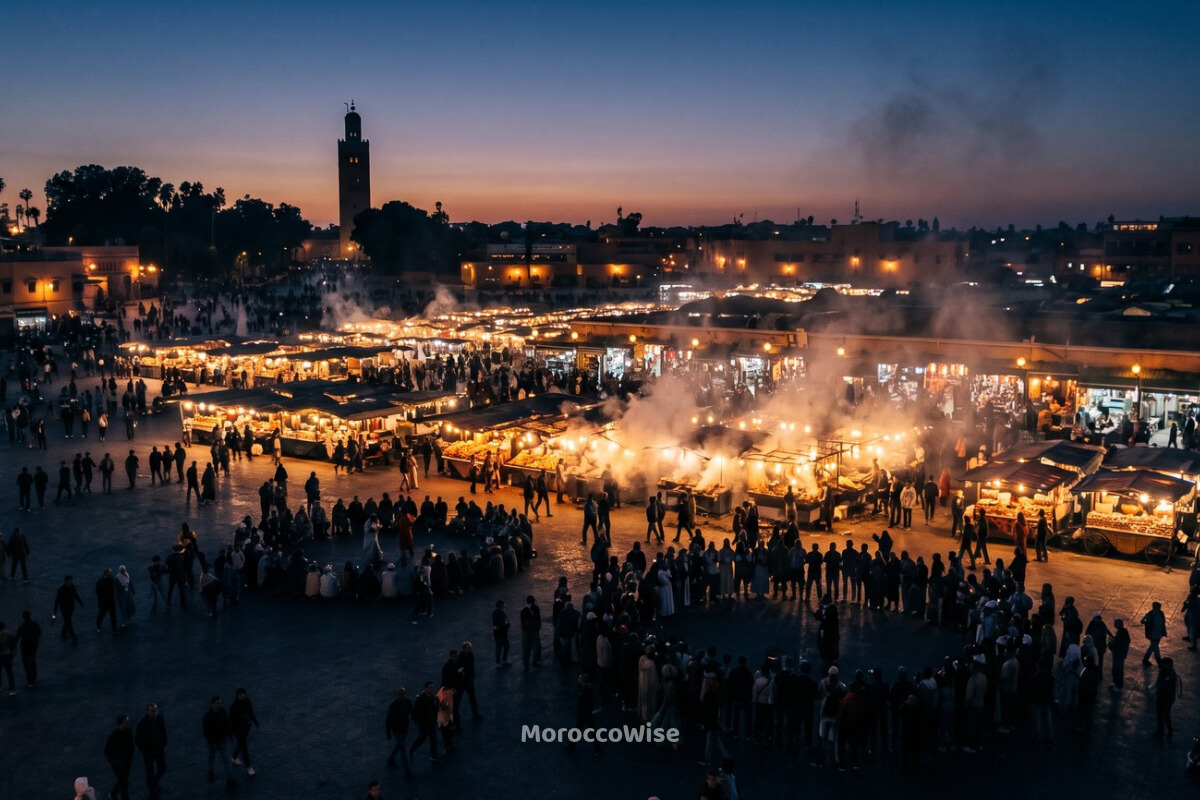
The pattern follows the foot traffic. Marrakech's Jemaa el-Fna, the maze of the Fes medina, and the blue lanes of Chefchaouen all fill with newcomers who do not know the layout, the prices, or what counts as normal. Opportunists gather where that is most true. Marrakech medina scams are frequent because the medina is large, confusing, and full of visitors carrying cash.
It also helps to separate a scam from ordinary commerce. A shopkeeper who invites you in for tea and opens at triple the real price is selling the way souks have always sold. You can haggle, decline, or leave. A scam involves a lie or a demand: a road that is not actually closed, a thread tied on your wrist, a bill for something you never asked for.
For official safety information, read the UK Foreign Travel Advice Morocco Safety and Security before you go. The Moroccan National Tourism Office Visitor Information covers visitor basics.
The 10 most common scams in Morocco (and how they work)
1. The "road is closed" trick
The setup: A friendly young man tells you the street ahead is shut for prayer, renovation, or "locals only." He knows another way, naturally. That route ends at a tannery, a carpet shop, or a "cooperative," and you are now inside someone else's sales pitch.
The safe exit: Check your offline map and keep going the way you were headed. A real closure shows: barriers, workers, locals turning back alongside you. If you want reliable data on your phone to check, our guide to What to Pack for Morocco: Money, Connectivity, and Everyday Essentials covers the best local options. Say "La, choukran" firmly and keep walking.
2. The tannery "festival today only" trap
The setup: Someone announces that today is the only day the "Berber market" is active at the tanneries, or that the tanneries are about to close. He leads you through a leather shop and up to a terrace, pressing a sprig of mint into your hand to mask the smell. A "guide" then appears with an extortionate tip demand, plus heavy pressure to buy leather goods.
The safe exit: There is no one-day-only market, and "today only" is the giveaway. The tanneries are worth seeing, so go in on your own terms. Say up front that you do not need a guide, and agree on any tip before you climb the stairs. The mint is the hook: take it for the smell if you like, then hand over a small tip you chose and leave.
3. The forced henna grab
The setup: At Jemaa el-Fna and Bab Boujloud, a woman takes your hand, starts drawing, and has half a design on your skin before you can answer. Then comes the price, delivered loudly: 200 to 500 MAD.
The safe exit: Keep your hands in your pockets or on your bag as you pass the henna stalls. If a hand is grabbed, pull back immediately and say "La, choukran" firmly. If a design is already on your skin, pay a small sum you consider fair (around 20–30 MAD) and walk away. Do not hand over a large banknote. If you do want henna, agree on the design and price first. Real henna stains orange-brown. Dark "black henna" paste can contain toxic chemical dyes (PPD) that burn the skin, so decline it completely.
4. The snake charmer and monkey photo ambush
The setup: A handler drops a Barbary macaque on your shoulder or drapes a snake around your neck, unasked. A photo gets taken, sometimes with your own phone, and then a steep payment demand follows (often 100 to 200 MAD). The animals are the hook; the invoice is the point.
The safe exit: Step back before anything touches you and keep your hands visible. Say "La, choukran" and keep your phone in your pocket. If you want the photo, settle the price first and pay it. If it has already happened, do not hand your phone to anyone, offer a small coin, and leave.
5. The "friendly local" who shows you the way (faux guides)
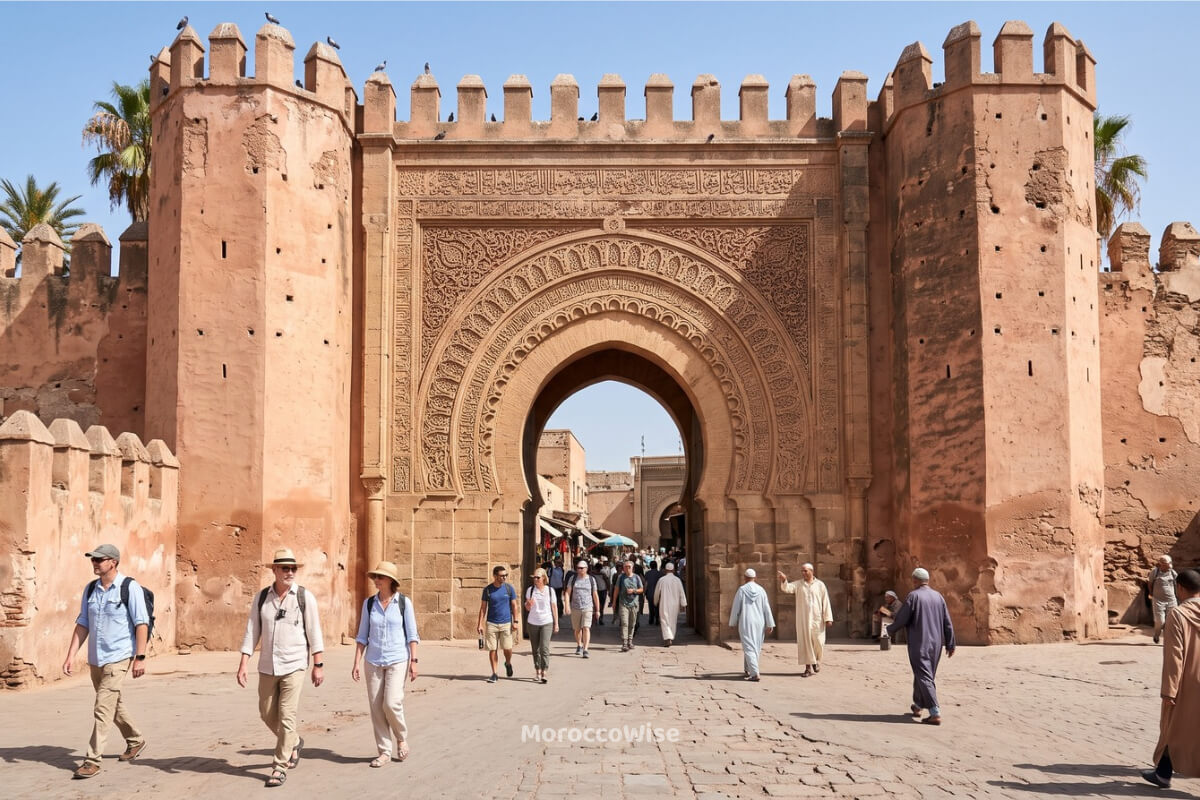
The setup: You are looking at your phone or a physical map when someone appears. "Where are you going? Riad? I'll show you." He walks with you, chatting pleasantly, and then aggressively asks for 50 to 100 MAD upon arrival. Sometimes he detours through shops that pay him a commission.
The safe exit: Decide before the first step. "No guide, thank you" works, followed by continuing to walk. If you are heading for a riad, ask the staff to send someone to meet you at the nearest taxi gate. If you want a real guide, hire a licensed one. Official guides carry a bronze badge under Moroccan Law 05.12, and unlicensed guiding is strictly illegal in Morocco.
6. The broken meter and night airport taxi surge
The setup: Petit taxis (small city cabs) are legally required to use the meter (the compteur). Some drivers claim it is broken, quote a flat fare several times the metered price, or claim the fare is "per person." Airports, train stations, and hotel fronts late at night are the usual hotspots.
The safe exit: Say "compteur, s'il vous plaît" before you step inside the cab. If the driver refuses, simply shut the door and take the next taxi. Grand taxis run on set routes or private hire, so agree on the total price for the whole car before moving. For complete transit details, see our Getting Around Morocco: The Ultimate Guide to Trains, Buses, and Taxis.
7. The restaurant menu swap and hidden cover charges
The setup: A tourist-facing restaurant hands you an English menu with no prices displayed. Bread, olives, and bottled water land on the table unrequested and then turn up on the final bill at high rates. Occasionally, prices on the handwritten bill do not match the printed menu at all.
The safe exit: Always ask for a menu with prices before ordering. Bread is a customary part of Moroccan hospitality, but ask "Is this included?" when unrequested extras arrive, and send back what you do not want. Check the bill line by line. If you plan to order wine or beer, see our Drinking Alcohol in Morocco: Rules, Laws and Cultural Etiquette guide for legalities and typical pricing.
8. The "free gift" and friendship bracelet trap
The setup: Someone ties a woven thread around your wrist, pushes a trinket or jasmine sprig into your hand, and says "welcome to Morocco, this is a gift for you." The moment it is in your possession, it is no longer a gift. If you refuse to pay, the person makes a loud scene to embarrass you into handing over cash.
The safe exit: Keep your hands close to your body and never accept items handed to you on the street. If a bracelet is already tied onto your wrist, take it off calmly, hand it back, say "La, choukran," and walk away. A loud scene is designed as social pressure—moving away briskly neutralizes it immediately.
9. The Sahara desert tour bait-and-switch
The setup: Street kiosks or budget storefronts in Marrakech sell an "all-inclusive luxury Sahara desert excursion" at an unrealistically cheap price. The glossy flyers show luxury glamping domes. In reality, travelers end up in an overcrowded minibus with broken air conditioning, a basic cold camp, and surprise out-of-pocket charges for camel treks, meals, and local site guides.
The safe exit: Demand a detailed written itinerary specifying group size, vehicle type, camp standard (private bathroom vs shared), included meals, and exact extra costs. Verify the agency with official registries and independent reviews. Pay a deposit via card and keep the remaining balance until services are confirmed.
10. The ATM "helpful bystander" distraction
The setup: Near a busy cash machine, a stranger hovers closely and offers unsolicited advice, claiming the machine requires a specific button press or is malfunctioning. While you are distracted, a collaborator memorizes your PIN or attempts card-swapping.
The safe exit: Use ATMs located inside official bank branches during daylight hours. Always cover the keypad with your hand when entering your PIN. Firmly decline any stranger's assistance. For ATM transaction fees and maximum withdrawal limits, check our Cash vs Credit Card in Morocco: How Much to Bring & ATM Tips guide.
The universal de-escalation playbook: how to handle street touts
How to avoid scams in Marrakech comes down to a handful of daily habits, and they work identically across Fes, Chefchaouen, and Essaouira.
The golden rule is to never accept items handed to you. Once an object is in your grip or on your shoulder, someone will argue that you bought it.
Stopping to argue or over-explain creates vulnerability. It gives the tout an audience and an opening for debate. A calm, polite refusal delivered while moving continuously leaves them nothing to work with.
Useful Moroccan Darija Phrases to Defuse Unwanted Offers
Speaking a few words of Moroccan Darija immediately signals that you are not an easy target:
| English Meaning | Moroccan Darija | Pronunciation | When to Use |
|---|---|---|---|
| No, thank you | La, shukran | lah, SHOO-kran | General polite refusal for shop touts, guides, and trinkets |
| Enough, thank you | Safi, shukran | SAH-fee, SHOO-kran | When someone continues following you after the first refusal |
| I don't need a guide | Ma bghitsh guide | mah BGHEETSH geed | When an unofficial guide offers to walk you to your hotel |
| How much does this cost? | Bshhal hada? | bsh-HAL ha-DA | Before accepting any service, henna design, or taxi ride |
| We did not agree on that price | Ma tfaqnash 3la had taman | mah t-fak-NASH ah-la had ta-MAN | When a taxi driver or vendor tries to alter the agreed rate |
| Please leave me alone | Khellini f halti, 3afak | kheh-LEE-nee f HAL-tee, ah-FAK | Firm, serious boundary for persistent street harassment |
A few supporting habits will protect your trip:
- Download an offline Google or Maps.me map and bookmark your riad's location before leaving Wi-Fi.
- Carry small dirham bills (20, 50 MAD) so you never pull out large banknotes in public.
- When you need genuine directions, ask an established shopkeeper behind their counter rather than someone idling in the alleyway.
- Keep your phone and wallet secure in a front crossbody bag.
Morocco scams quick-reference cheat sheet
| Scam / Situation | Where It Happens | Warning Sign | Best Defense |
|---|---|---|---|
| "Road is closed" detour | Medina lanes near tanneries (Marrakech, Fes) | A stranger claims the street ahead is shut | Say "La, choukran," check your offline map, keep walking |
| Tannery "festival today only" | Fes & Marrakech tanneries | Urgency claim ("Berber market today only") | Go independently, refuse touts, settle any tip beforehand |
| Forced henna | Jemaa el-Fna, Bab Boujloud | Your hand is grabbed without consent | Keep hands back, pull away firmly, pay only small coins if marked |
| Snake and monkey photos | Jemaa el-Fna | An animal placed on your body unasked | Step back immediately, settle the fee first or walk away |
| Faux guide | Medina gates, transport hubs | Unsolicited "I will show you your riad" | Say "No guide, thank you," arrange riad staff pick-up |
| Taxi meter refusal | Airports, train stations, late night | Driver claims "meter is broken" or quotes flat rate | Demand "compteur s'il vous plaît" or take the next taxi |
| Menu swap & cover charges | Tourist square restaurants | Menus without prices, surprise appetizers | Ask for a priced menu, confirm inclusions, check the bill |
| "Free gift" / bracelet trap | Busy public squares | A thread or trinket forced into your hand | Keep hands back, never accept, walk away calmly |
| Sahara tour bait-and-switch | Street kiosks and budget desks | Unrealistically cheap "luxury" desert tour | Get written itineraries, check reviews, pay deposit by card |
| ATM bystander distraction | Street-facing ATMs | A stranger hovers offering help | Use bank-branch ATMs, shield your PIN, reject help |
What to do if you get scammed in Morocco or feel intimidated
Do not escalate physically over small change. A minor disagreement over 20 or 50 dirhams is never worth a confrontation in a foreign country. If handing over a small coin defuses a tense moment, pay it and walk away calmly.
Head directly into an established public space: a hotel lobby, an open restaurant, a café, or a busy shop. Street touts will almost never follow you into a private business where they are known to the owners.
If you encounter theft, extortion, or intimidation, contact the Moroccan Tourist Police (Brigade Touristique). These specialized officers operate in major visitor hubs across Marrakech, Fes, Casablanca, Rabat, and Tangier. In Marrakech, their office sits right on Jemaa el-Fna near the central post office.
Save these emergency numbers on your phone before you travel:
- Police in cities (Sureté Nationale): Dial
190from a mobile (19from a landline) - Royal Gendarmerie (Rural areas & highways): Dial
177 - Ambulance & Fire Service: Dial
15 - Marrakech Tourist Police direct helpline:
+212 5 24 38 46 01
Frequently asked questions
Is it safe to walk around Marrakech medina at night?
Yes, for the vast majority of visitors. The main streets, souk thoroughfares, and Jemaa el-Fna remain bustling with families and tourists late into the evening. However, dimly lit residential alleys (derbs) can be confusing and quiet. Stick to well-lit main routes, keep an offline map handy, and ask your riad host to meet you if returning late. Solo women can consult our What to Wear in Morocco: 2027 Dress Code & Packing Guide for Women for practical street etiquette.
What should I say to unofficial guides in Morocco?
Make direct eye contact, place your hand on your heart, and say "La, shukran" (No, thank you) while walking briskly. If they persist, say "Safi, shukran" (Enough, thank you). If you want an authentic guided tour, always hire an officially licensed guide wearing their official ministerial badge through your accommodation.
How do I avoid taxi scams from Marrakech or Casablanca airports?
Insist on the meter by saying "compteur, s'il vous plaît" for city petit taxis, or agree on the total price for the entire vehicle beforehand for grand taxis. Alternatively, book a fixed-rate transfer in advance through your hotel or riad to eliminate all arrival friction.
Are henna artists in Jemaa el-Fna legitimate?
Some are legitimate artisans, but many in the open square practice aggressive grab tactics. Legitimate artists show design books and agree on fixed prices before touching your skin. Always settle the price first, and refuse "black henna" which often contains dangerous chemical additives.
How can I contact the Tourist Police in Morocco?
Visit the Brigade Touristique station located on Jemaa el-Fna in Marrakech (phone: +212 5 24 38 46 01). In any Moroccan city, you can also dial 190 to reach the police dispatch directly.
Final verdict: staying smart without missing the magic
Knowing these scams is simply about learning to neutralize awkward situations in thirty seconds so you can get back to enjoying your vacation. Keep an offline map on your phone, carry small change, and remember that a calm "La, choukran" is your most effective tool.
Genuine Moroccan hospitality is everywhere. The vast majority of locals you meet—from shopkeepers to riad hosts—are genuinely welcoming and proud to share their country with you.