
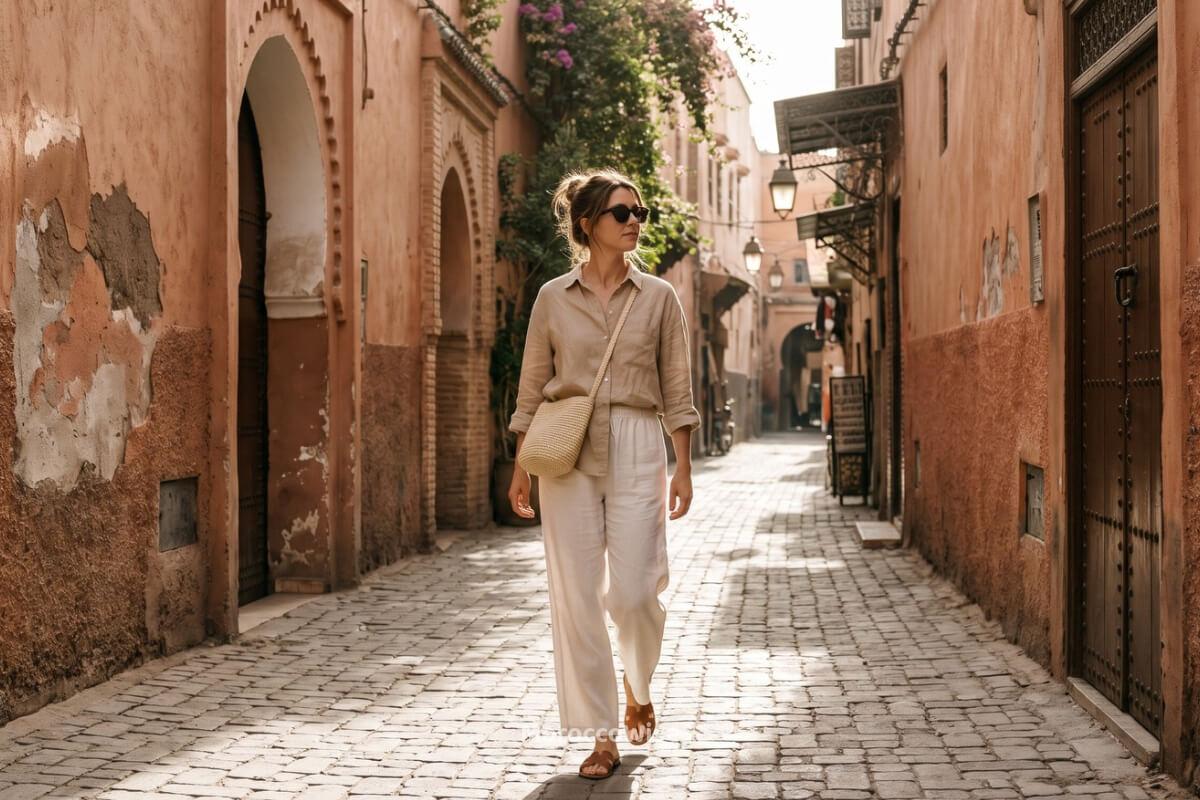
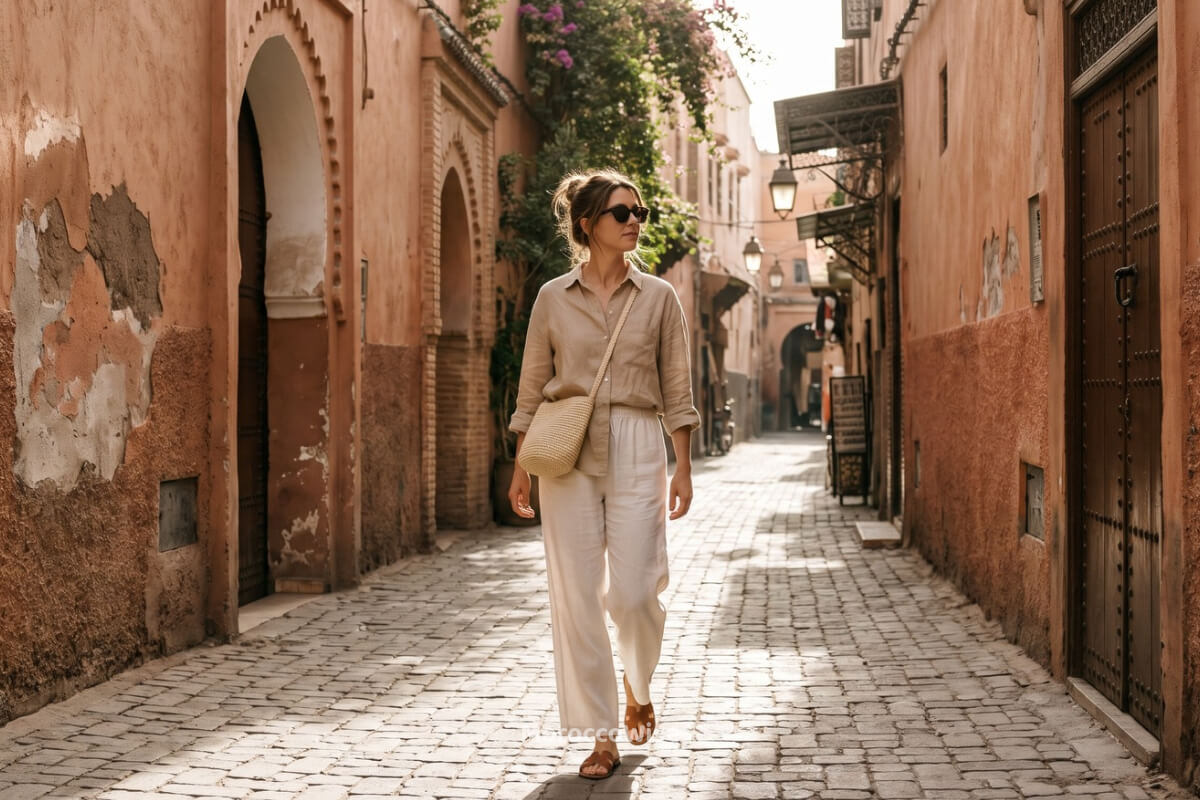
If you are wondering what to wear in Morocco, start with the fact that most blogs bury: no law tells a foreign woman to cover her hair, wear a hijab or put on a long robe. What you wear is your call. What changes with your choices is how much attention you get and how comfortable you feel at 3 p.m. in July.
Morocco is a mostly Muslim, socially conservative country, and modest clothing is the default everywhere except beach resorts and the trendiest parts of the big cities. Sun protection and breathable layers will do more for your trip than any rulebook. A Marrakech medina alley, a Gueliz rooftop and a High Atlas village call for three different outfits, so pack for the places on your route.
Is There an Official Dress Code in Morocco? (Law vs. Culture)
Moroccan law does not impose a dress code on tourists. Nobody will ask you to cover your head at the airport, in a taxi or in a café, and you will only need a scarf over your hair if a particular religious site asks for it. Public indecency is an offence in Morocco, as in most countries, but a sleeveless top or a knee-length skirt is nowhere near it.
Culture is a different matter, and it is the one that shapes your day. Plenty of Moroccan women wear jeans and a blouse with no headscarf, while others wear a djellaba (the long, hooded everyday robe) out of faith or habit. Visitors are expected to show some awareness of that mix.
The practical payoff of dressing with the setting in mind is easy to spot. Covered shoulders and knees tend to mean fewer stares and friendlier exchanges with shopkeepers, riad staff and the women you meet. For the official wording, see UK Government Morocco Travel Advice - Local Laws and Customs.
Can You Wear Shorts in Morocco? The Honest Truth
Can you wear shorts in Morocco as a woman? Legally, yes. Whether you will enjoy it depends on the length, the neighborhood and how much staring you are willing to ignore.
In the historic medinas (Marrakech, Fes, Chefchaouen)
Short shorts in a medina attract long looks and the occasional comment. Knee-length linen bermudas or tailored culottes avoid most of that, and they are cooler than jeans. If shorts are all you have, throw a long, loose shirt over them.
In modern districts (Gueliz, Hivernage, Gauthier) and luxury resorts
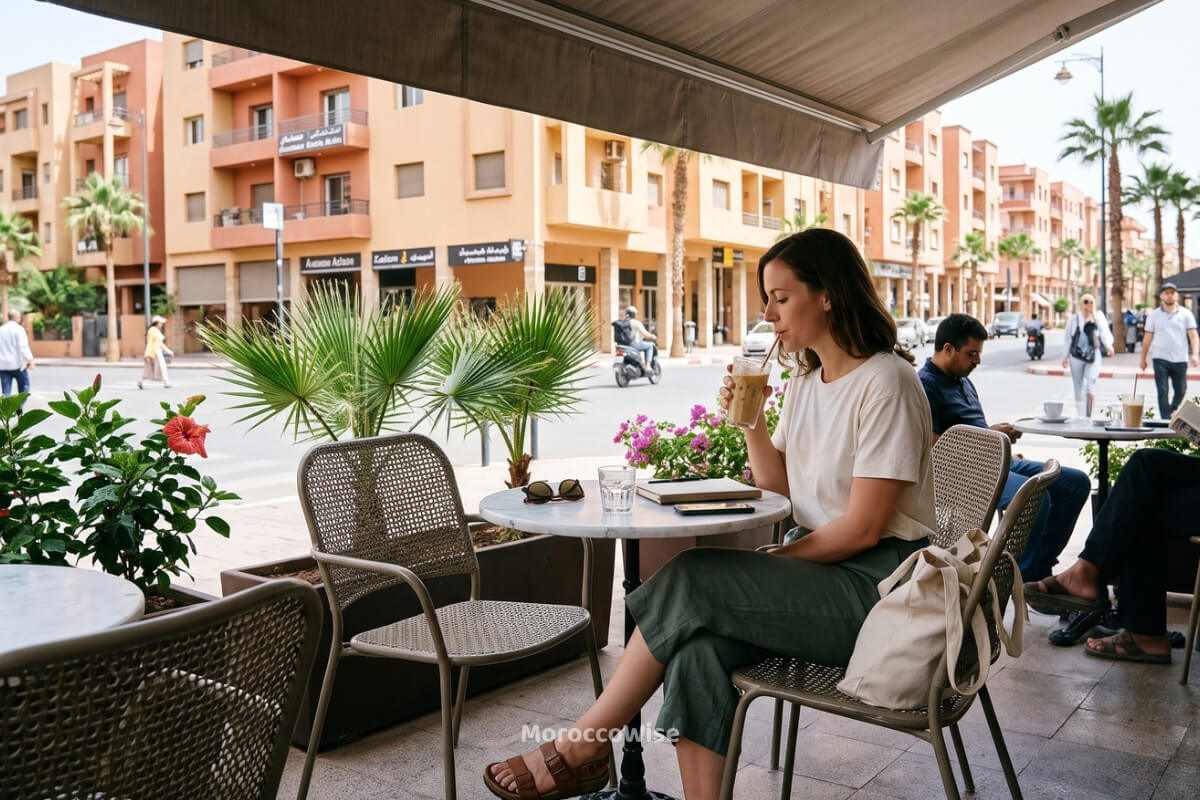
Tolerance is high here. Shorts, sundresses and sleeveless tops are common on terraces, in hotel lobbies and around the cafés of Gueliz. Walking through the neighborhood is still more comfortable with a light layer in your bag.
At the beach and hotel pools (Taghazout, Agadir, Essaouira, private resorts)
Swimsuits and bikinis are normal at resort pools and on tourist beaches. Surf towns like Taghazout are used to foreign women in swimwear on the sand, but the village streets behind the beach are still a Moroccan village. Bring a sarong or a kaftan and put on shorts and a tee when you leave the sand. Essaouira's beach is famously windy, so a wrap is useful there for the weather as well.
In rural Berber villages and mountain towns
Long, loose clothing is strongly advised. In the villages around Imlil and across the High Atlas, lightweight trousers and a tee with sleeves keep you comfortable on a hike and avoid awkward moments in places where tourists are rare.
What to Wear in Marrakech: Navigating the Medina vs. Gueliz
Visitors searching for what to wear in Marrakech as a woman usually find advice that treats the city as one place. It is two, and they sit about ten minutes apart by taxi.
The medina and the souks
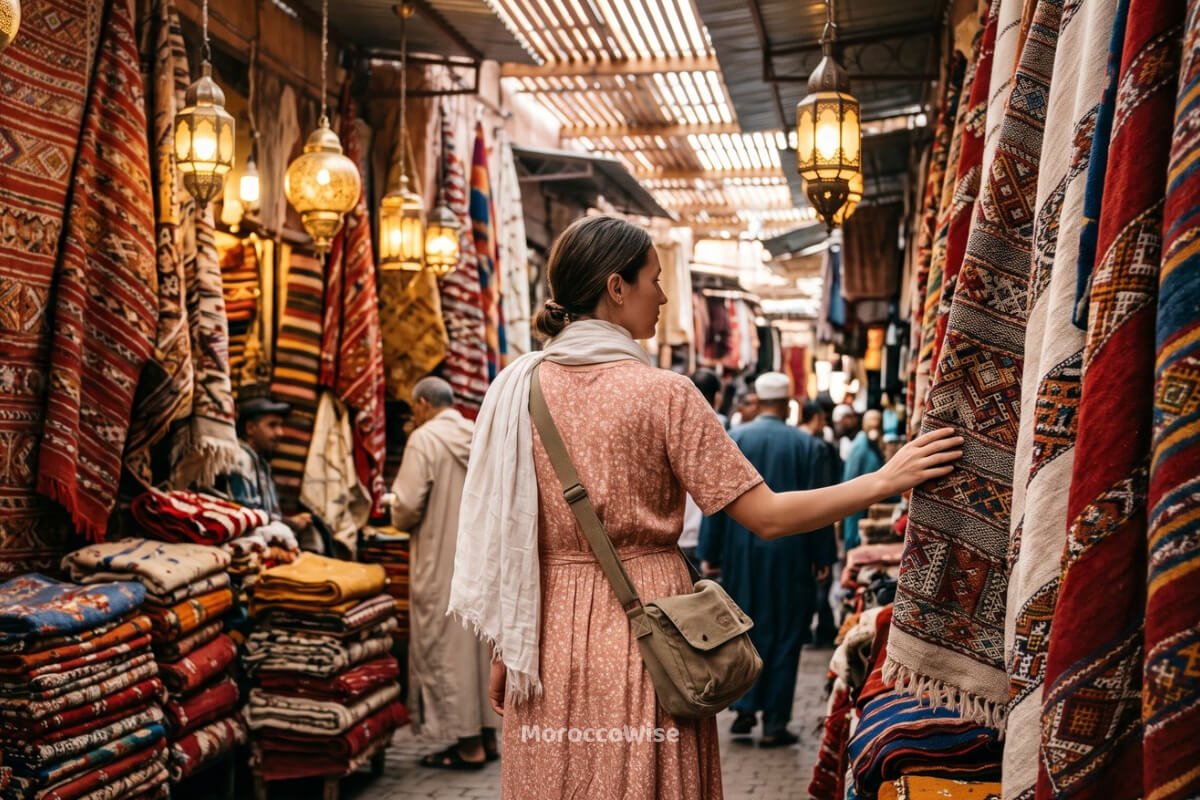
The medina means uneven paving, dust, crowds and motorbikes that squeeze through alleys with little warning. Loose linen trousers, maxi skirts and covered shoulders work here for practical reasons as much as respect: they shield you from the sun and from the dust, and they keep you from fussing with your clothes in a packed lane. Plan for a lot of walking, since many alleys are closed to cars (more in Getting Around Morocco: The Ultimate Guide to Trains, Buses, and Taxis).
Gueliz and nightlife
Gueliz and the big hotels in Hivernage are where contemporary Western fashion is common. Rooftop bars, upscale restaurants and modern venues see dresses, jumpsuits and heels. A light wrap helps for the taxi ride and the walk back to your riad, particularly if you are staying in the medina. The rules around drinking are covered in Drinking Alcohol in Morocco: Rules, Laws and Cultural Etiquette.
Core Packing Rules: Fabrics, Cuts, and Everyday Staples
Fabric matters more than style in a country where daytime highs are often well above 30°C. Choose 100% linen, light cotton, rayon or bamboo, and skip heavy polyester, which traps heat and clings. Linen wrinkles, and that is part of its charm in a riad courtyard.
The items that earn their place in the suitcase:
- A lightweight scarf or pashmina. It works as a sun shield, a dust filter, a shoulder cover and a mosque wrap.
- Maxi dresses and midi skirts with breathable linings.
- Wide-leg linen pants and tailored culottes.
- Light linen button-down shirts, plus loose tees that cover the collarbone.
- Closed-toe walking shoes or sturdy sandals for cobblestones. High heels stay at home, because medina paving will punish them.
Pockets are worth hunting for, since you will carry small bills for scarves, tea and tips (see Cash vs Credit Card in Morocco: How Much to Bring & ATM Tips). For money, connectivity and the rest of the suitcase, see What to Pack for Morocco: Money, Connectivity, and Everyday Essentials.
Leave behind tight bodycon dresses for street walks, crop tops in traditional markets and sheer garments that need an underlayer you did not pack.
Dressing for Special Situations: Mosques, the Desert, and Seasons
Visiting mosques
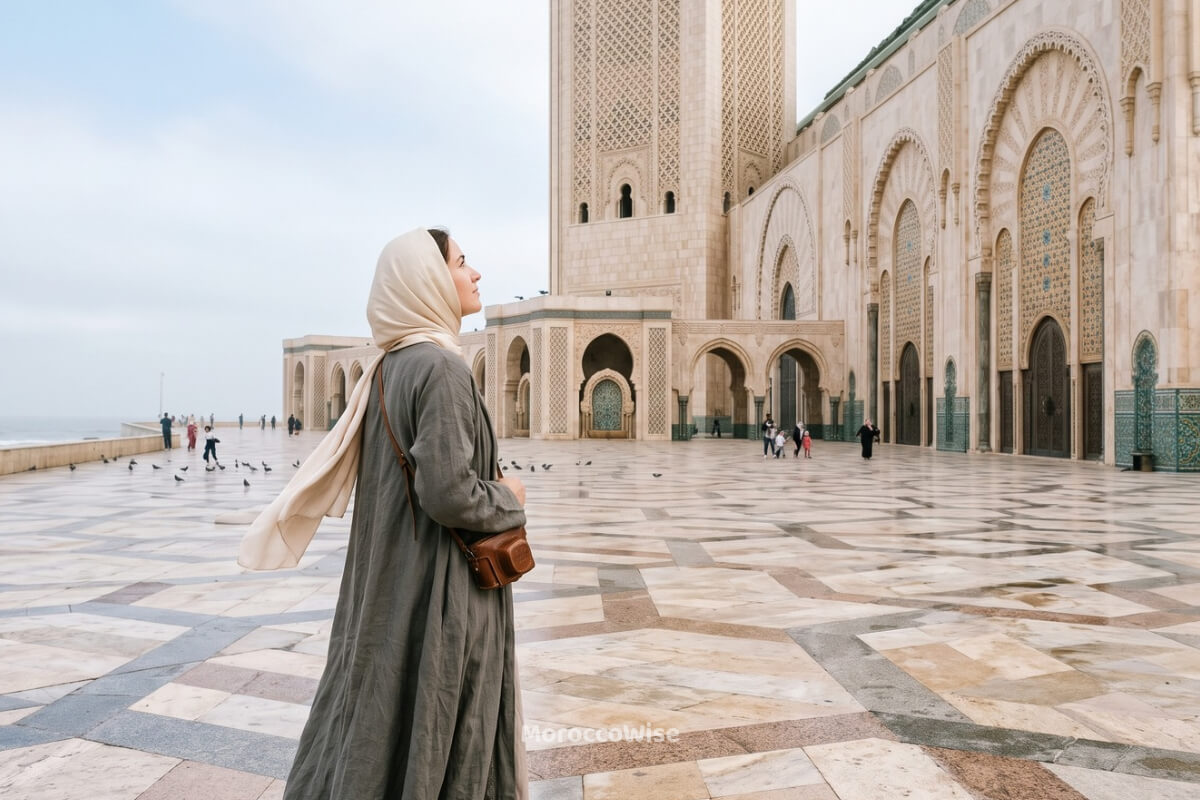
Most mosques in Morocco are closed to non-Muslims. The Hassan II Mosque in Casablanca is the main exception and can be visited only on a guided tour, outside prayer times.
Cover your shoulders, chest and knees at a minimum. Many guides and visitors recommend long sleeves and trousers or a long skirt to be safe, and shorts, sleeveless tops and crop tops are not allowed. You will take off your shoes. Sources disagree on headscarves: most say women do not have to cover their hair, but bringing a scarf costs nothing and some visitors report being asked. Check the current rules in Hassan II Mosque Foundation Visitor Guidelines before you go.
The Sahara
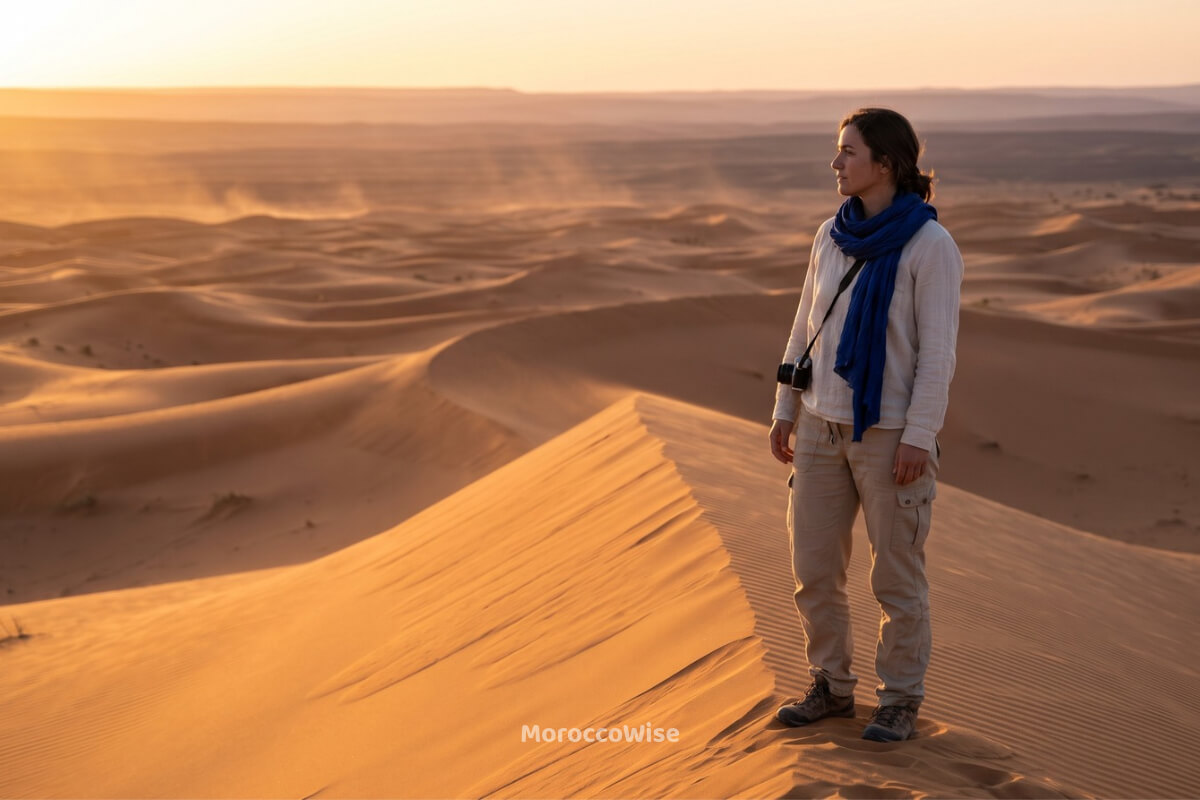
Daytime in the desert means strong sun and blowing sand. A long-sleeved linen shirt, loose trousers, sunglasses and a scarf you can wrap around your head and face cover most of it. Closed shoes beat sandals, which fill with sand within minutes.
Nights drop fast. Pack a fleece, a thermal base layer and a hat, and expect near-freezing temperatures in winter. Route and packing details are in Planning a Sahara Trip from Marrakech: Routes, Time, and What to Pack.
Seasonal adjustments
In summer, Marrakech regularly climbs above 38°C, so go for the lightest linen you own, a wide-brimmed hat and a scarf you can wet to cool your neck. Winter and spring evenings are a surprise to many visitors: riads are often unheated, and their tile and stone hold the cold. A sweater, a thin thermal layer and warm socks are the difference between a cozy night and a miserable one.
Clothing, Culture, and Street Attention: Practical Safety Advice
Stares and comments happen, especially in Marrakech and Fes, and solo women notice them more. Modest clothing works as a social buffer and tends to cut down on the attention, but it guarantees nothing. Moroccan women themselves report street harassment whatever they wear.
These habits help:
- Wear sunglasses and avoid prolonged eye contact with people who are staring or calling out.
- Walk with purpose, even when you are lost. If you need the map, step into a café or shop to check it.
- Answer an unwanted comment with a short, firm "la, shukran" (no, thank you) and keep moving. You do not owe anyone a conversation.
- Ask a shopkeeper, a hotel receptionist or another woman for directions rather than a stranger who approaches you.
- If you feel followed, go into a shop, café or riad. Larger cities have a tourist police unit you can contact.
What to Wear in Morocco Cheat Sheet (Summary Table)
| Location / Activity | Recommended Attire | What to Avoid | Notes |
|---|---|---|---|
| Medina & Souks | Linen trousers, maxi or midi skirts, loose tees or shirts covering shoulders, closed walking shoes | Short shorts, crop tops, tight or sheer clothing | Uneven paving and dust. Carry a scarf. |
| Modern City Districts | Dresses, jumpsuits, knee-length or longer shorts, sleeveless tops | Beachwear away from the beach | High tolerance in Gueliz and Hivernage. Bring a light layer for the walk home. |
| Mosques & Religious Sites | Shoulders, chest and knees covered, ideally long sleeves and trousers or a long skirt, scarf on hand | Shorts, sleeveless tops, crop tops | Shoes come off. Check the site's current rules. |
| Beach & Pool | Swimsuit or bikini at pools and tourist beaches, plus a cover-up | Swimwear in town | Shorts and a tee over your swimsuit when you leave the sand. |
| Desert & Mountains | Long sleeves, loose trousers, head scarf, closed shoes, fleece and thermal layer for the night | Open sandals in the dunes | Large day-to-night swings. Hats and sunglasses. |
Final Verdict: Dressing Smartly and Respectfully in Morocco
You do not need a costume and you do not need to hide. Pick clothes that suit the weather first, then adjust the neckline and hemline for the neighborhood you are in. Most of what makes a trip comfortable comes down to fabric and fit.
Pack one scarf you love, linen that covers your shoulders and knees for the medina, and one outfit for a rooftop dinner. Add a fleece if the Sahara or an unheated riad is on your itinerary.
FAQ: What Women Ask Most About Dress in Morocco
Do female tourists have to cover their hair in Morocco?
No. There is no legal requirement for foreign women to cover their hair anywhere in Morocco. A scarf is useful for the sun, the dust and the occasional religious site that asks for it.
Can you wear shorts in Morocco as a woman?
Yes, legally. In the medinas, knee-length shorts or culottes draw less attention than short shorts. In Gueliz, Hivernage and at resorts, shorts are common.
Can you wear sleeveless tops or tank tops in Morocco?
Yes, in modern districts, hotels and resorts. In medinas, villages and anywhere conservative, a loose tee or a light shirt or scarf over your shoulders is more comfortable and draws fewer stares.
What can women wear at Moroccan beaches and hotel pools?
Swimsuits and bikinis are normal at hotel pools, resort beaches and tourist beaches. Bring a cover-up for walking through town, and keep topless sunbathing and swimwear out of the streets.
What shoes should women pack for walking in Moroccan cities?
Closed-toe walking shoes or sturdy sandals with good grip. Medina paving is uneven and dusty, and heels are a poor match for it.
What is the dress code during Ramadan for tourists?
There is no separate dress code for tourists during Ramadan. Modest clothing matters a little more, since streets are busy in the evenings and the month is religiously important. Many visitors also avoid eating or drinking openly in the street during daylight hours out of respect.
Official Travel and Cultural Resources
- UK Government Morocco Travel Advice - Local Laws and Customs
- Hassan II Mosque Foundation Visitor Guidelines
- Government travel advice pages for Morocco from the United States, Canada and Australia, for current local-law notes before you book.