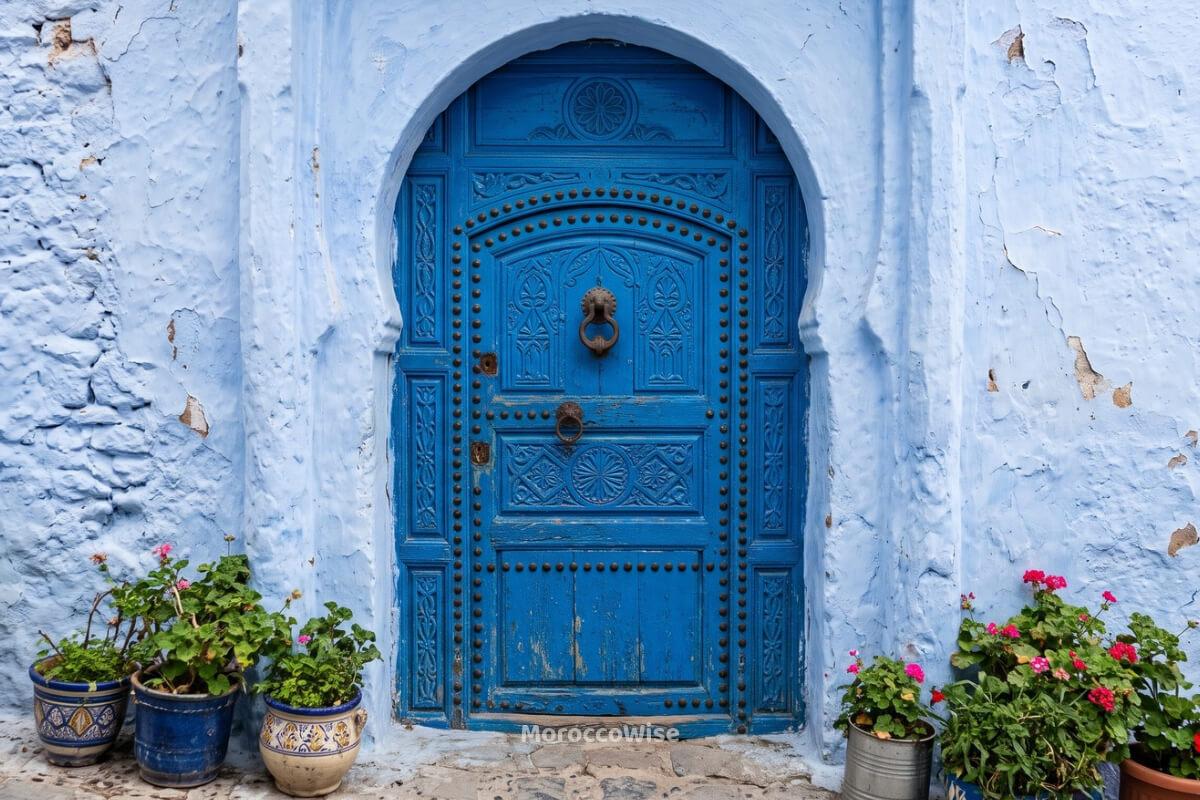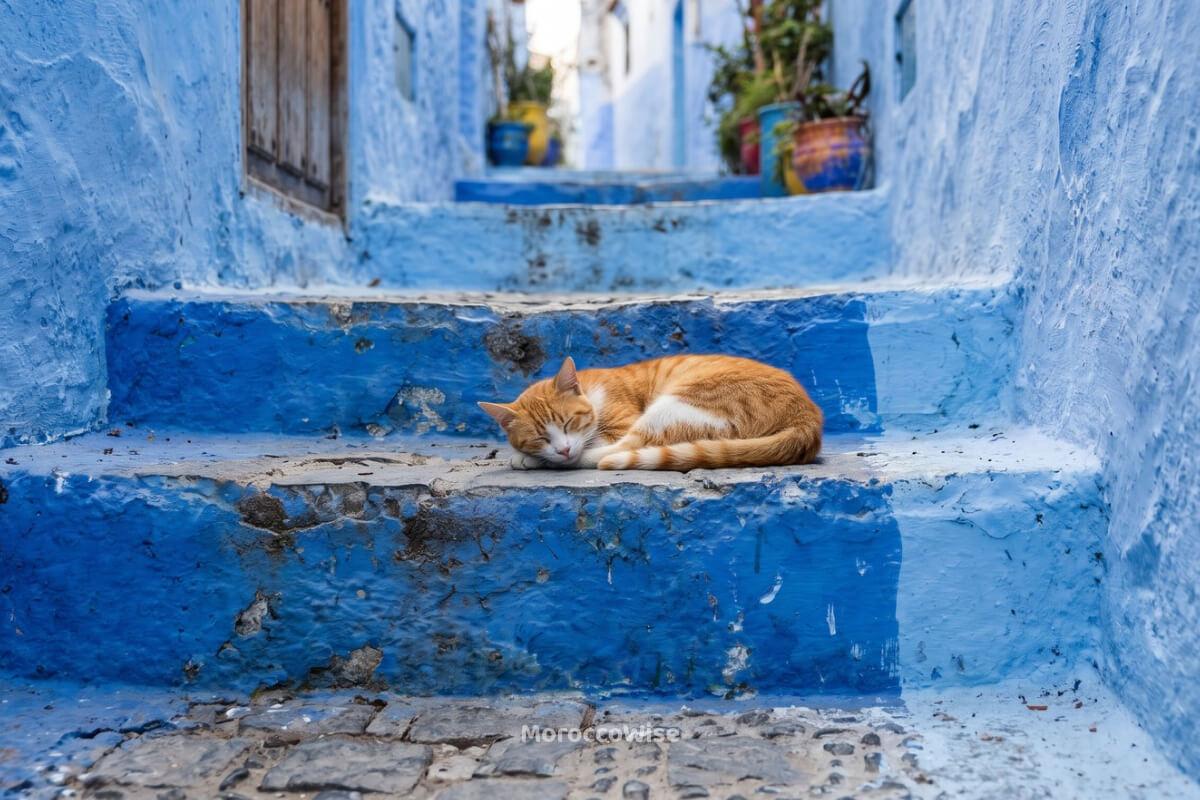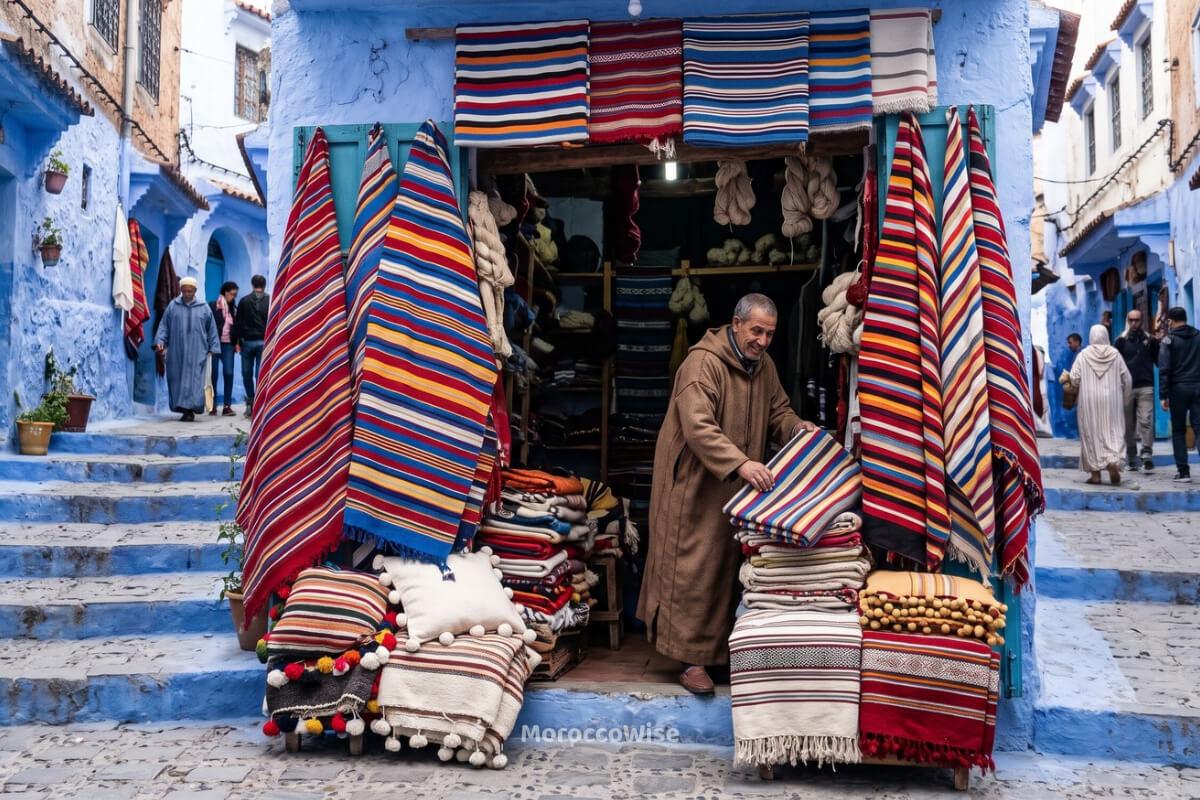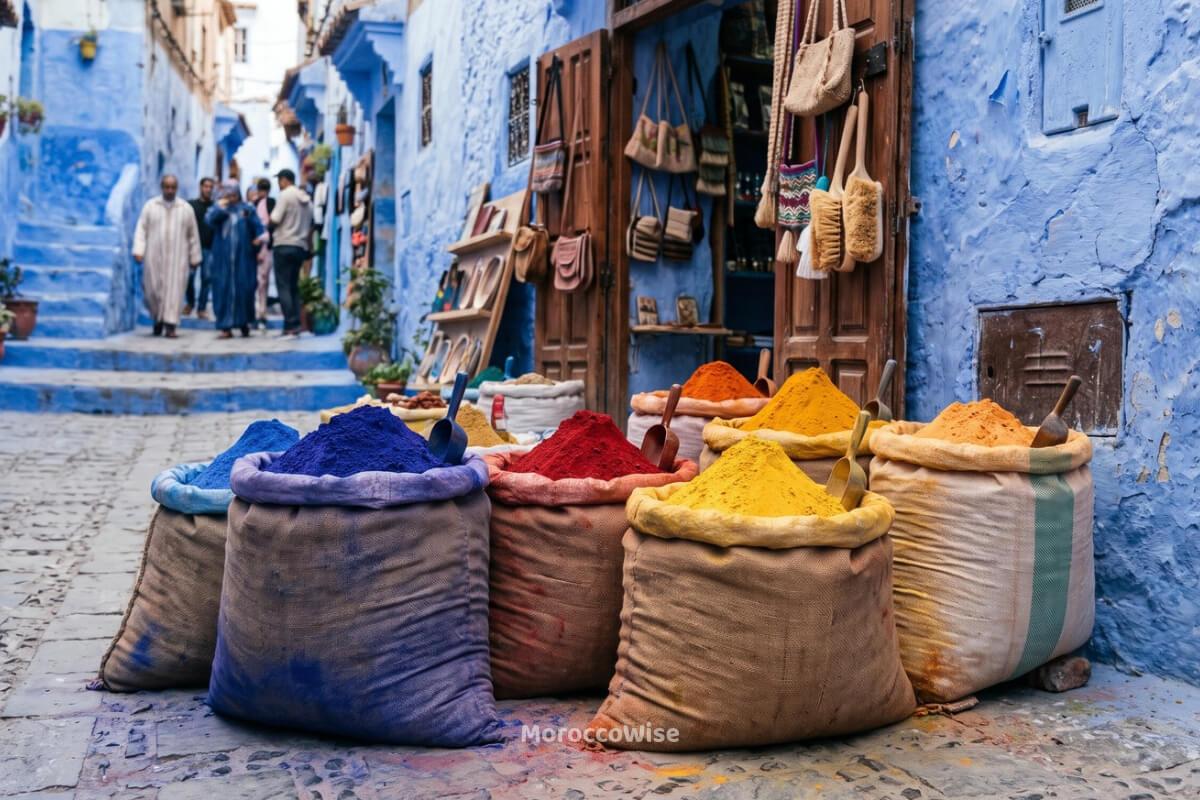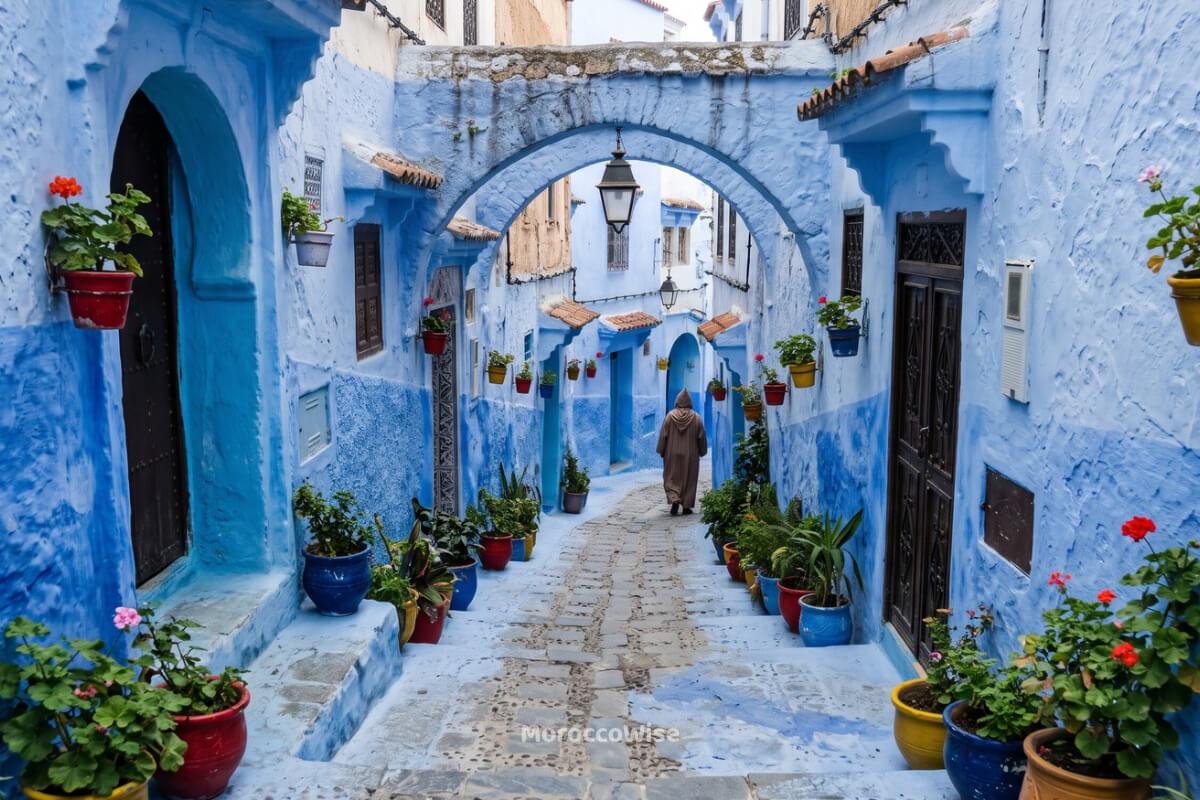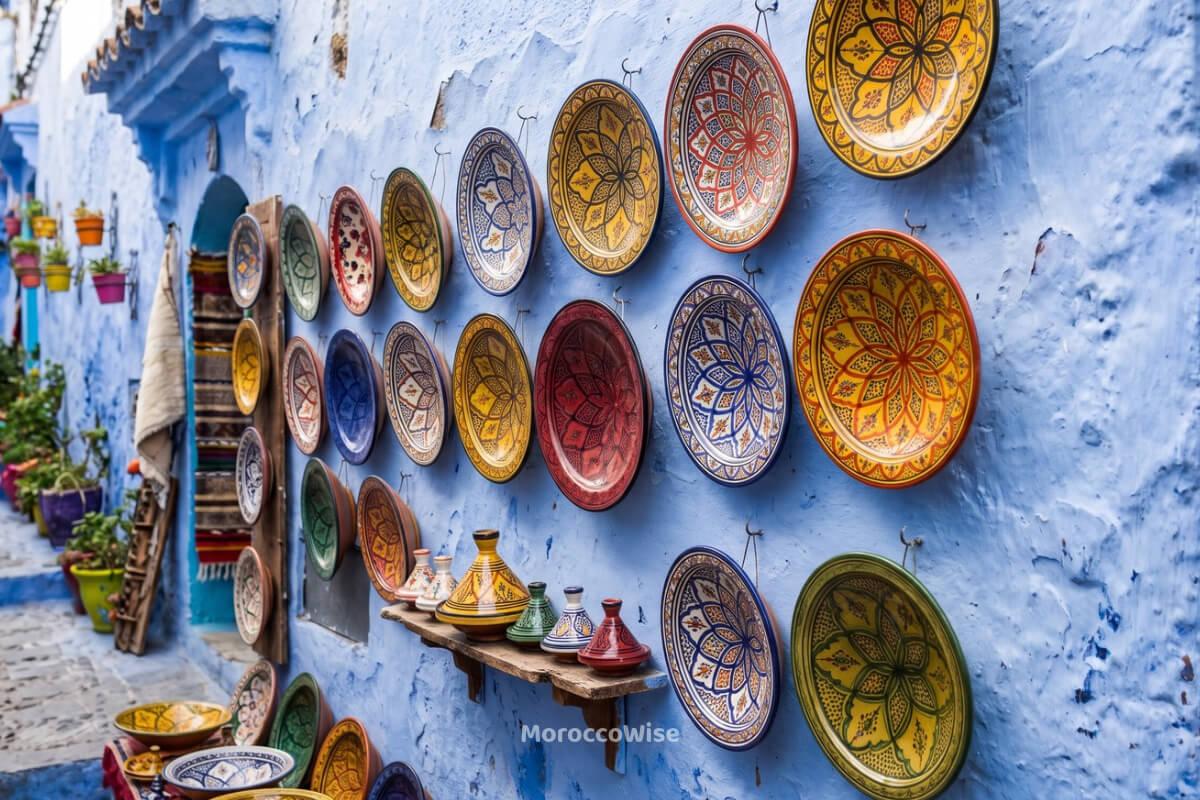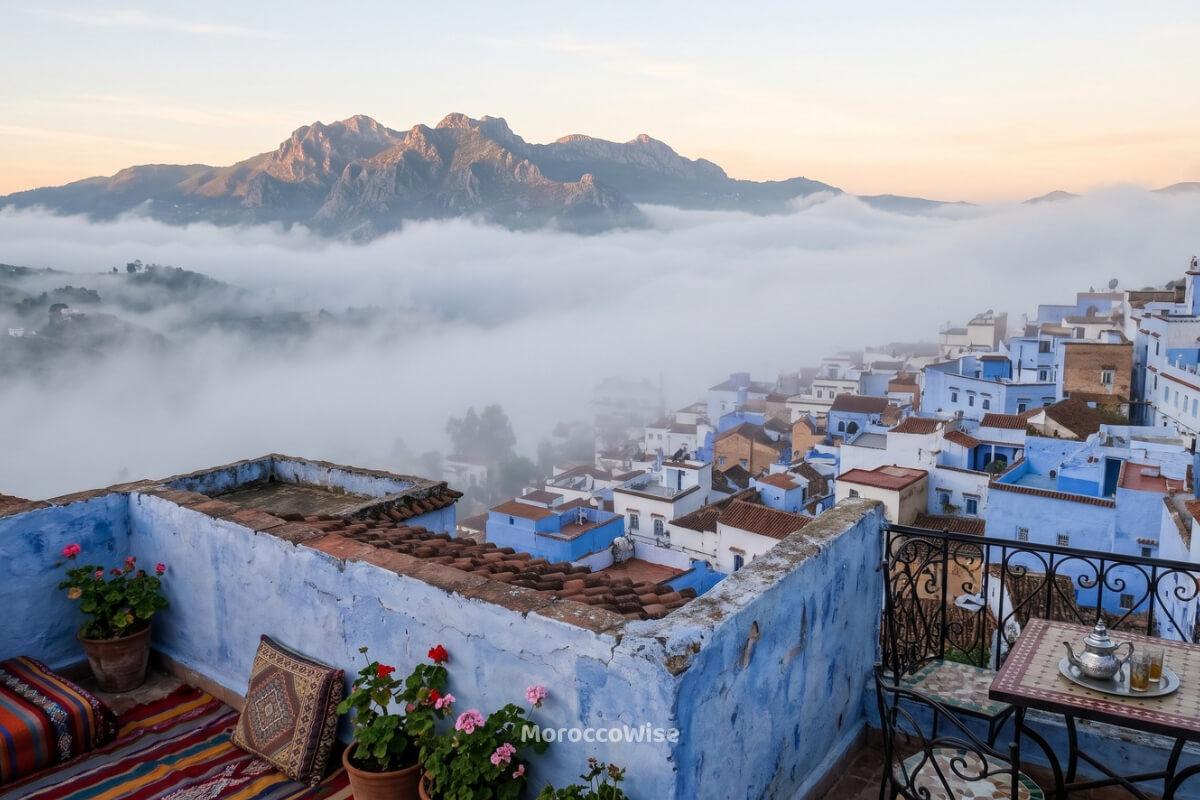
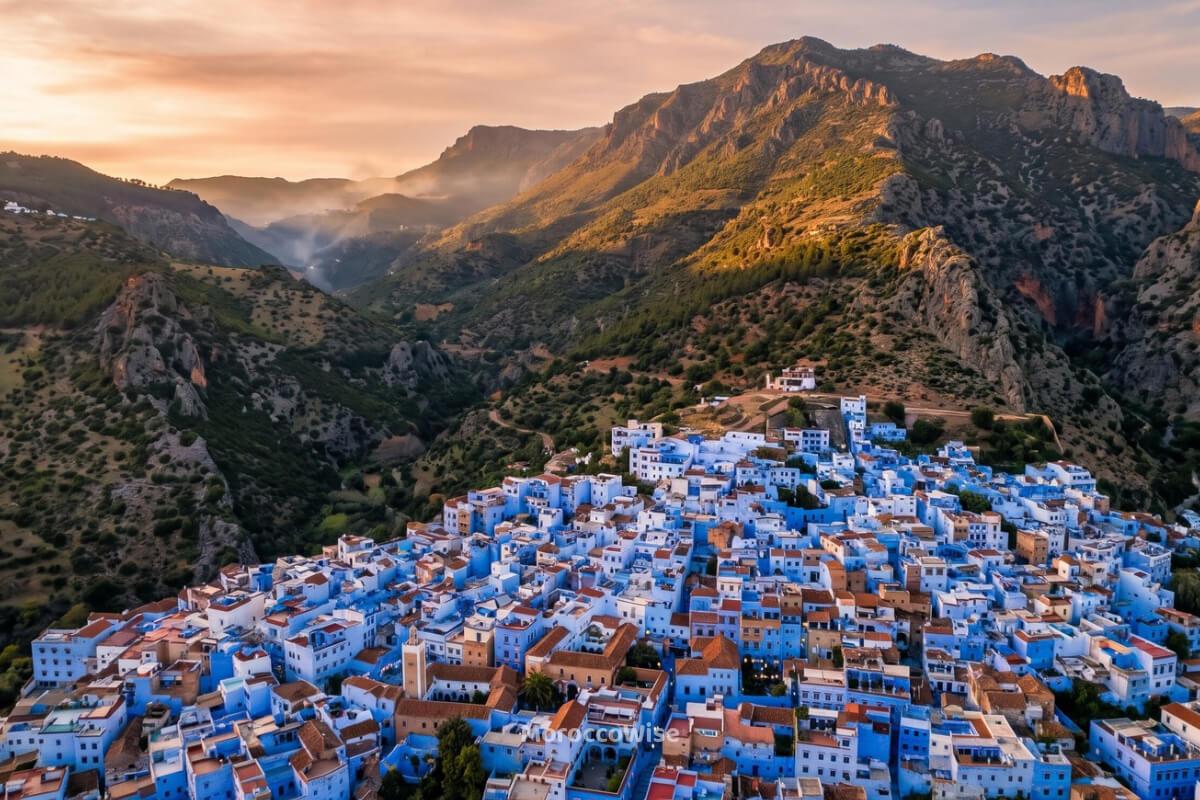
Imagine walking through a narrow mountain alley where every wall, staircase, doorway, and flowerpot seems to have been dipped in shades of blue. Above the rooftops, the rugged peaks of the Rif Mountains rise against the sky. Somewhere nearby, water flows down from the mountains, local shopkeepers arrange handmade blankets, and the smell of freshly baked bread escapes from a traditional oven.
Welcome to Chefchaouen, Morocco's famous Blue Pearl.
Located in northern Morocco, this small mountain city has become one of the country's most photographed destinations. Its blue-washed medina attracts photographers, independent travellers, and anyone looking for a slower alternative to the busy streets of Marrakech and Fes. But there is another side to the postcard. Chefchaouen has steep stairs, winding mountain roads, occasional photography crowds, and transport connections that require proper planning.
This Chefchaouen travel guide separates the Instagram fantasy from the practical reality, helping you plan a rewarding visit in 2027.
Chefchaouen Quick-Answer Factsheet
| Travel question | Practical answer |
|---|---|
| Best time to visit | April–June and September–October |
| Ideal duration | 2 days and 1–2 nights |
| Nearest transport hubs | Tangier (2.5 hrs) and Fes (3.5–4 hrs) |
| Airport / Train Station | None (Access by road only) |
| Best sunset viewpoint | Spanish Mosque |
| Best nature excursion | Akchour Waterfalls |
| Luggage Advice | Pack light; wheeled suitcases struggle on the steep steps |
The Blue Pearl at a Glance (And Why It's Blue)
Chefchaouen was founded in 1471 as a fortified settlement in the Rif Mountains. Its Andalusian heritage remains visible in the architecture and distinctive cultural identity.
But why is everything blue? There is no single historically proven explanation. Some theories connect it to Jewish communities who painted buildings blue as a symbolic reminder of the divine, while others suggest the blue paint helps discourage mosquitoes or was simply adopted in the 1970s to attract tourism.
Unlike the fast-moving souks of Marrakech, Chefchaouen is a Jibli (mountain) town where life moves slowly. Shopkeepers let you browse in peace, and visitors can spend an entire afternoon exploring without following a strict schedule.
Getting In: The Transport Reality (No Trains, No Flights)
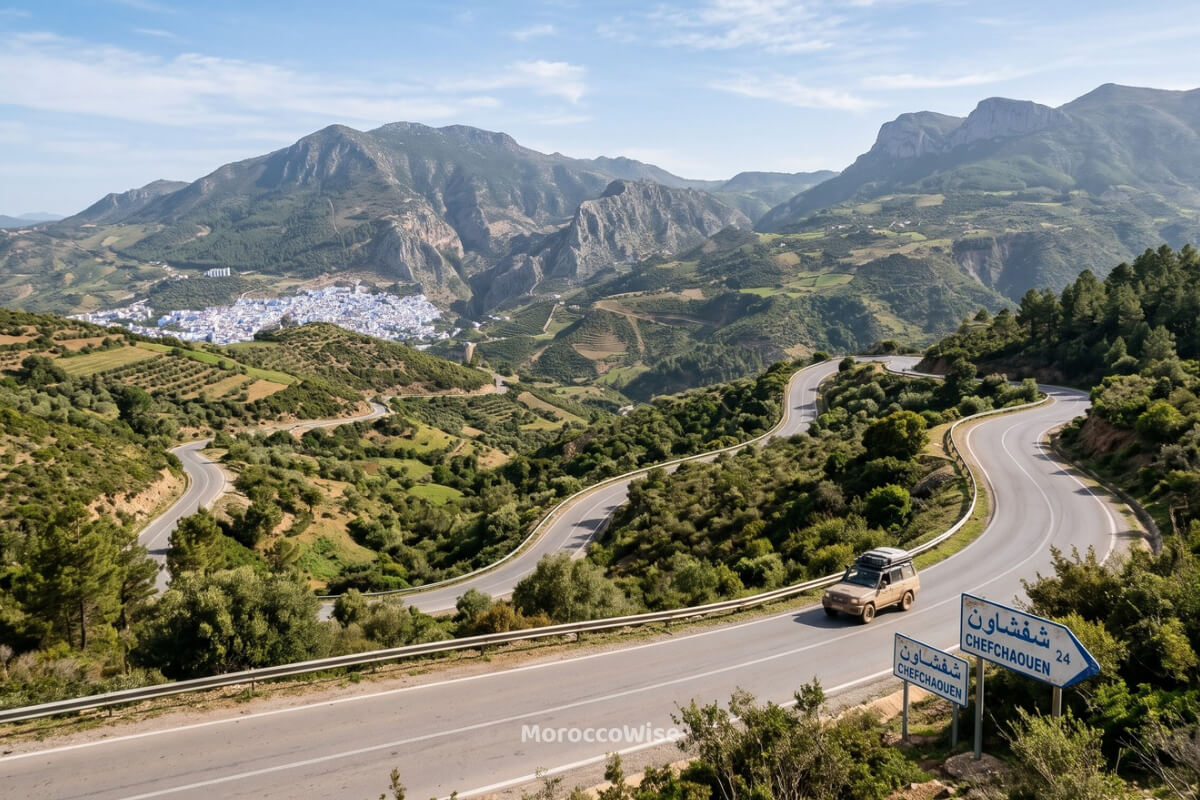
Let's make one thing absolutely clear: Chefchaouen has no airport and no railway station. You must reach the city by road, usually from Tangier or Fes.
1. Getting to Chefchaouen from Tangier
Tangier is the most convenient gateway. The road journey is approximately 2.5 hours by direct car. You can take the CTM Bus (the most practical choice for independent travellers), a shared Grand Taxi, or hire a Private Transfer.
2. How to Get to Chefchaouen from Fes
The journey from Fes is longer. The driving time is approximately 3.5–4 hours over winding mountain roads. CTM bus services generally take around 4.5–5 hours. Our advice: Book your CTM coach seat several days ahead during the summer.
Is a Day Trip from Fes Worth It?
We strongly advise against treating Chefchaouen as a rushed day trip from Fes. A return journey means seven to eight hours of driving. You will spend most of your day travelling and arrive at midday when the alleys are most crowded. Stay at least one night, ideally two.
For more transport advice, see our guide to getting around Morocco.
Where to Stay: Navigating the Steep Medina
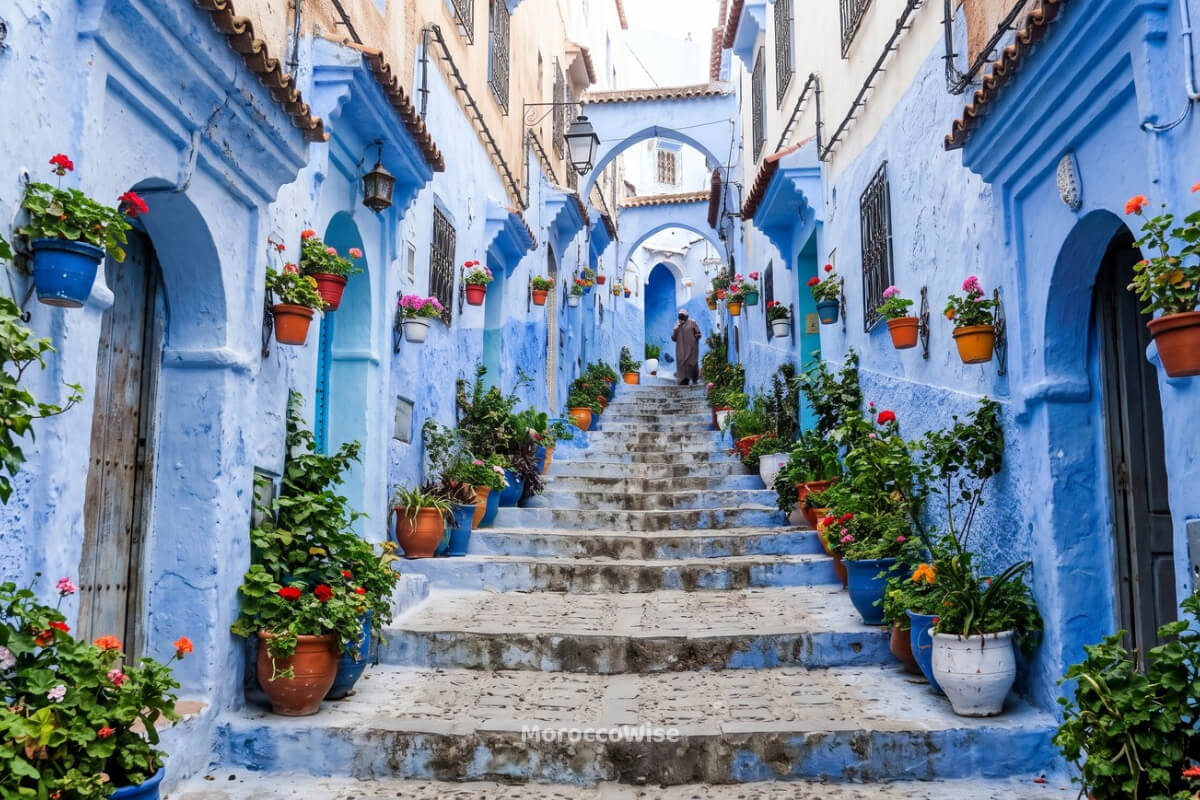
Chefchaouen is built into the steep slopes of the Rif Mountains. Its medina contains narrow passages, uneven paving, and streets that climb much more than they appear to on a map.
1. Traditional Medina Guesthouses (Dars)
Staying inside the old medina is the most atmospheric option. However, your accommodation might require climbing several staircases. Ask the property how close the nearest vehicle drop-off point is.
2. Modern Hotels Outside the Medina
Hotels on the outskirts offer easier vehicle access and fewer stairs. This is especially useful for travellers with heavy luggage.
The Golden Rule: Pack Light. Heavy rolling suitcases are highly impractical here. Handcart porters cannot navigate all the steep steps. A soft duffel or backpack makes life considerably easier.
Top Things to Do in Chefchaouen
1. Outa El Hammam Square and the 15th-Century Kasbah
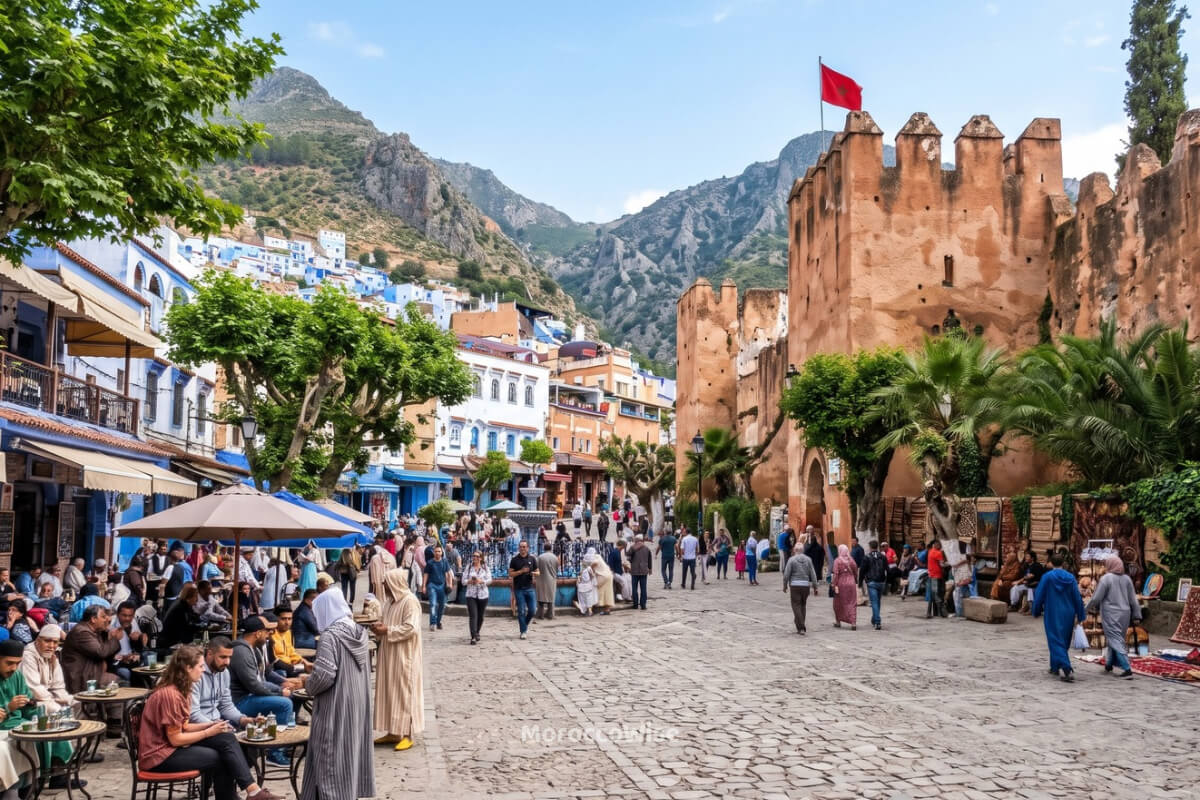
The historical heart of Chefchaouen. The square is surrounded by cafés and the ancient red-clay walls of the Kasbah. Inside the Kasbah, you can explore the gardens and the tower views.
2. Ras El Maa: The Mountain Spring
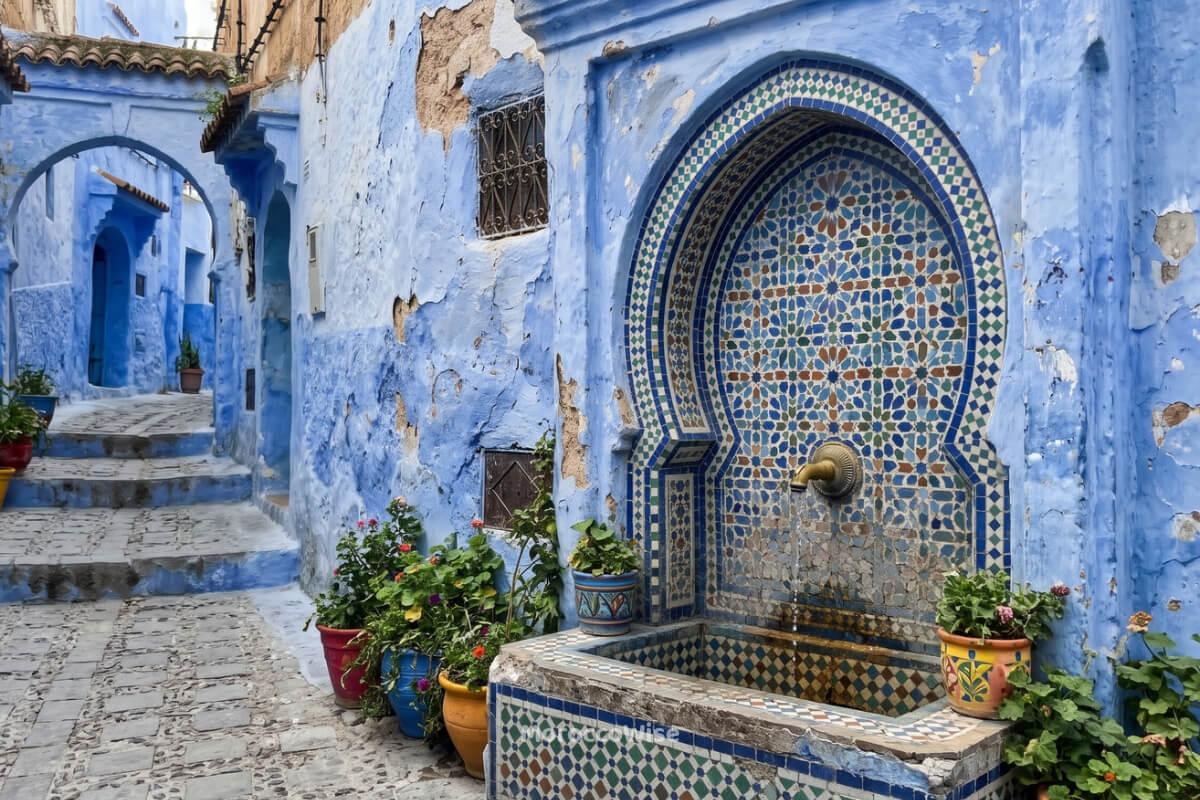
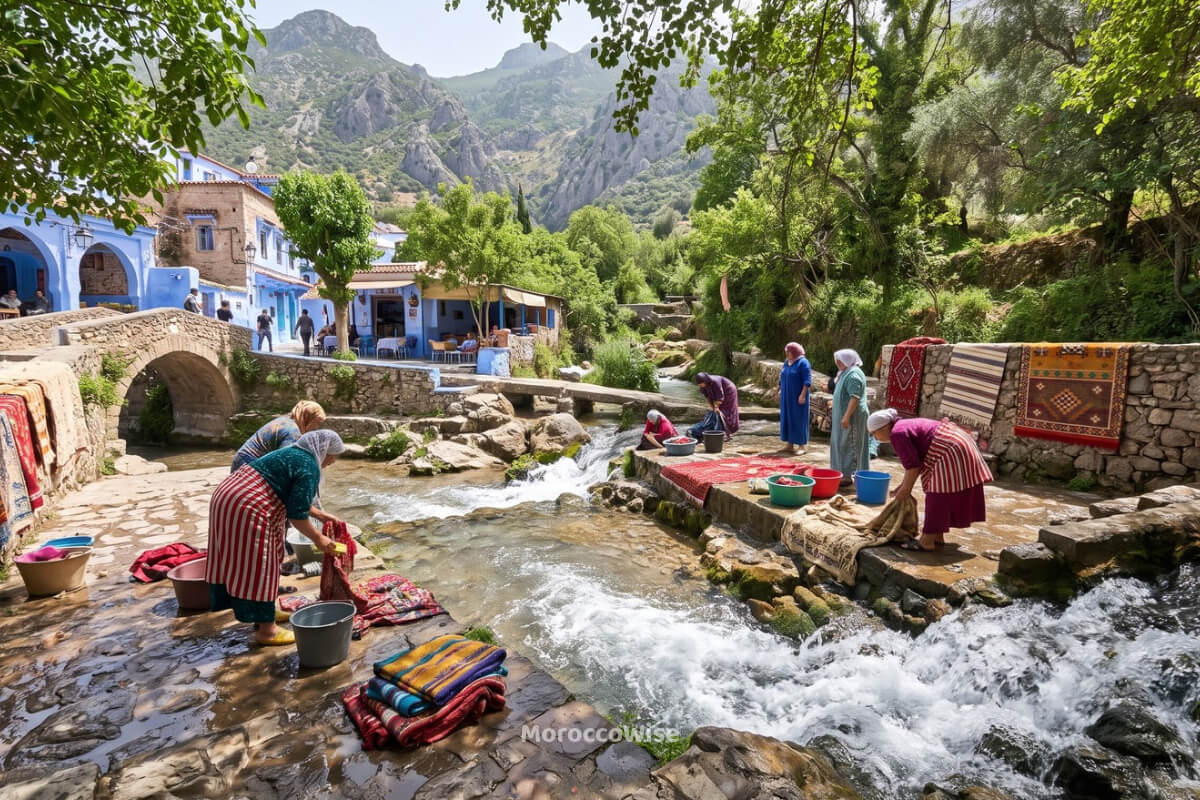
At the eastern edge of the medina, mountain water flows into the city. Depending on the day, you may see local women cleaning traditional textiles in the river. Respect residents and avoid treating this living public space as a photo set.
3. Wander Through the Blue Alleys & Photography Etiquette
The famous Instagram locations often have queues of visitors waiting for pictures. Keep these simple rules in mind:
- Never block a doorway for a photograph.
- Ask explicit permission before photographing local residents (especially women in traditional Rifi clothing and hats).
- Keep your voice down in residential lanes.
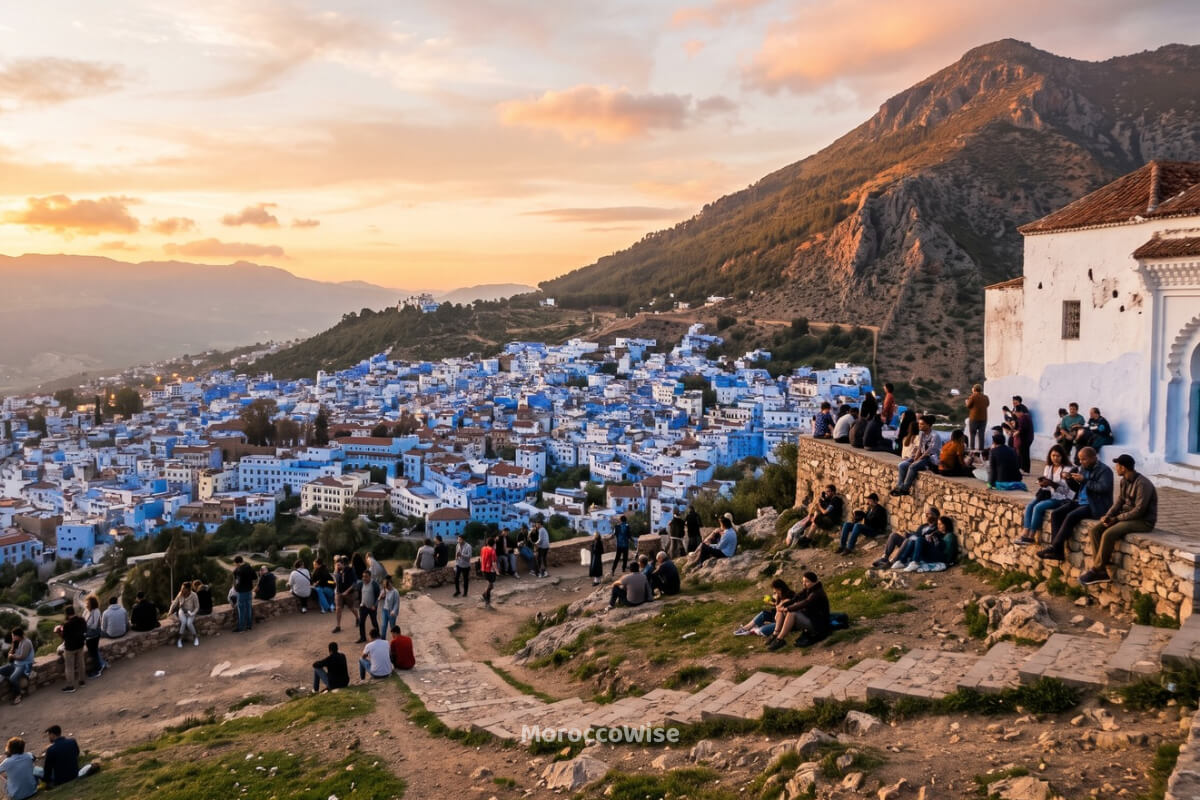
4. The Spanish Mosque: The Ultimate Sunset View
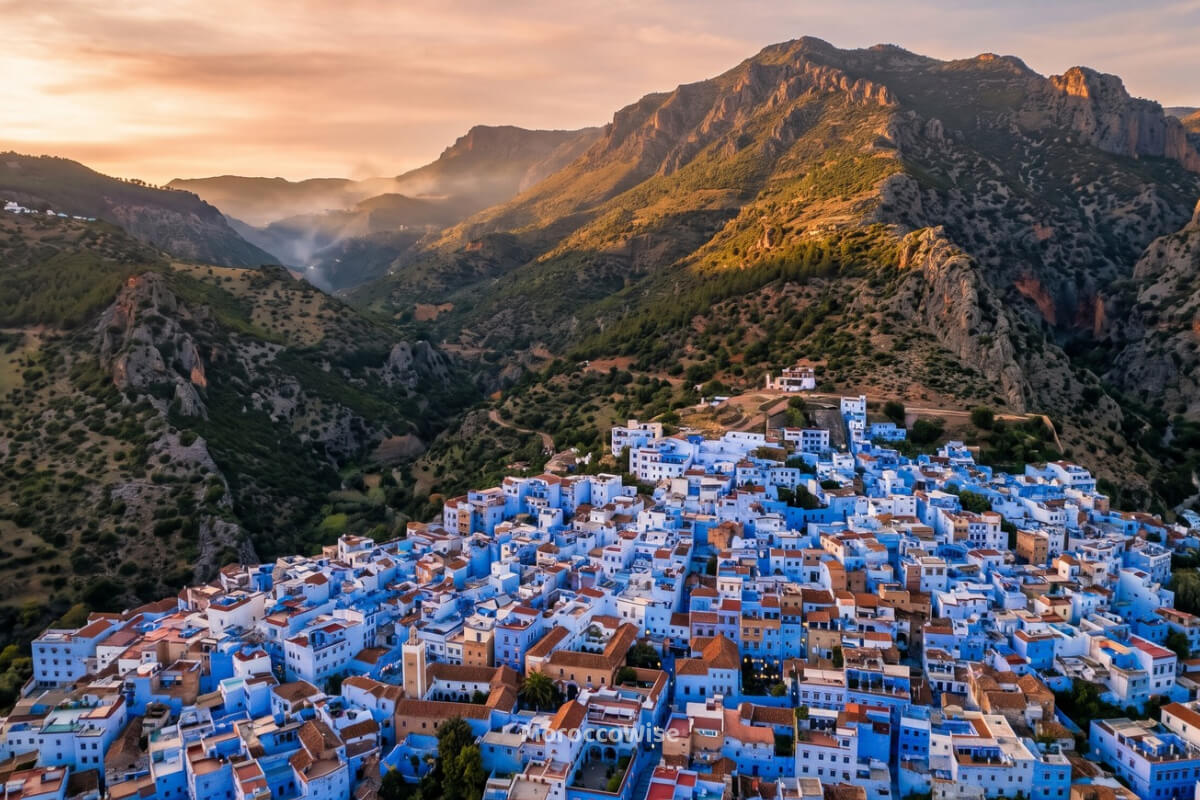
The best panorama of Chefchaouen is found outside the medina. The uphill walk takes 20–30 minutes. At the top, the view opens across the blue rooftops and the Rif Mountains. Sunset is spectacular, but plan your return before it gets completely dark.
Food & Culture: Tasting the Rif Mountains
Chefchaouen's Jibli (mountain) culture influences its food.
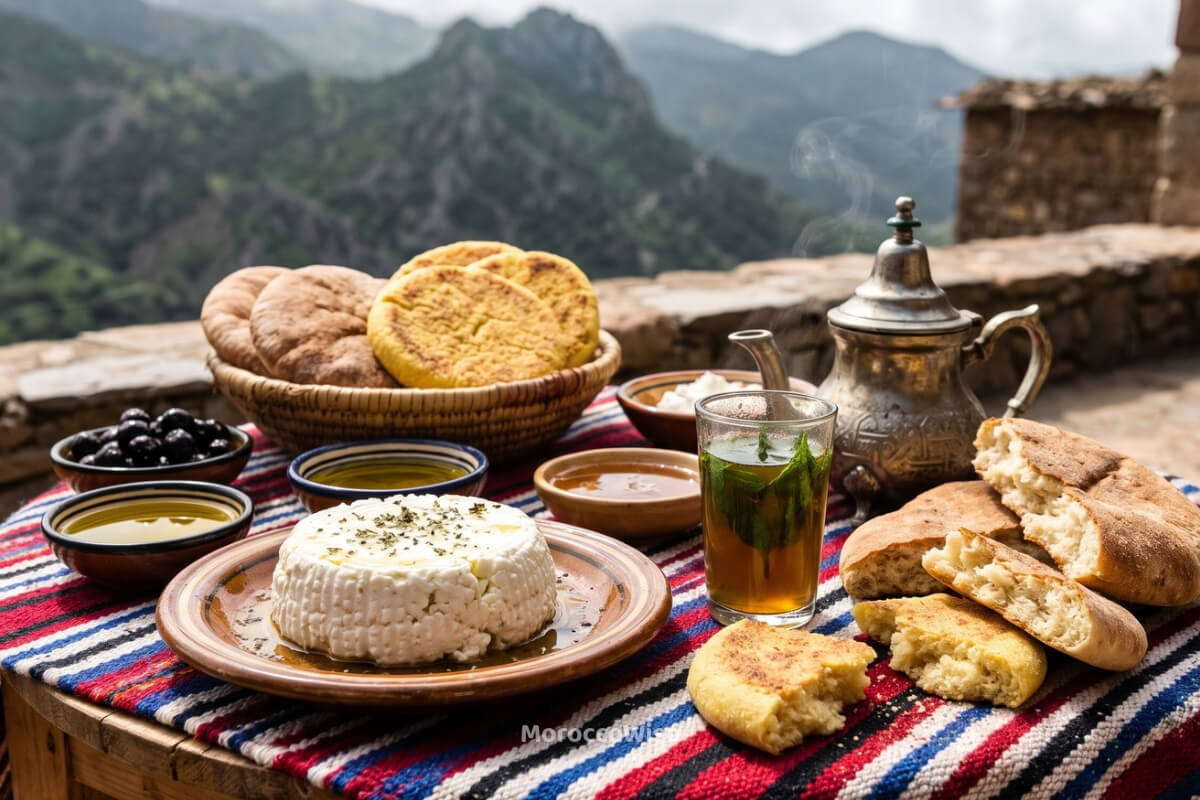
- Jben: A fresh, soft local goat cheese served at breakfast with bread and olive oil.
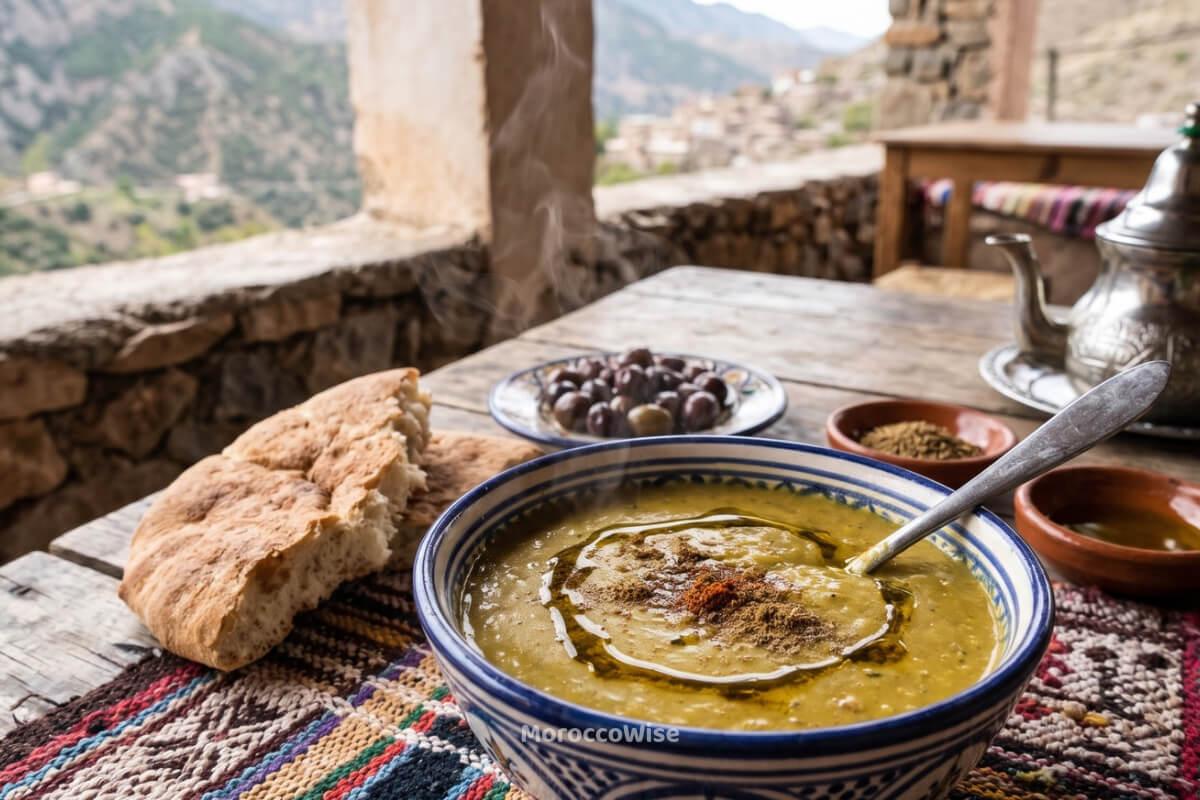
- Baissara: A thick, comforting fava bean soup served warm with olive oil and cumin, perfect for cool mountain mornings.
- Fliou Tea: Mint tea prepared with fliou (pennyroyal), a wild mountain mint with a strong, slightly medicinal herbal aroma.
Practical Safety, Scams, and the Kif Reality
Chefchaouen is exceptionally safe and relaxed. Women traveling solo generally find it easy to navigate without aggressive harassment.
The Hashish (Kif) Reality
The Rif region has a long history of cannabis cultivation. You will likely encounter unsolicited offers for hashish (locally called kif), usually offered quietly by a doorway ("Smoke?" or "Hashish?").
Do not panic, but do not engage. A simple, polite response is enough: "La, shukran" (No, thank you). Say it calmly with a smile and keep walking. One clear refusal is almost always enough. Cannabis remains illegal in Morocco for recreational use, and there are frequent police checkpoints on the roads out of the Rif. Do not buy it, do not carry it, and never carry a package for someone else.
For a wider understanding of tourist issues, read our guide to common scams in Morocco.
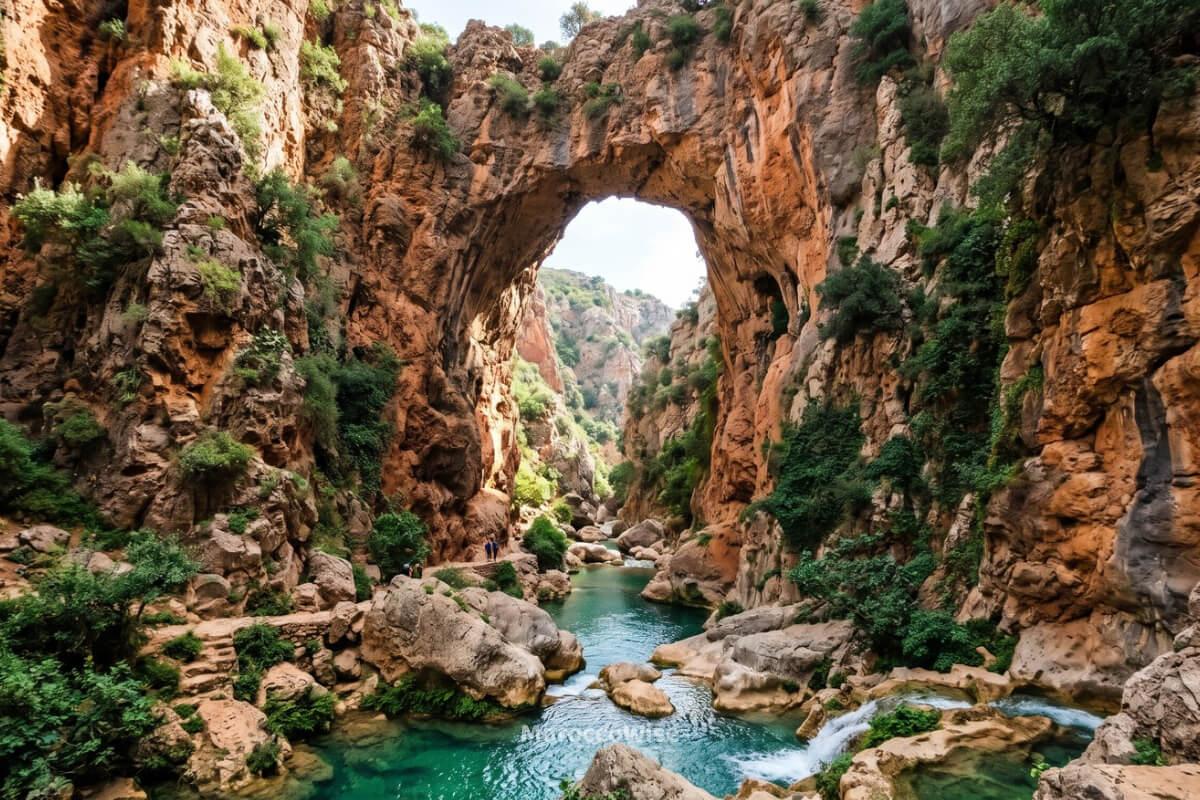
Beyond the Blue: Hiking to Akchour Waterfalls
Located 45 minutes from Chefchaouen in Talassemtane National Park, Akchour is the best argument for staying a second night.
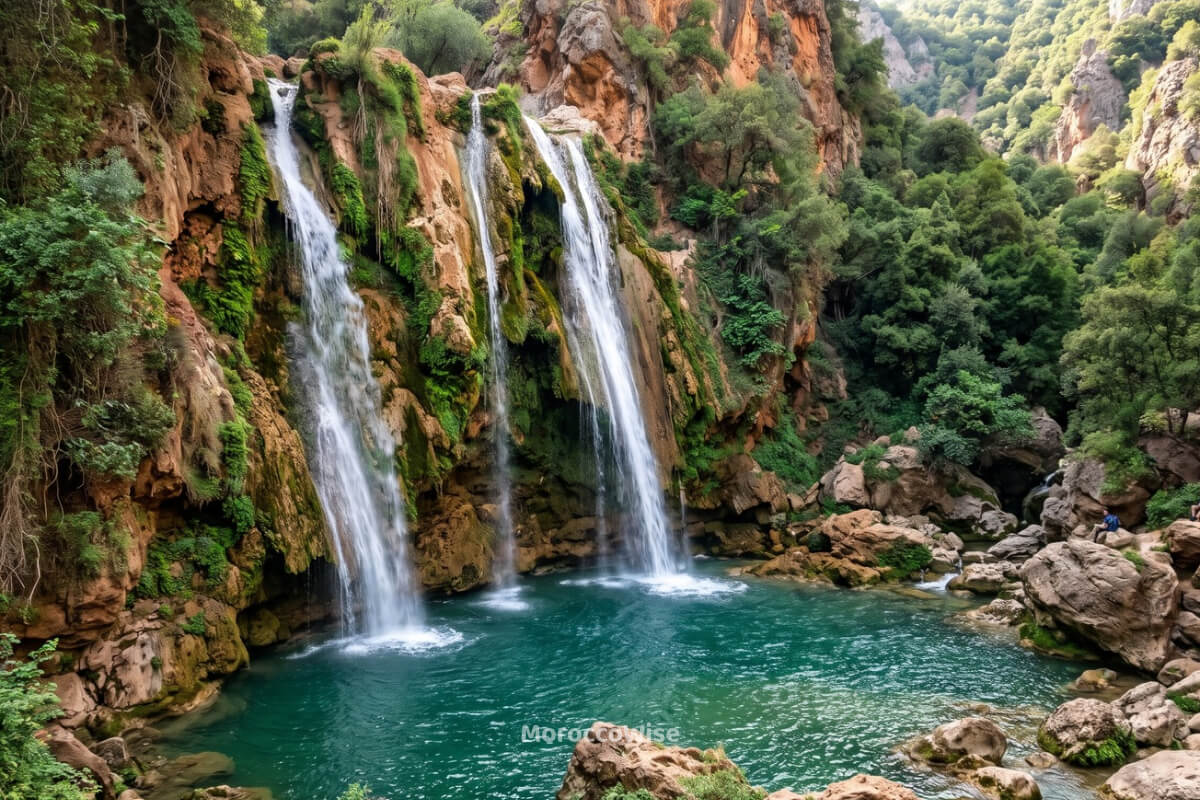
- God's Bridge (Pont de Dieu): A huge natural rock arch spanning a gorge above the river. The hike takes roughly 1.5 hours each way and offers stunning views.
- The Grand Cascade: A longer, rougher trail (4–5 hours round trip) leading deep into the valley toward a large waterfall where locals swim in the summer.
Wear proper shoes with grip, as the rocks near the water can be incredibly slippery.
The Perfect 2-Day Chefchaouen Itinerary
| Time | Day 1: The Blue Medina & Sunset | Day 2: The Akchour Hike |
|---|---|---|
| Morning | Arrive early, drop bags, explore Outa el Hammam & the Kasbah. | Take an early grand taxi to Akchour to beat the midday heat. |
| Afternoon | Eat Baissara for lunch, then wander the quiet blue alleys. | Hike to God's Bridge or the Grand Cascade; Riverside café lunch. |
| Sunset | Visit Ras El Maa, then hike up to the Spanish Mosque. | Return to Chefchaouen to rest and shower. |
| Evening | Rooftop dinner and mint tea with Fliou. | Last stroll for souvenirs and woven Rifi blankets. |
Frequently Asked Questions (FAQ)
Can I do a day trip from Fes to Chefchaouen?
You can, but it means about eight hours on the road for just a few hours in town. You will miss the quiet early morning and sunset hours when the town is at its best. Stay at least one night.
How many days do I need?
Two days is ideal: one for the medina and a sunset at the Spanish Mosque, and one for the Akchour hike.
Is there an airport or train station in Chefchaouen?
No. Most visitors arrive through Tangier or Fes, which both have airports and train stations. From there, take a CTM bus, a grand taxi, or book a private transfer.
Official and Practical Reference Links
For bus schedules and official tourism updates, consult these authoritative sources before your trip: