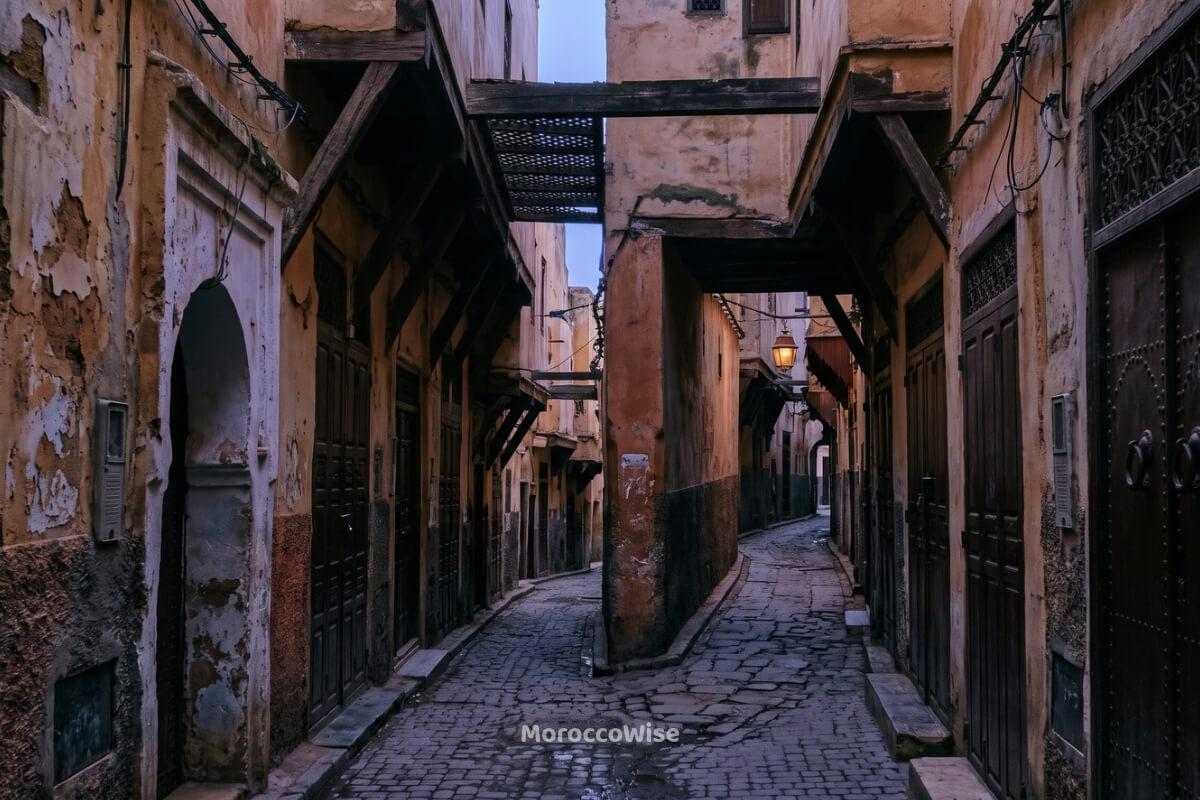
There are few places in Morocco that make you feel as though you have stepped several centuries backwards quite like Fes. Follow the sound of copper being hammered in a traditional workshop, catch the smell of cedarwood and freshly ground spices drifting through a narrow passage, and watch a donkey carrying an impossible-looking load disappear around a medieval corner.
This fes travel guide is designed to help you experience the city's extraordinary history without falling into the usual tourist traps. Whether you are planning your first trip to Morocco or returning to discover somewhere beyond Marrakech, Fes offers a cultural experience that rewards curiosity and patience.
Quick Facts: Fes at a Glance
| Category | What You Need to Know |
|---|---|
| Best time to visit | March–May and September–November |
| Ideal duration | 3 full days |
| Airport | Fes-Saïss International Airport (FEZ) |
| Currency | Moroccan Dirham (MAD) |
| Main attraction | Fes el-Bali Medina (World's largest car-free zone) |
| Famous experience | Chouara Tanneries |
| Fes vs Marrakech | Fes is older, quieter, and harder to navigate. Marrakech is bigger, louder, and easier. |
Fes at a Glance: Stepping Back in Time (The Reality Check)
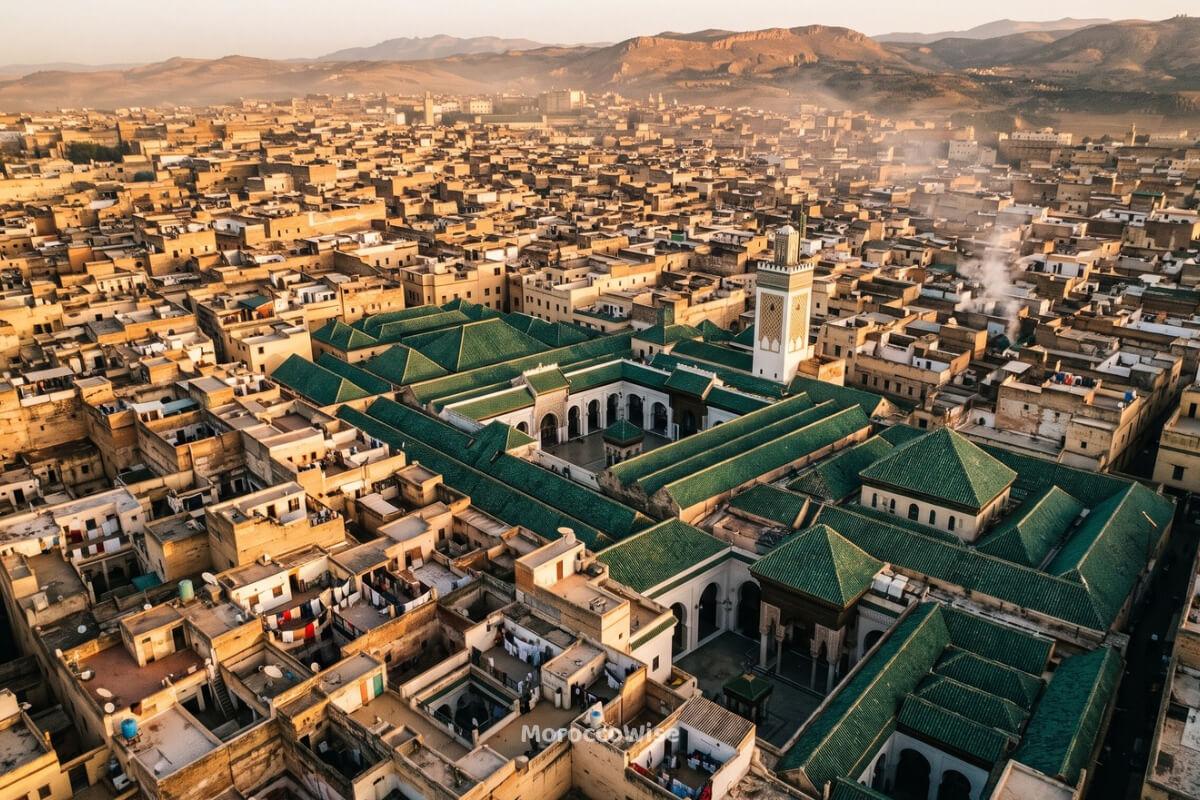
Fes is one of Morocco's four historic imperial cities. UNESCO recognizes its medina as an outstanding example of a medieval Islamic city. However, modern Fes is not one uniform historic district. It is helpful to understand its three main areas before arriving.
| Area | Era | What it feels like | Why you go |
|---|---|---|---|
| Fes el-Bali | 9th century | Walled medina, ~9,000 alleys, strictly no cars | Madrasas, souks, tanneries, riads |
| Fes el-Jdid | 13th century | "New Fes," built by Marinids, wider lanes | Royal Palace gates, the Mellah |
| Ville Nouvelle | French protectorate | Modern boulevards, cafés, banks, train station | Modern hotels, easy taxis |
The "Balak!" Rule: Watch Out for Donkeys
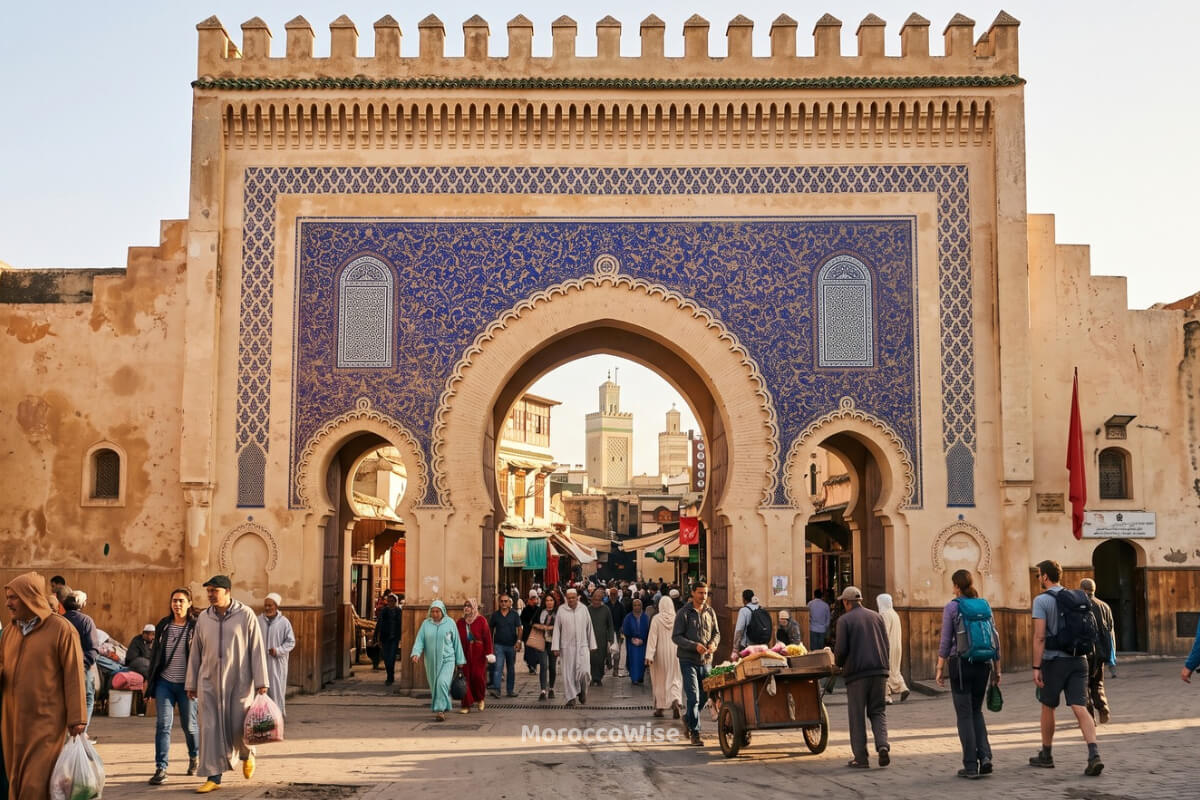
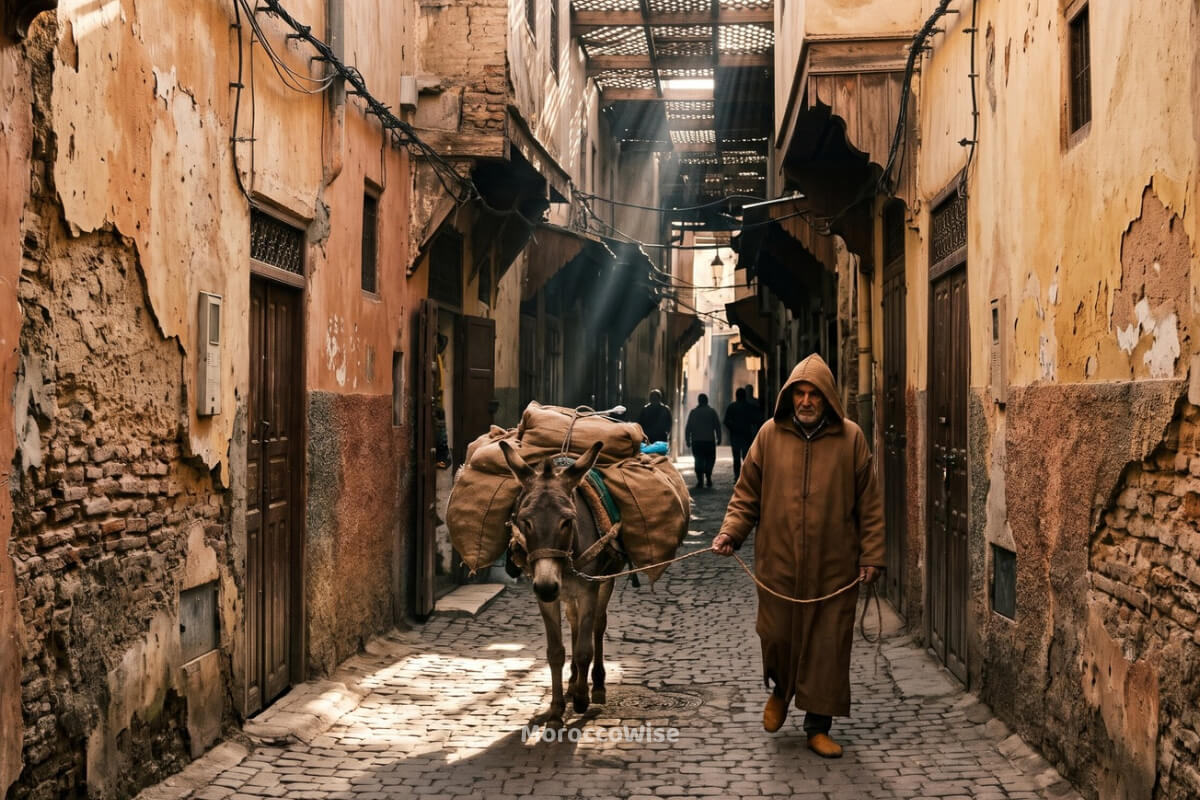
Fes el-Bali is the world's largest car-free urban area. Goods move through the medina using donkeys, mules, and handcarts. When you hear "Balak!" shouted behind you, it is a warning to watch out or move aside for a heavily loaded donkey. Do not stop in the middle of a lane to take a photograph. Move close to a wall and let it pass.
Getting In: Fes-Saïss Airport (FEZ) and Train Logistics
Fes-Saïss International Airport (FEZ) is approximately 15 kilometres south of the city.
| Transport | Indicative Cost | Journey Time | Best For |
|---|---|---|---|
| Bus 16 | Around 4 MAD | ~40 minutes | Light packers on a tight budget |
| Grand Taxi | Around 120–150 MAD | 25–35 minutes | Groups and those with rolling luggage |
Arriving by Train: Gare de Fès sits in the Ville Nouvelle. Outside the station, take a red petit taxi to Bab Bou Jeloud (the Blue Gate) and ask for the meter ("compteur"). Taxis cannot enter the medina; they stop at a gate, and your riad's porter takes over from there.
You can check current routes and schedules on the official ONCF Moroccan Railways website.
Where to Stay: Fes el-Bali Riads vs. Ville Nouvelle Hotels
The Riad Experience
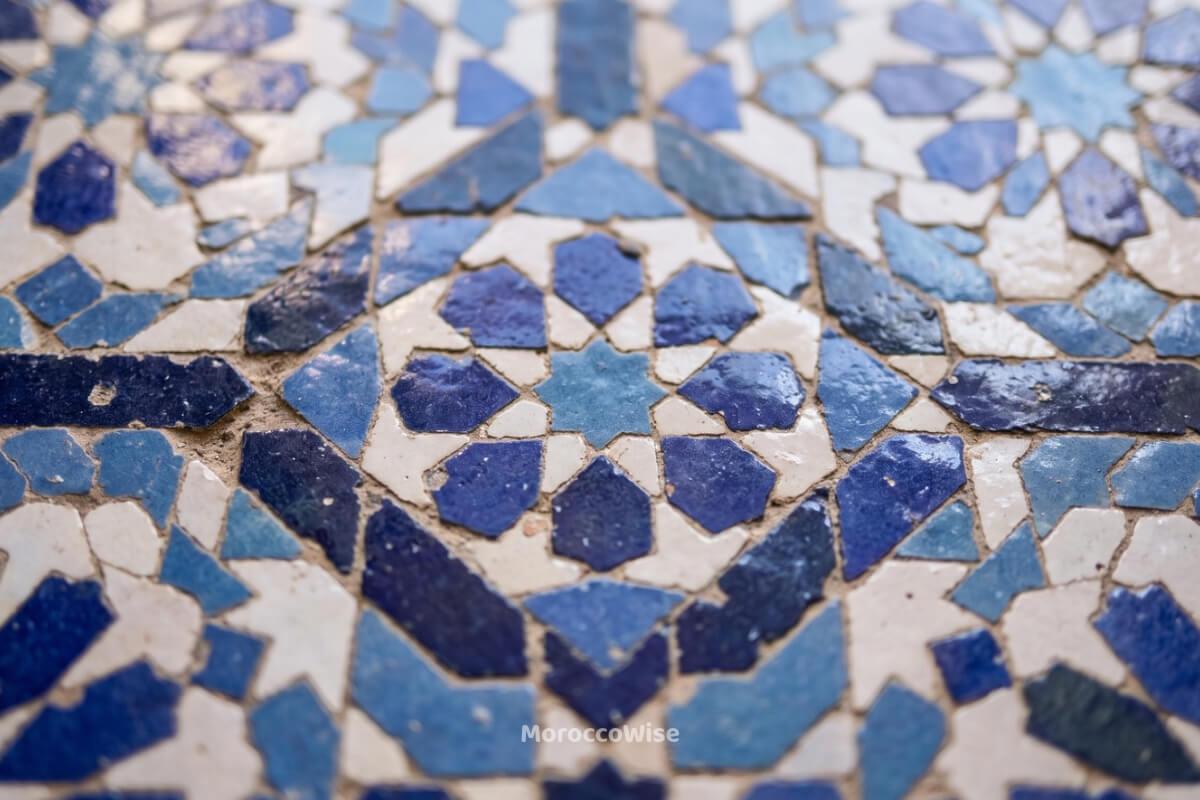
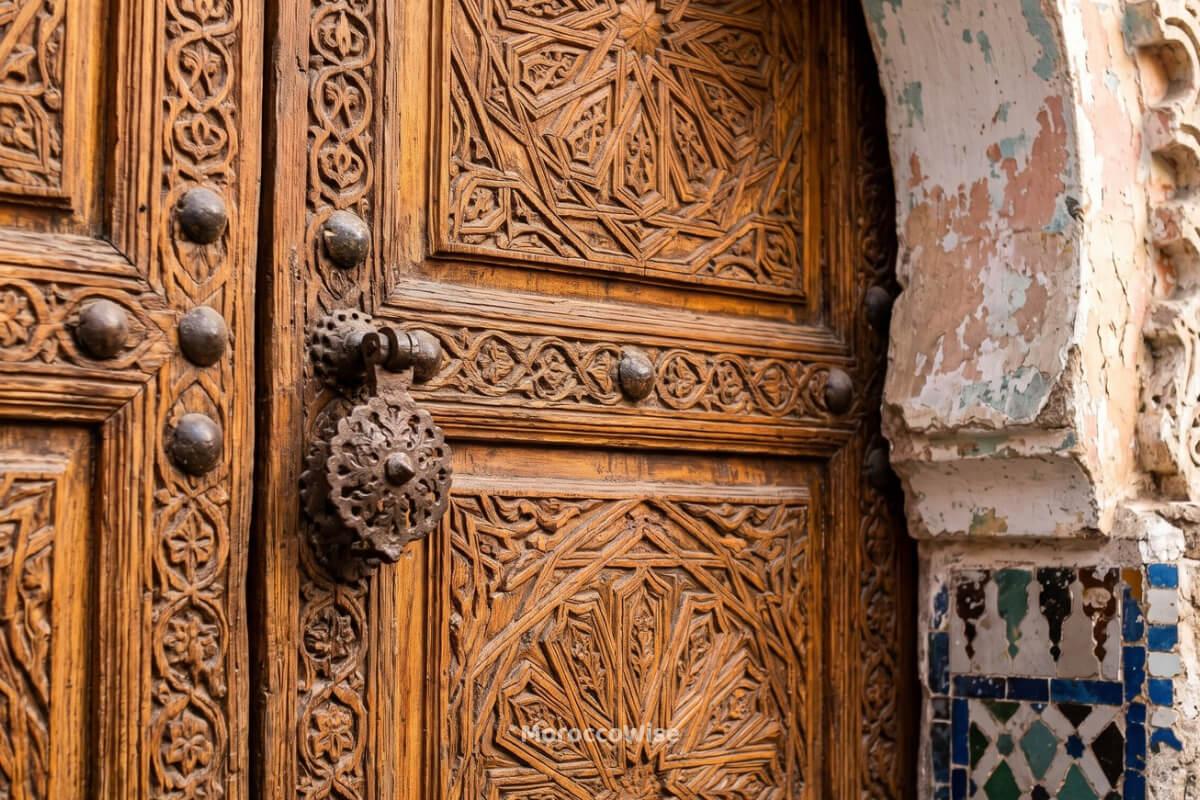
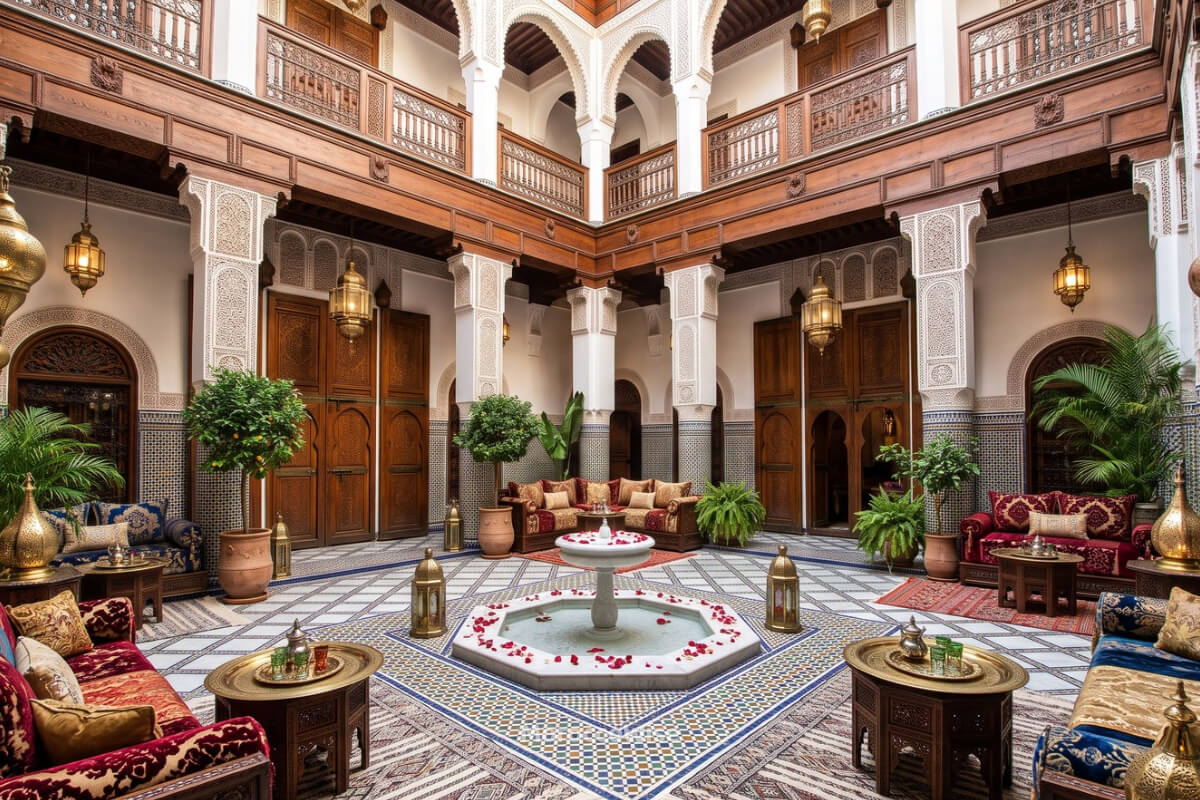
If your budget allows it, choose a traditional riad inside Fes el-Bali. Compared with Marrakech, Fes riads are often especially elaborate, featuring incredibly detailed geometric zellige tilework, carved wooden ceilings, and peaceful interior courtyards.
The Luggage Problem: Porters Are Your Friends
Your taxi might leave you at Bab Bou Jeloud, but your riad could be a 15-minute walk through a maze of narrow, cobbled passages. Ask your riad to arrange a luggage porter (kerrassa). They will meet you at the gate with a handcart. Agree on the price before the service begins (usually 20-30 MAD).
MoroccoWise tip: Choose a riad near a main gate (Bab). A riad deep inside the maze might look wonderful online, but every arrival means a long walk and every late return means navigating dark lanes.
The 10 Must-See Attractions in Fes
1. Bab Bou Jeloud (The Blue Gate)
The iconic western entrance to Fes el-Bali. It is tiled blue on the outside and green on the medina side.
2. Chouara Tanneries
The undisputed icon of Fes. You view the vats of natural dyes from surrounding leather shop terraces. We cover how to visit safely below.
3. Bou Inania Madrasa
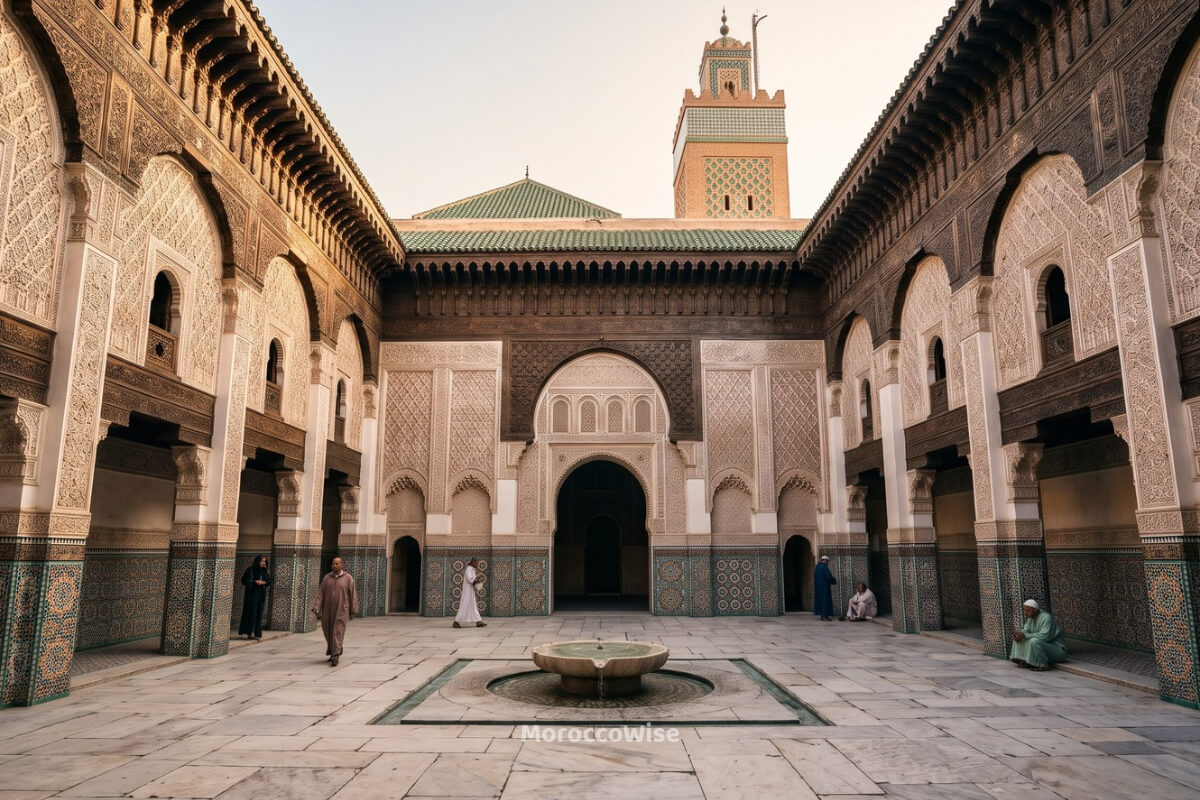
An architectural masterpiece built in the 14th century. Expect intricate zellige mosaics and carved cedarwood. (Entrance: ~20 MAD).
4. Al-Qarawiyyin University and Mosque
Founded in 859 AD by Fatima al-Fihri, it is the world's oldest continuously operating university. Non-Muslims cannot enter, but you can appreciate the stunning courtyard from the open doorways.
5. Al-Attarine Madrasa
A smaller, more intimate 14th-century school near Al-Qarawiyyin, famous for its detailed stucco and cedarwood. (Entrance: ~20 MAD).
6. Nejjarine Museum of Wooden Arts & Crafts
A restored historic funduq (caravanserai) showcasing traditional woodworking. The rooftop terrace offers excellent medina views.
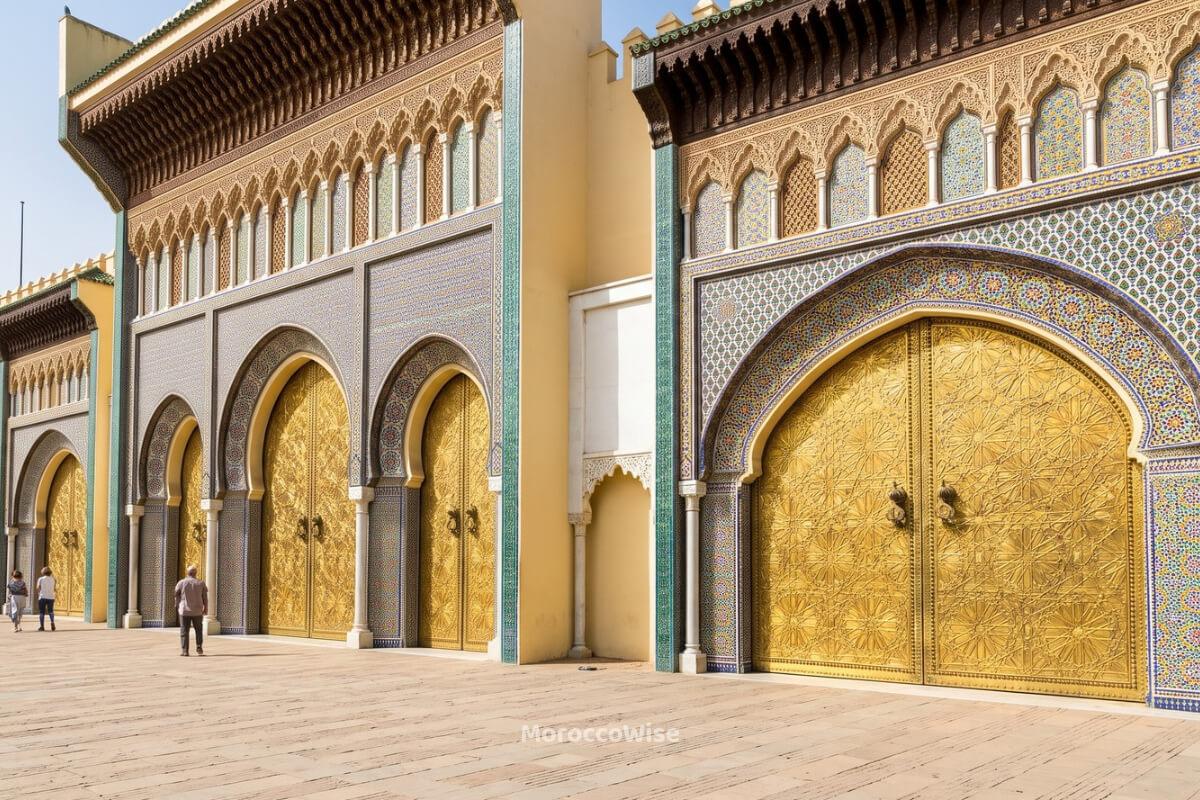
7. The Royal Palace Gates (Dar al-Makhzen)
Located in Fes el-Jdid, the enormous brass doors and intricate tilework make this a top photography location. (The palace interior is closed to the public).
8. The Mellah: Historic Jewish Quarter
The historic Jewish quarter features distinctive architecture with balconies facing the street, contrasting with the inward-facing houses of the older medina.
9. The Artisan Souks
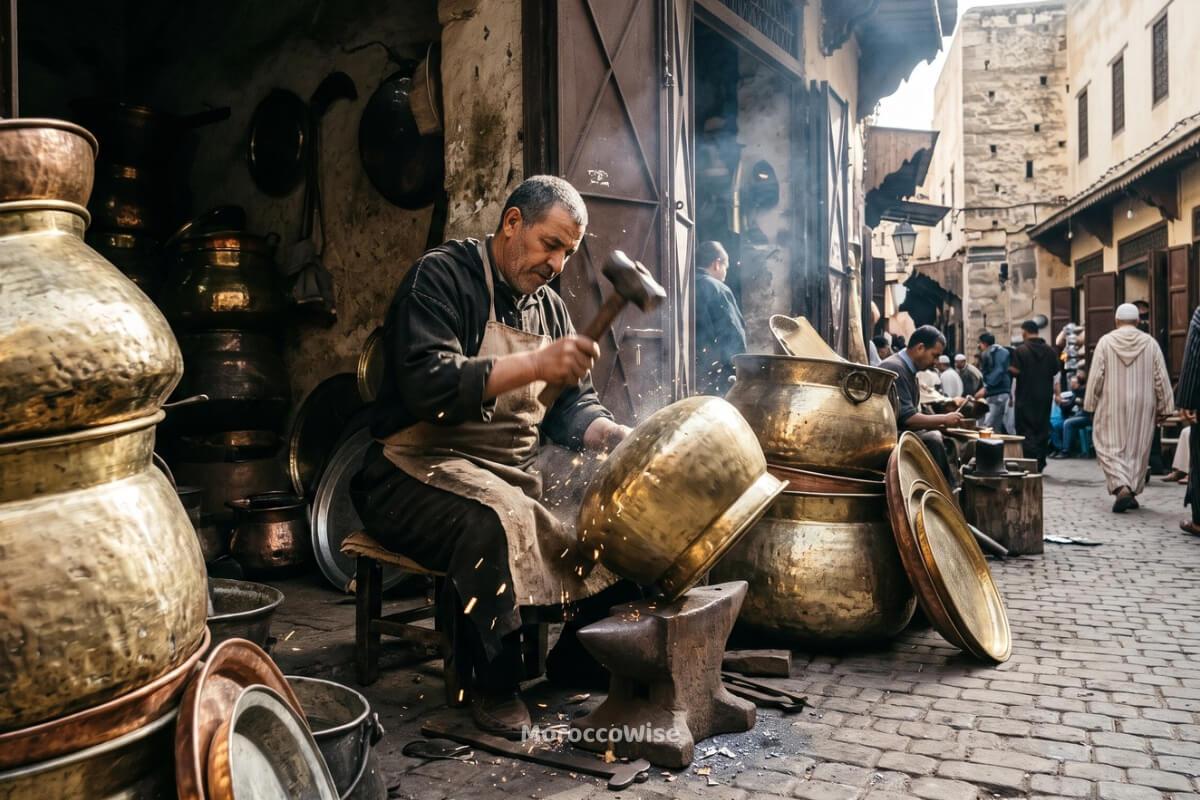
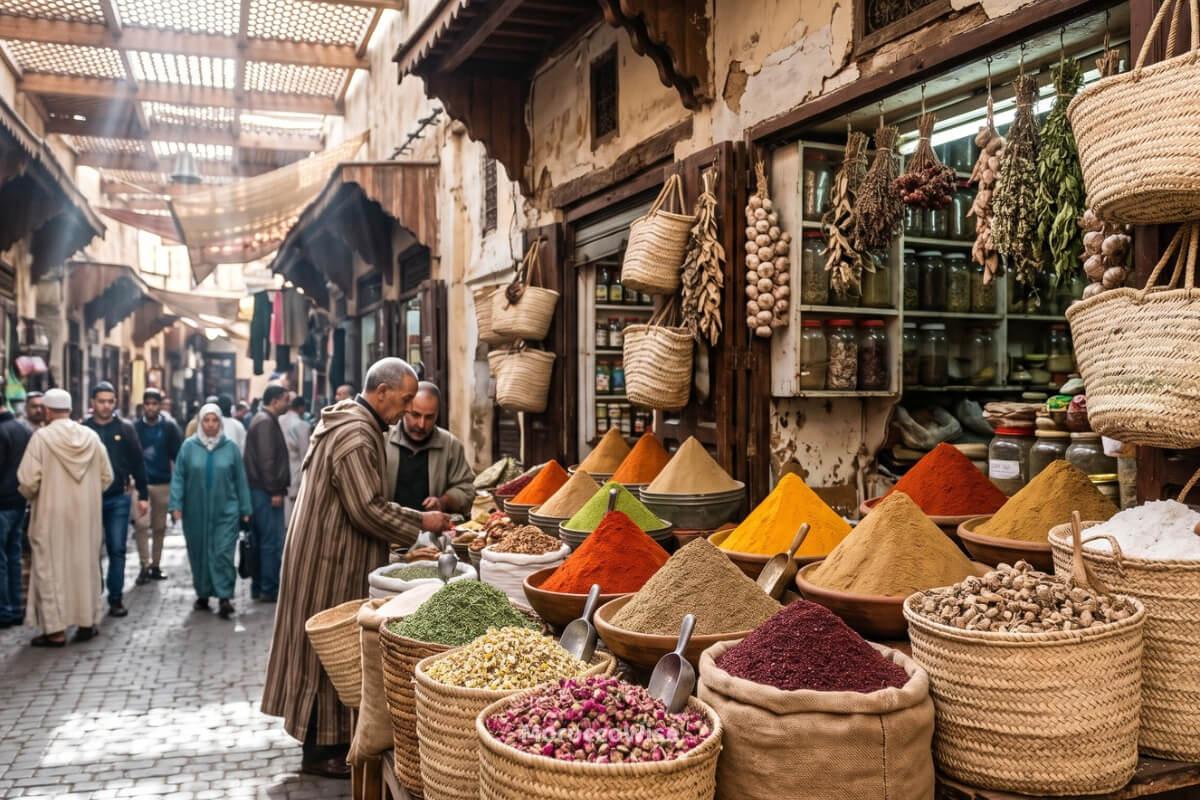
Place Seffarine is famous for coppersmiths hammering brass pots. The Henna Souk is the traditional market for natural cosmetics and ceramics.
10. Borj Nord and the Marinid Tombs
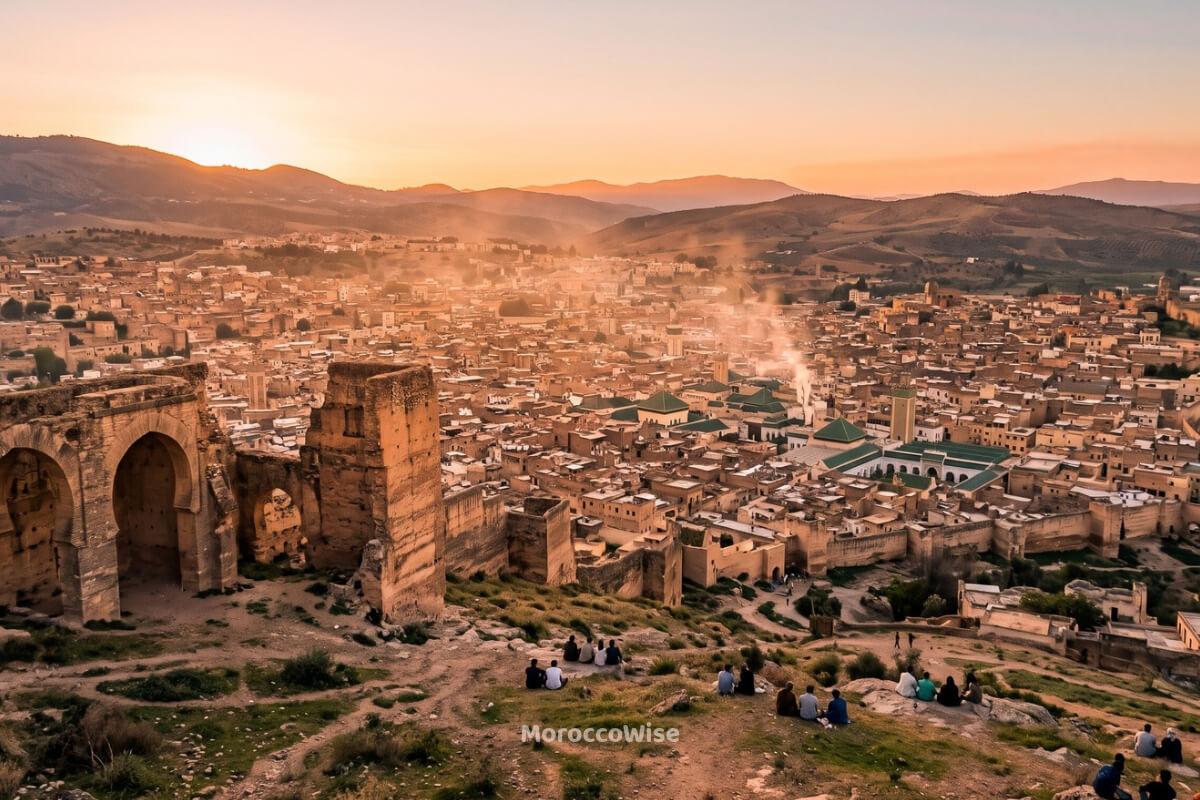
Head up the hill for a panoramic view of Fes, especially beautiful at sunset. Take a taxi up and walk down while there is still light.
The Chouara Tannery: Avoiding Scams and Uncomfortable Sales
The usual visitor experience involves accessing a viewing terrace by walking through a surrounding leather shop.
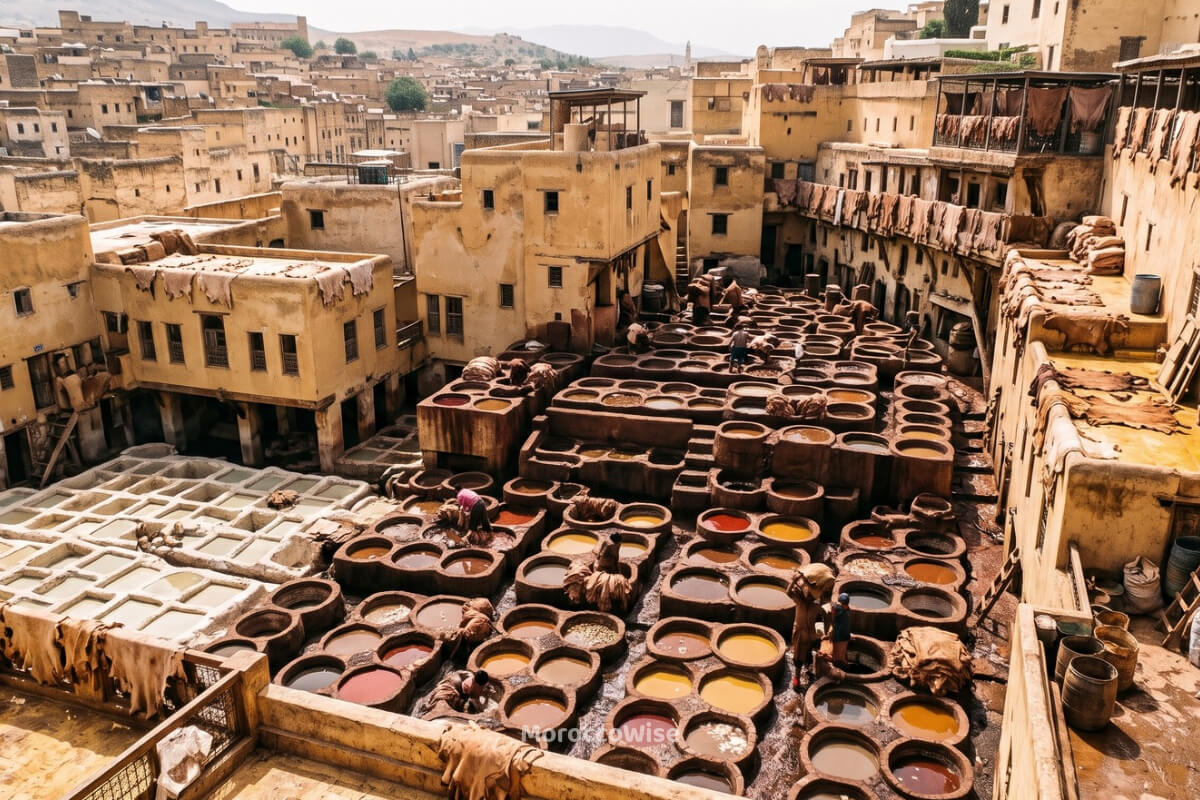
The Smell & The Mint: Traditional tanning mixtures involve pigeon droppings and ammonia. The smell is powerful. You will be handed a sprig of fresh mint at the door to hold near your nose.
The Tip: The mint is free, but the person who guided you to the terrace expects a tip of 10 to 20 MAD. Hand it over on the terrace. That gets the guide paid and leaves you with no further obligation.
Handling the Sales Pressure: As you exit through the showroom, you will be enthusiastically encouraged to buy leather jackets or bags. If you do not want to buy, say "La, shukran" (No, thank you) with a smile and keep moving toward the stairs. Do not counteroffer on an item you do not want, because haggling signals interest.
Food & Culture: Eating in Morocco's Culinary Capital
Fes claims the best cooking in Morocco. Fassi cuisine leans on slow cooking and sweet-and-savoury combinations.
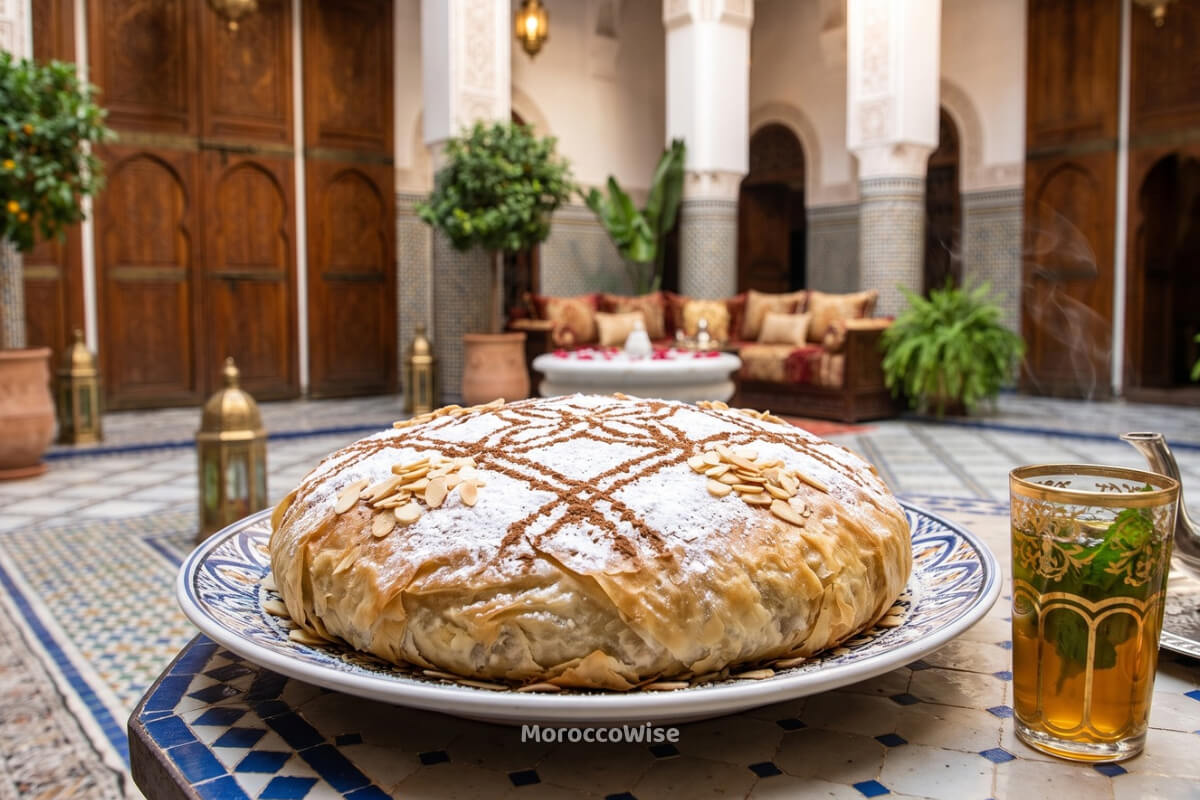
- Pastilla (Bstilla): A delicate pastry made with thin warqa sheets, filled with spiced pigeon or chicken, almonds, and egg, finished with cinnamon and powdered sugar.
- Khli3 (Khlii): Preserved and dried beef or lamb, often fried with eggs at breakfast.
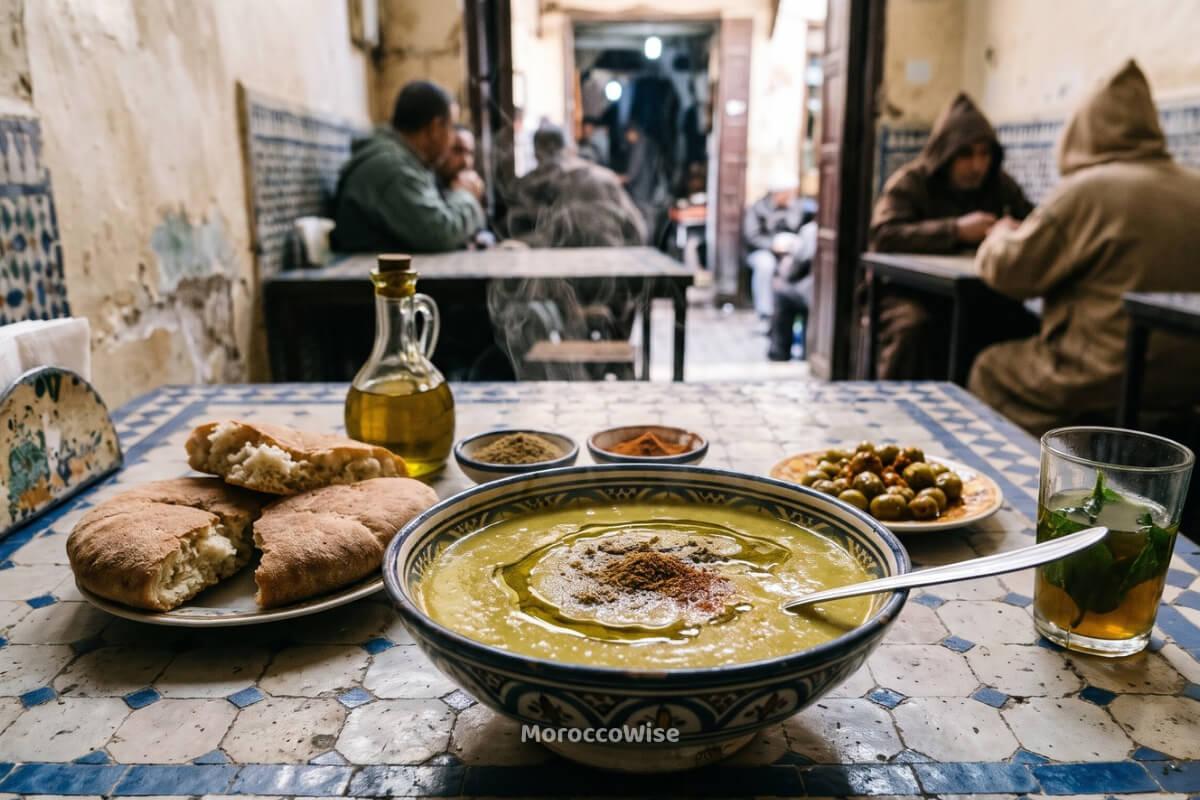
- Bissara: A comforting broad bean soup served with olive oil and cumin.
Where to eat: Street food is excellent (look for busy stalls), but dining at your riad is often the best meal of the trip, as cooks work from traditional family recipes.
Practical Safety, Scams, and Getting Lost
1. Getting Lost Is Normal
Google Maps struggles inside the 9,000 alleys. Download an offline map, save your riad's location, and look for the colored directional signs on walls. If you want out, walking uphill takes you toward the walls and gates; walking downhill takes you toward the busy central lanes.
2. The "Road Is Closed" Scam
A stranger tells you the lane ahead is closed and offers to show you another way. The other way ends at a shop or a demand for money. Check with a shopkeeper or keep walking; most "closed" lanes are open.
3. The False Guide
Unofficial guides wait at gates claiming your riad is closed or they are "going the same way." Official guides carry a badge. Say "La, shukran" and keep walking.
For more detailed advice, read our guide to Common Scams in Morocco.
Beyond Fes: Top Day Trips
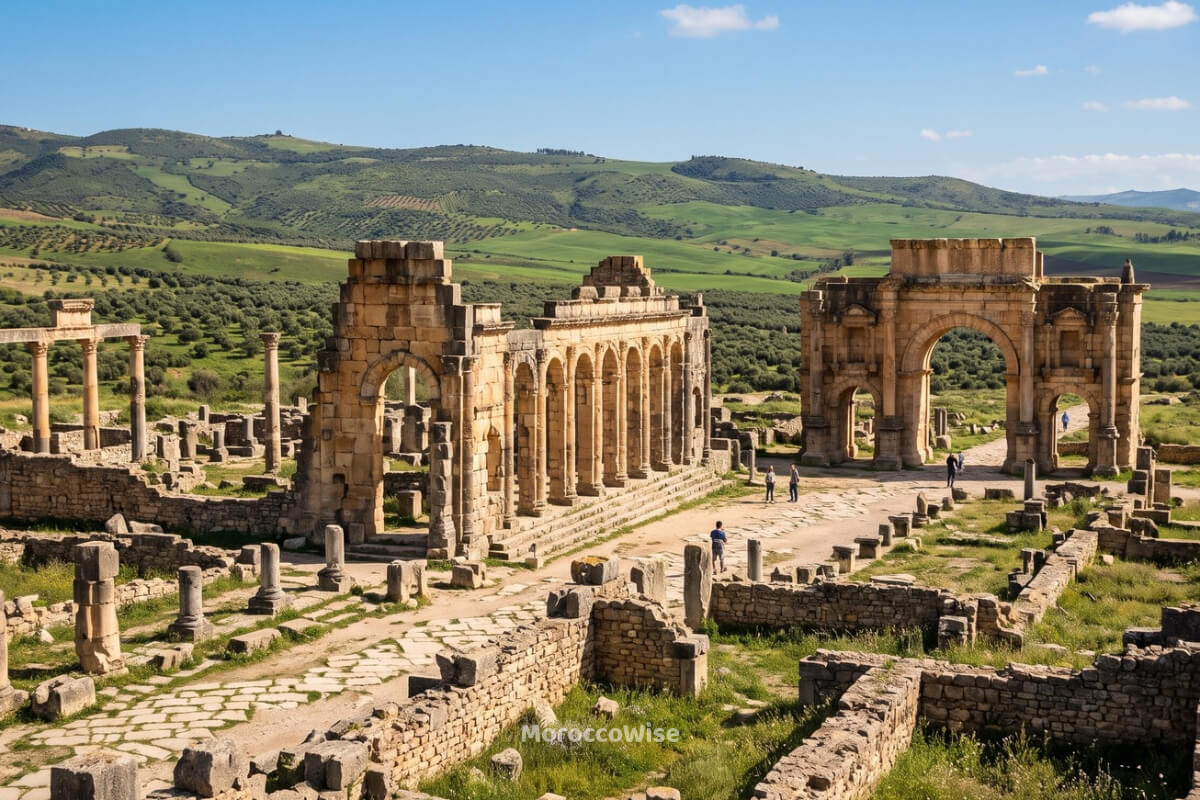
- Volubilis & Moulay Idriss: (1.5 hours away) Volubilis is the best-preserved Roman site in Morocco. Nearby Moulay Idriss is a stunning hilltop pilgrimage town.
- Meknes: (1 hour away) The neighboring imperial city, famous for Bab Mansour and El Hedim Square. Easily reached by train.
- Chefchaouen: The Blue City is a long drive (3.5 to 4 hours each way). Eight hours in a car for a few hours in the blue streets is exhausting. We highly recommend staying overnight rather than treating it as a day trip.
To plan your transport, see our Getting Around Morocco guide.
The Perfect 3-Day Fes Itinerary
| Day | Morning | Afternoon | Evening | Local Tip |
|---|---|---|---|---|
| Day 1: Medina Deep Dive | Meet official guide at Bab Bou Jeloud. See Bou Inania & Al-Attarine. | Nejjarine Museum, Seffarine Square, Qarawiyyin doorways. | Dinner at your riad. | Hire an official guide for your first half-day to learn the maze. |
| Day 2: Tanneries & Palaces | Chouara Tannery terrace and Henna souk. | Fes el-Jdid: Royal Palace gates & the Mellah. | Sunset at Borj Nord / Merenid Tombs. | Keep 10–20 MAD coins ready for the tannery tip. |
| Day 3: History Day Trip | Drive to Volubilis Roman ruins. | Stop at Moulay Idriss; explore Meknes. | Relaxed final Fassi dinner. | Book a driver through your riad to save time. |
Frequently Asked Questions (FAQ)
Is Fes safe at night?
The Ville Nouvelle and main lanes near Bab Bou Jeloud stay busy and safe. Deep inside the medina, many alleys empty out and are poorly lit. Be back at your riad before it gets too quiet, or ask your host for the safest walking route.
Do I need an official guide for Fes?
You don't need one for the whole stay, but hiring a licensed guide for the first morning is highly recommended. It removes the pressure from false guides and helps you understand the layout.
Fes or Marrakech for a first-timer?
Marrakech is easier, louder, and has more tourist infrastructure. Fes is older, less polished, and harder to navigate. If you want an easy start, choose Marrakech. If you want raw medieval history, choose Fes.
Official and Practical Reference Links
For train schedules, official history, and tourism updates, consult these authoritative sources before your trip: