
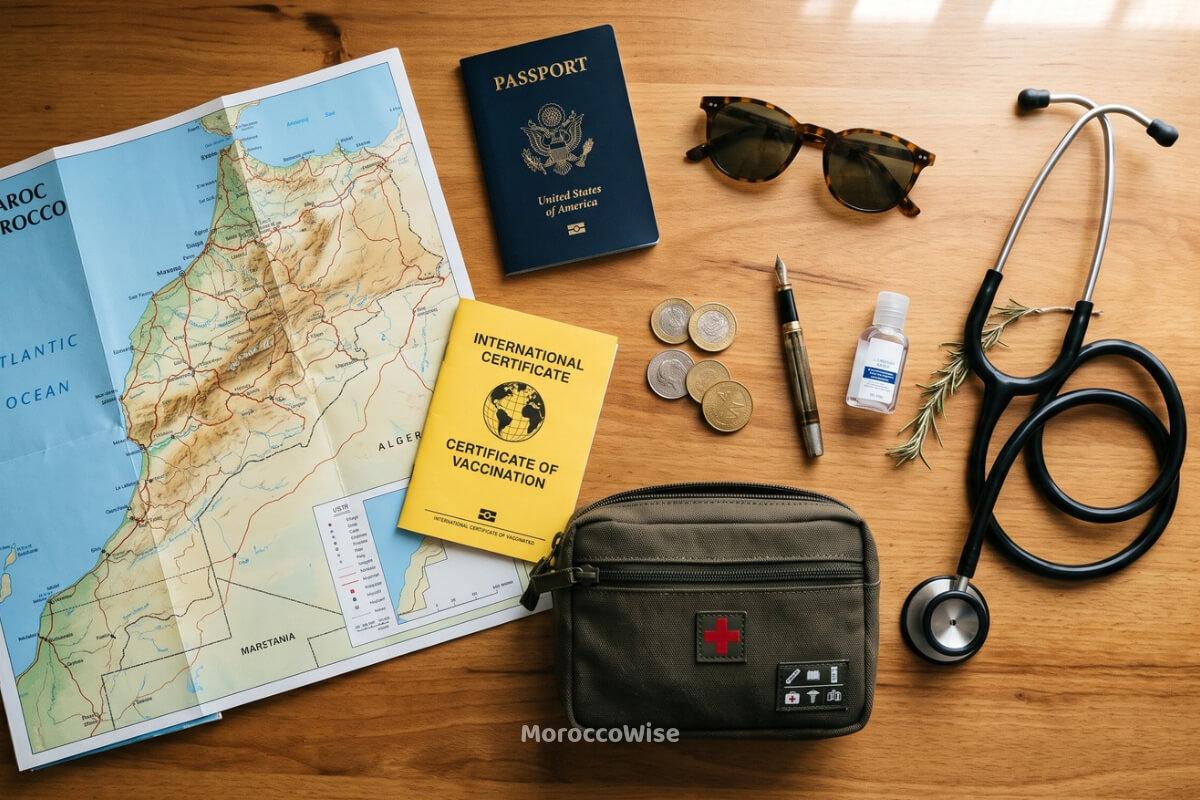
If you are planning a North African adventure and asking yourself, "Do I need vaccinations for Morocco?", here is the direct answer: No vaccinations are legally mandatory to enter Morocco for travelers arriving from the US, UK, Canada, Europe, or Australia. You will not be asked for a Yellow Fever certificate or proof of COVID-19 immunization at Moroccan border control.
However, "not mandatory for entry" does not mean you should fly without medical preparation. Global public health authorities—including the CDC, the UK's Travel Health Pro (NaTHNaC), and NHS Inform—strongly recommend that all travelers to Morocco are up to date on routine adult boosters (especially Tetanus, Diphtheria, and Polio) and receive specific travel vaccines against Hepatitis A and Typhoid, which spread through contaminated food and water. Depending on your itinerary, a Rabies or Hepatitis B vaccine may also be advised.
This comprehensive 2027 travel health guide breaks down exactly what travel vaccines you really need, how long travel vaccines last, when to book an appointment at clinics like Boots or Passport Health, and the essential ground-level health precautions to keep you safe from "Marrakech Belly."
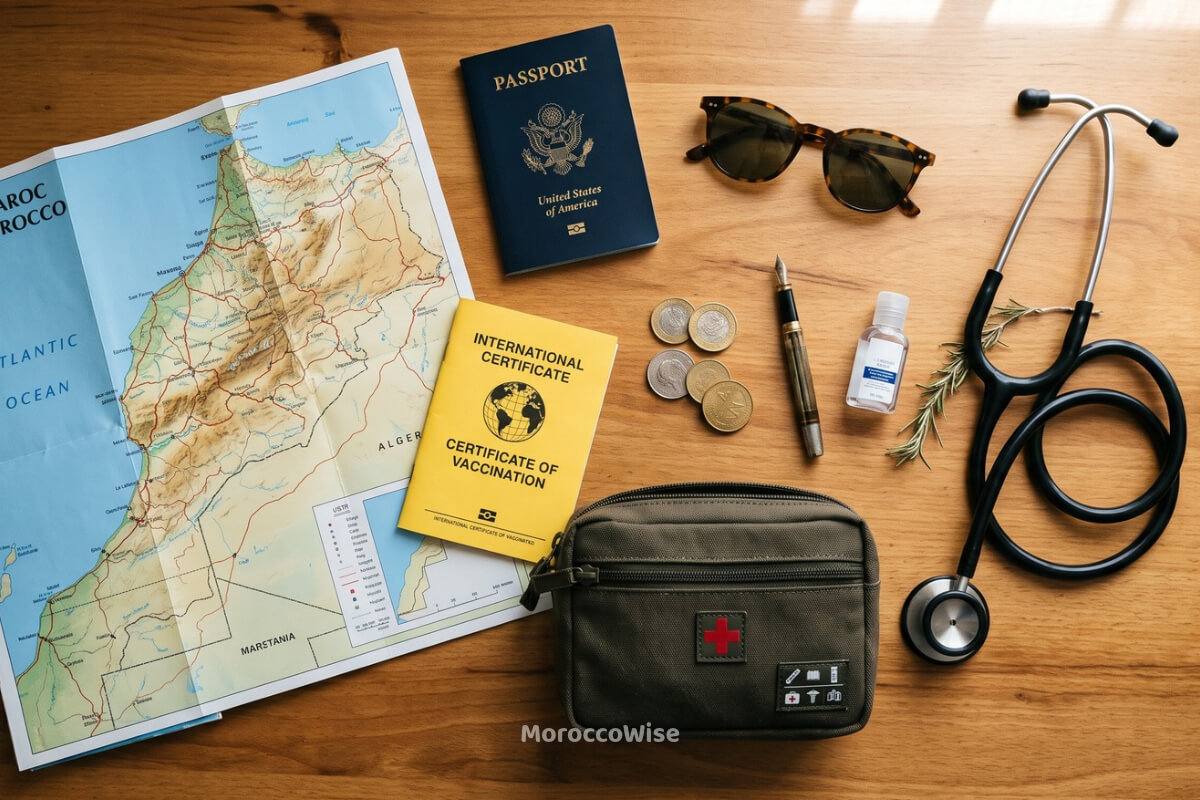
Quick-Answer Matrix: What Travel Vaccines Do I Need for Morocco?
When travelers search "what travel vaccines do I need", the answer depends on whether you are staying in luxury resorts in Marrakech or trekking through remote Berber villages in the High Atlas. Use this quick-reference medical matrix to evaluate your personal risk profile:
| Vaccine Name | Recommended For | How It Spreads | How Long Does the Vaccine Last? |
|---|---|---|---|
| Hepatitis A | Most Travelers (Highly Recommended) | Contaminated food, water, ice, or unwashed produce | 1 year after 1st dose; 20–25+ years after the 6–12 month booster |
| Typhoid | Most Travelers (Especially foodies & rural visitors) | Contaminated food and water | 2–3 years (injectable shot) or 5 years (oral capsules) |
| Tetanus / Diphtheria / Pertussis (Tdap or Td/IPV) | All Travelers (Routine Adult Booster) | Cuts, scrapes, or rusty surfaces (Tetanus); airborne droplets | 10 years (requires a booster every decade as an adult) |
| Rabies (Pre-Exposure) | High-Risk & Long-Stay Travelers (Hikers, cyclists, kids) | Bites, scratches, or licks on broken skin from stray dogs, street cats, or monkeys | 3+ years to lifetime priming (still requires 2 post-exposure shots if bitten, but avoids hard-to-find immunoglobulin) |
| Hepatitis B | Extended Stay & Adventure Travelers | Blood or bodily fluids, unsterile medical/dental gear, tattoos | 20+ years to lifetime after completing the full 3-dose (or Twinrix) series |
| MMR & Polio | All Unvaccinated or Under-Vaccinated Adults | Airborne respiratory droplets / fecal-oral route | Lifetime (MMR); Polio included in the UK 3-in-1 adult booster every 10 years |
| Yellow Fever | Not Required (No risk in Morocco) | Mosquitoes in sub-Saharan Africa / South America | Lifetime (Not needed for Morocco) |
(Checking your entry paperwork too? Read our updated guide on Do I Need a Visa to Visit Morocco?).
What Vaccines Do You Really Need for a Standard Morocco Trip?
When patients ask a travel clinician, "What vaccines do you really need for a 7- to 10-day holiday in Morocco?", medical guidance focuses on three core pillars:
1. Hepatitis A (Top Priority)
If you only get one travel-specific shot before boarding your flight, make it Hepatitis A. Even travelers staying in five-star hotels in Marrakech or Tangier eat out at local restaurants, drink fresh juices, or handle buffets. Hepatitis A is a viral liver infection transmitted through microscopic food or water contamination.
- The Twinrix Option: Many clinics offer Twinrix, a combined vaccine that protects against both Hepatitis A and Hepatitis B in a single course.
- Timing: A single dose of the standard Hepatitis A vaccine given at least 2 weeks before departure provides high protection for your trip. Even if you are leaving in a few days, travel nurses still advise getting the shot, as it begins building immunity rapidly.
2. Typhoid Fever
Typhoid is a serious bacterial infection (Salmonella Typhi) linked to food and water hygiene. While the risk is lower in upscale tourist resorts, most visitors to Morocco want to experience authentic street food in Jemaa el-Fnaa, dine in small medina cafés in Fes, or visit mountain villages.
- Forms Available: You can get a single-dose injectable vaccine (ideally 2 weeks before travel) or take an oral vaccine consisting of 4 capsules taken every other day (completed at least 1 week before travel).
3. Tetanus Booster (The Forgotten Essential)
Whether you trip on steep cobblestones in Chefchaouen, scrape your leg on a rusty fence during a Sahara camp excursion, or get a minor cut in the souks, Tetanus bacteria live in soil and dust worldwide. If it has been more than 10 years since your last Tetanus shot, you need a booster before you fly.

Adult Immunization Guide: Boosters, Over-30s & Core Schedules
Many adults assume the childhood shots they received in school protect them forever. When researching what vaccinations or health precautions do I need, understanding adult immunity waning is crucial.
What Vaccines Need Boosters as Adults?
If you are looking up what vaccines need boosters as adults or vaccines for adults over 30, check your medical records for the following:
- Tdap / Td (US & Canada) or Revaxis 3-in-1 Td/IPV (UK): In the US, adults need a Tetanus and Diphtheria booster every 10 years. In the UK, the NHS recommends the 3-in-1 booster (Tetanus, Diphtheria, and Polio) for travelers visiting regions where hygiene infrastructure varies, if their last dose was more than 10 years ago.
- MMR (Measles, Mumps, and Rubella): Adults born after 1957 (US) or 1970 (UK) who never had two documented doses of the MMR vaccine—or who only received an early, less-effective measles shot in the late 1960s/1970s—should get an adult MMR booster before international travel.
- Hepatitis A (Second Dose): Your first Hepatitis A shot covers you for 1 year. Returning for your single booster dose 6 to 12 months later locks in immunity for 20 to 25+ years.
- Typhoid: Because immunity fades fast, adults who travel frequently need a Typhoid booster every 2 to 3 years (for the injection) or every 5 years (for the oral vaccine).
What Vaccines Should I Get Yearly?
When asking what vaccines should I get yearly, two respiratory immunizations top the list for travelers:
- Seasonal Influenza (Flu) Shot: Airplanes, busy airport terminals, and crowded tour buses are prime hotspots for flu transmission. Morocco's flu season mirrors the Northern Hemisphere (November through March).
- Updated COVID-19 Booster: While no longer required for entry into Morocco, an annual booster reduces the risk of spending your expensive holiday feverish in bed inside your riad.
What Are the 11 Vaccines Now Recommended for Adults?
Public health bodies like the CDC and WHO maintain a master adult immunization framework. Travelers wondering what are the 11 vaccines now recommended across an adult lifespan should be aware of the full routine roster:
- COVID-19 (Updated seasonal formula)
- Influenza (Yearly flu vaccine)
- Tdap or Td (Tetanus, Diphtheria, Pertussis — booster every 10 years)
- MMR (Measles, Mumps, Rubella — for adults lacking 2 doses)
- Varicella (Chickenpox — for adults with no prior immunity)
- Shingles (Recombinant Zoster / Shingrix) (Recommended for adults aged 50+)
- Pneumococcal (Recommended for adults aged 65+ or younger adults with chronic conditions)
- HPV (Human Papillomavirus) (Routine up to age 26; shared clinical decision up to age 45)
- Hepatitis B (Universal adult catch-up recommendation for ages 19–59)
- Hepatitis A (Recommended for all international travelers to developing nations)
- RSV (Respiratory Syncytial Virus) (Recommended for older adults 60–75+ and pregnant travelers)
Where to Book: NHS Inform, Travel Health Pro, Boots & Passport Health
How you arrange your jabs depends on where you live, and booking 4 to 6 weeks before departure is the gold standard:
- For UK Travelers (
NHS inform travel vaccines,Travel Health Pro vaccinations, &Boots travel vaccinations): Start by checking the official government guidance on TravelHealthPro (run by NaTHNaC) or NHS Inform (Fit for Travel) in Scotland. In the UK, four travel vaccines are typically available free on the NHS through your GP surgery or local health board: Hepatitis A, Typhoid, the 3-in-1 (Td/IPV) booster, and Cholera (Cholera is not needed for Morocco). However, GP appointments fill up weeks in advance, and vaccines like Rabies and Hepatitis B for travel must be paid for privately. If your GP cannot fit you in, high-street pharmacy clinics like Boots Travel Vaccinations, Superdrug, or MASTA offer fast, convenient consultations and stock both routine and specialist vaccines. - For US & Canadian Travelers (
Passport Health& Travel Clinics): Primary care doctors often do not stock travel-specific vaccines like Typhoid or Rabies. Dedicated travel medicine networks such as Passport Health, CVS MinuteClinic, Walgreens, or university hospital travel clinics carry every required immunization and provide personalized destination briefings.
The Rabies Reality in Morocco: Why You Must Not Pet Street Cats
One of the most important sections in any guide answering do I need vaccinations for Morocco involves Rabies.
Unlike the UK, Ireland, Australia, or New Zealand—and unlike domestic pets in North America—Rabies is endemic in Morocco. The virus is fatal once symptoms appear, and it is carried primarily by stray dogs, street cats, bats, and rural livestock.
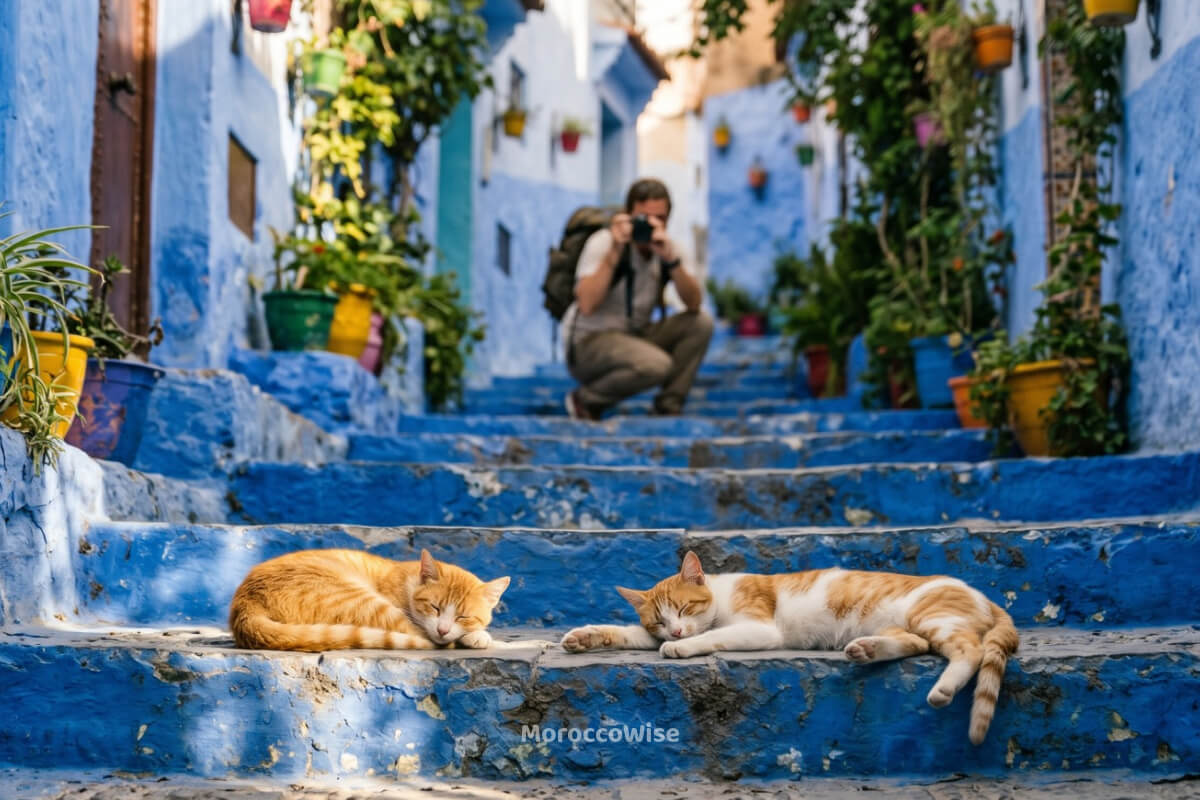
If you have scrolled through Instagram photos of Morocco, you have seen hundreds of adorable kittens sleeping on blue stairs in Chefchaouen or begging for fish scraps at the port in Essaouira. Do not touch, pet, or hand-feed street cats or stray dogs in Morocco. Even a playful kitten scratch or a lick over an existing blister requires urgent post-exposure medical treatment.
Also Beware of Barbary Macaques (Monkeys):
- In Jemaa el-Fnaa (Marrakech): Never allow handlers to place chained Barbary macaques on your shoulders for photos. Beyond ethical concerns, stressed monkeys bite and scratch unpredictably.
- In the Cedar Forests of Azrou & Ouzoud Waterfalls: Wild monkeys are accustomed to tourists holding peanuts. Admire them from a distance of several meters and never feed them by hand.
Should You Get the Pre-Exposure Rabies Vaccine?
- Who needs it most: Children (who love petting animals and may not report a minor scratch), cyclists, hikers trekking in the Atlas Mountains far from major hospitals, cavers, and long-stay travelers.
- Why pre-exposure vaccination matters: If you are bitten or scratched in Morocco and you haven't been vaccinated, you urgently need both the Rabies vaccine series AND Rabies Immunoglobulin (RIG)—a specialized blood product that can be very difficult to locate outside major hospitals in Rabat or Casablanca. If you have had the pre-exposure vaccine course before your trip, you do not need immunoglobulin; you only need two quick booster shots at a local clinic.
- What to do if bitten or scratched: Immediately wash the wound vigorously with soap and running water for at least 15 full minutes, apply an antiseptic (like iodine or 70% alcohol), and go straight to the nearest public hospital or Pasteur Institute (Institut Pasteur du Maroc in Casablanca or Tangier) for post-exposure prophylaxis.
Essential Health Precautions in Morocco (Beyond Vaccines)
Vaccines only cover specific pathogens. When travelers ask "what vaccinations or health precautions do I need", day-to-day hygiene and environmental awareness make up 80% of staying healthy on the ground.
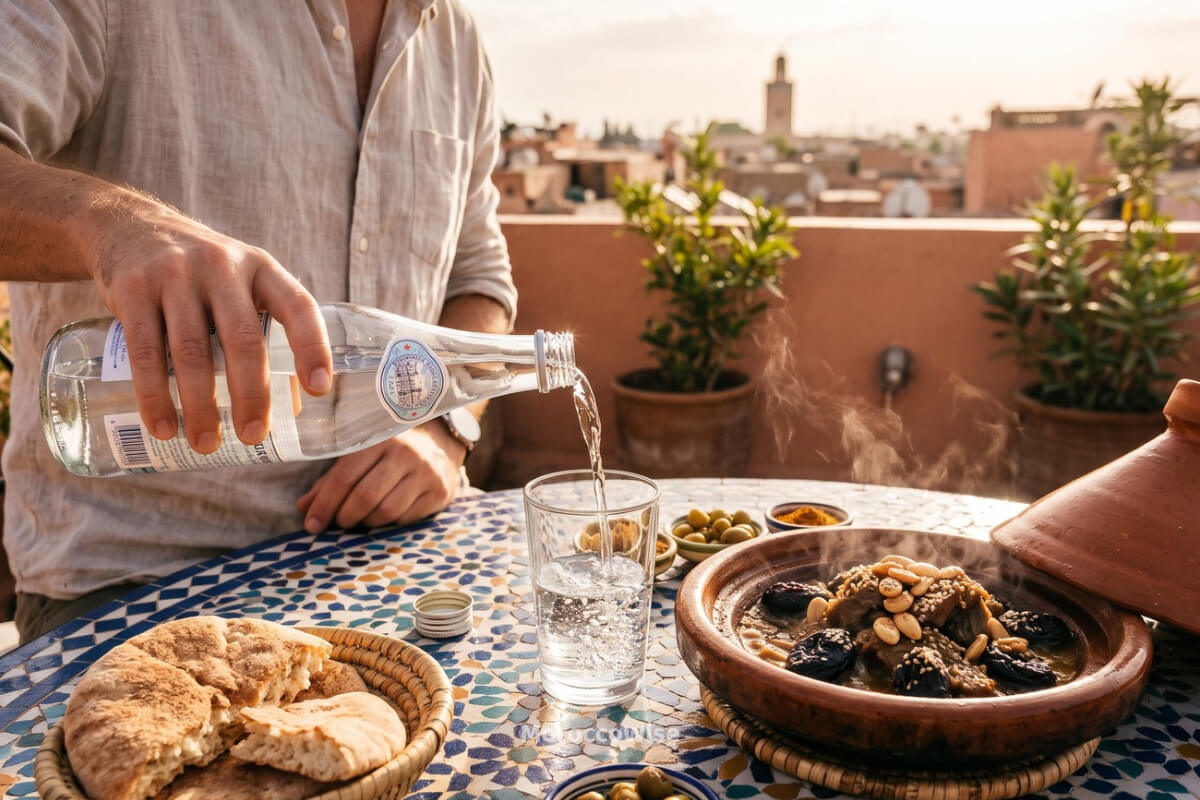
1. Beating "Marrakech Belly" (Food & Water Safety)
Travelers' diarrhea affects roughly 20% to 30% of visitors to North Africa, usually caused by E. coli bacteria or unfamiliar water minerals rather than poor restaurant hygiene. Follow these golden rules:
- Never Drink Tap Water: Stick strictly to sealed bottled water (Sidi Ali, Ain Saiss, Sidi Harazem) or sparkling water (Oulmes). Always check that the plastic cap seal clicks when you twist it open.
- Skip the Ice in Local Stalls: High-end hotels and tourist restaurants in Marrakech make ice from filtered water, but small roadside cafés and juice carts often use tap water.
- The Orange Juice Rule: If ordering fresh orange juice in Jemaa el-Fnaa, watch the vendor squeeze the oranges in front of you, ask for it without ice, and ask for a disposable paper cup rather than a glass rinsed in a bucket of standing water.
- Eat Where Locals Queue: Follow the classic travel rule: "Boil it, cook it, peel it, or forget it." Bubbling-hot tagines, freshly grilled skewers over charcoal, and steaming bowls of Harira or Baissara soup are very safe. Avoid lukewarm buffet salads that have been sitting out at room temperature.
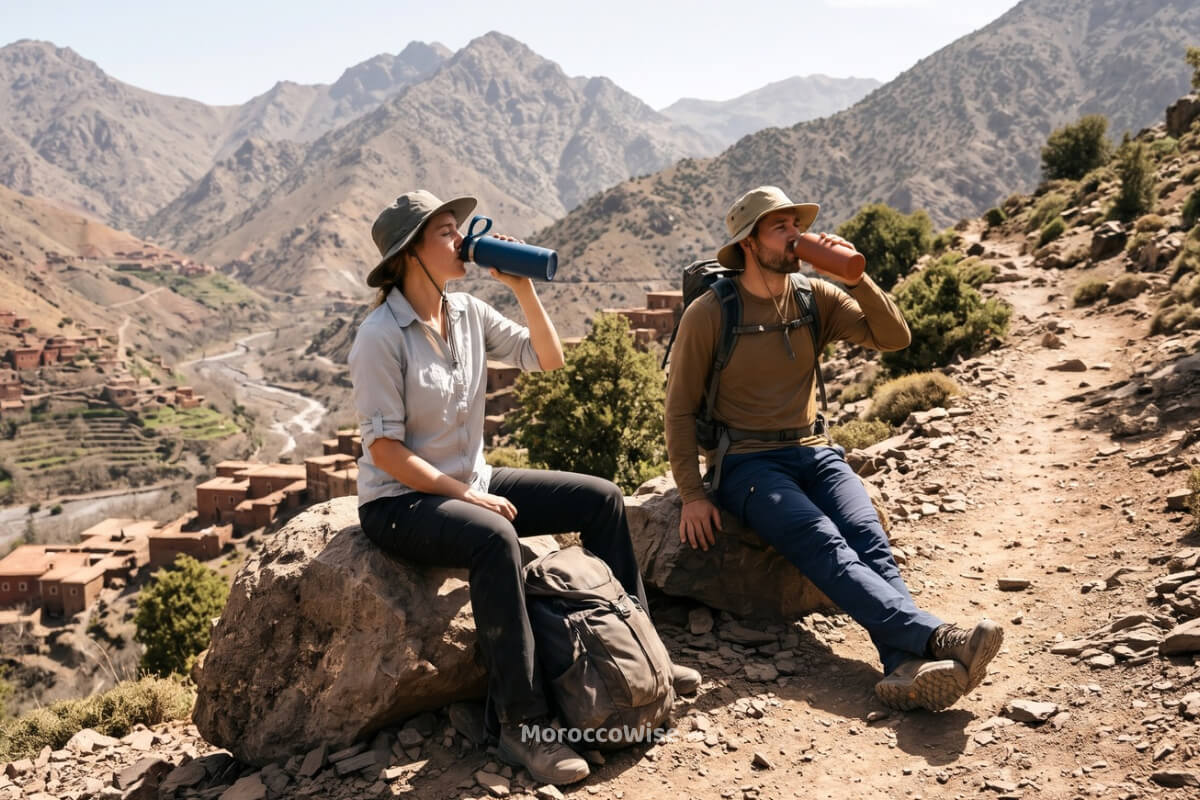
2. Heat Exhaustion, Sun & Hydration
Between May and September, inland cities like Marrakech and Fes regularly hit 38°C to 43°C (100°F–110°F), and the Sahara Desert is intensely arid year-round.
- Pack Oral Rehydration Salts (electrolyte packets) and mix one into your water bottle every afternoon after walking through the medina.
- Wear breathable linen clothing, a wide-brimmed hat, and high-SPF sunscreen. (See our complete guide on What to Pack for a Trip to Morocco for a full medical kit checklist).
3. Mosquitoes, Bugs & Malaria Status
- Is there Malaria in Morocco? No. The World Health Organization (WHO) officially certified Morocco as 100% Malaria-free in 2010. You do not need antimalarial pills for Morocco.
- Mosquitoes & Sandflies: While there is no malaria or dengue epidemic, mosquitoes can be a nuisance near rivers, oases, and coastal marshes in spring and autumn, and sandflies in rural areas can occasionally transmit leishmaniasis. Pack an insect repellent containing 20%–30% DEET or Picaridin for warm evenings.
4. Navigating Pharmacies & Hospitals in Morocco
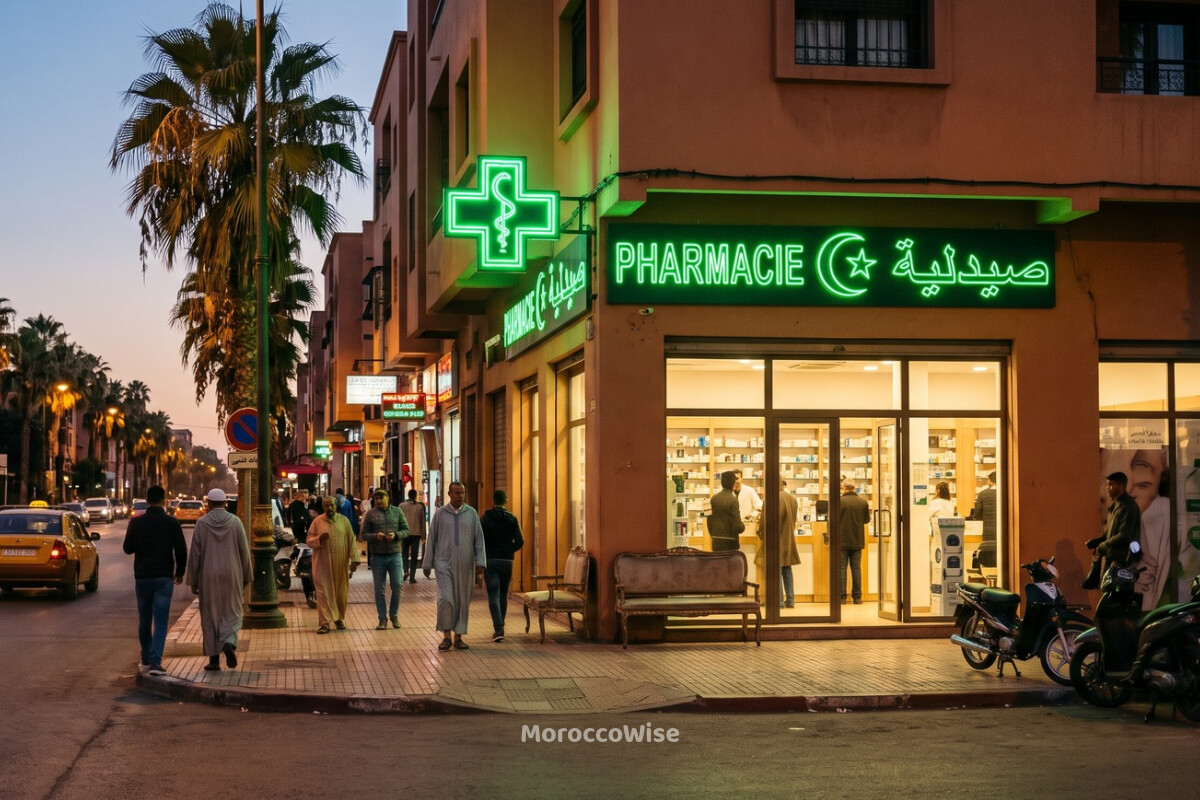
Moroccan cities have an excellent network of pharmacies, easily spotted by a glowing neon green crescent or green cross sign reading Pharmacie.
- Pharmacists Are Highly Trained: Moroccan pharmacists speak fluent French and Arabic (and often English in tourist hubs) and can dispense medications over the counter for minor ailments like stomach cramps, dehydration, allergies, or mild infections that might require a doctor's visit back home.
- Night Duty (Pharmacie de Garde): Every neighborhood designates a 24-hour duty pharmacy for late-night emergencies; the list is posted on the door of every closed pharmacy.
- Private Clinics vs. Public Hospitals: If you need a doctor or hospital care, always go to a private clinic (Clinique Privée) in major cities like Marrakech, Casablanca, Rabat, Tangier, or Fes rather than an overcrowded public hospital (except for post-exposure rabies shots, which are handled by public municipal health centers and the Institut Pasteur). Keep credit cards and your travel insurance policy number handy, as private clinics require upfront payment before you claim reimbursement.
Frequently Asked Questions (FAQ)
Do I need vaccinations for Morocco from the UK or USA?
No vaccinations are mandatory for entry into Morocco from the UK, USA, Canada, or the EU. However, both the UK's TravelHealthPro/NHS and the US CDC strongly recommend being up to date on your routine Tetanus/Diphtheria/Polio booster and getting vaccinated against Hepatitis A and Typhoid at least 2 to 6 weeks before flying.
How long before my trip to Morocco should I get travel vaccines?
Ideally, book your travel health consultation 4 to 6 weeks before departure. This gives vaccines time to build full immunity and allows time for multi-dose schedules (like Rabies or Twinrix). However, if you booked a last-minute trip, still visit a clinic—single-dose Hepatitis A, Typhoid, and Tetanus shots can be given right up until the week of travel.
How long do travel vaccines last once I get them?
- Hepatitis A: 1 year after the first dose; 20–25+ years if you get the booster shot 6 to 12 months later.
- Typhoid: 2 to 3 years for the injection; 5 years for the oral capsules.
- Tetanus / Diphtheria / Polio Booster: 10 years.
- Hepatitis B: 20+ years to lifetime after completing the 3-dose series.
Are COVID-19 vaccines or PCR tests required to visit Morocco in 2027?
No. Morocco lifted all COVID-19 entry restrictions, vaccine pass requirements, Passenger Health Forms, and PCR testing rules. You enter with your standard passport and visa/AEVM requirements.
Official and Practical Reference Links
Medical recommendations evolve, and individual health needs vary based on age, pregnancy, and pre-existing conditions. Always verify your vaccination plan with a qualified healthcare provider and consult these official travel medicine portals:
- CDC Travelers' Health – Official Morocco Vaccination & Health Guidelines (US)
- TravelHealthPro (NaTHNaC) – Official UK Travel Vaccines Advice for Morocco
- NHS Fit for Travel (NHS Inform) – Morocco Immunization & Malaria Advice
- Institut Pasteur du Maroc – Official Vaccination & Rabies Center in Morocco
(Planning the rest of your trip? Read our essential guide on Visiting Morocco for the First Time and learn how to avoid street hassle in our Common Scams in Morocco guide!)