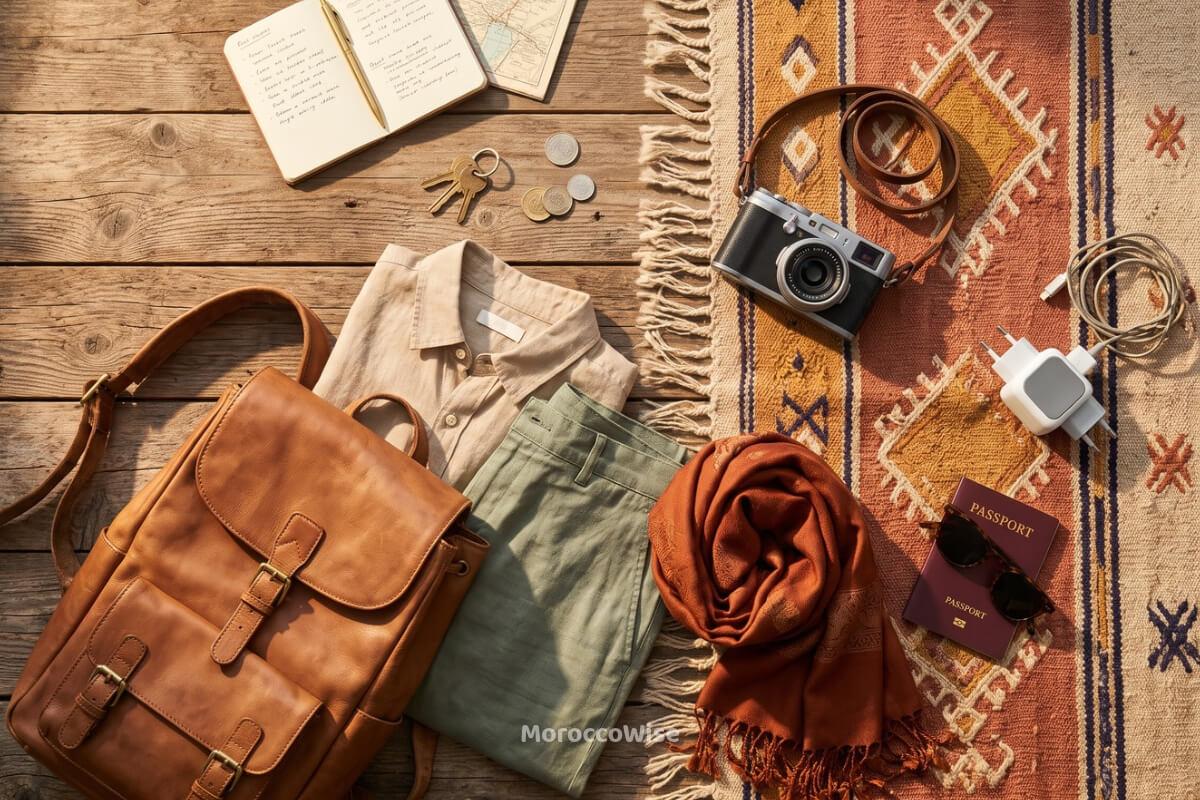
Deciding what to pack for a trip to Morocco is one of the biggest challenges for international travelers. Morocco is a land of dramatic geographic and cultural contrasts. Within a single week, you might walk through the sun-baked ochre alleys of Marrakech, hike across windy Atlantic coastal towns, and sleep under freezing stars in the Sahara Desert—all while navigating the expectations of a predominantly conservative Muslim society.
To pack smart for Morocco, build your wardrobe around loose, breathable, modest layers (linen, cotton, and merino wool) that cover your shoulders and knees, broken-in closed-toe walking shoes for uneven medina cobblestones, a warm fleece or down jacket for cold desert nights and unheated riads, a Type C/E power adapter, and a well-stocked travel health kit. Leave rolling hard-shell suitcases, high heels, and strictly prohibited items like drones at home.
This comprehensive guide breaks down exactly what to pack for a trip to Morocco by gender, season, and region—so you feel comfortable, culturally respectful, and prepared for every climate zone.
Quick-Answer Checklist: Morocco Packing by Season & Region
Because temperatures swing wildly between day and night, your packing list must adapt to your specific travel dates. Use this quick-reference matrix before loading your bag:
| Season / Region | Daytime Weather | Nighttime Reality | Key Items to Pack |
|---|---|---|---|
| Spring (March–May) | Warm & sunny (22°C–30°C) | Cool in mountains & desert (10°C–15°C) | Breathable linen shirts, light cardigan, sunglasses, high-SPF sunscreen, allergy meds. |
| Summer (June–August) | Extreme inland heat (38°C–45°C) | Warm in cities; breezy on the coast | Ultra-lightweight cotton/linen, wide-brim sun hat, electrolyte packets, chafing balm. |
| Autumn (September–November) | Mild & golden (23°C–30°C) | Chilly in late Oct/Nov (8°C–14°C) | Mix of short and long sleeves, light fleece layer, swimsuit, light rain shell for the north. |
| Winter (December–February) | Mild sun by day (16°C–21°C) | Near freezing in Sahara & Atlas (0°C–7°C) | Packable down jacket, thermal base layers, warm pajamas, wool socks (riads lack central heating). |
| Coastal Towns (Essaouira/Tangier) | Breezy & moderate year-round | Windy and damp | Windbreaker or denim jacket, secure hat, closed walking shoes. |
(Not sure when to book your flights? Read our full guide on the Best Time of Year to Visit Morocco).
Rule #1: Choose the Right Luggage for Moroccan Medinas
Before deciding what to pack for a trip to Morocco, you must choose what to pack it in.
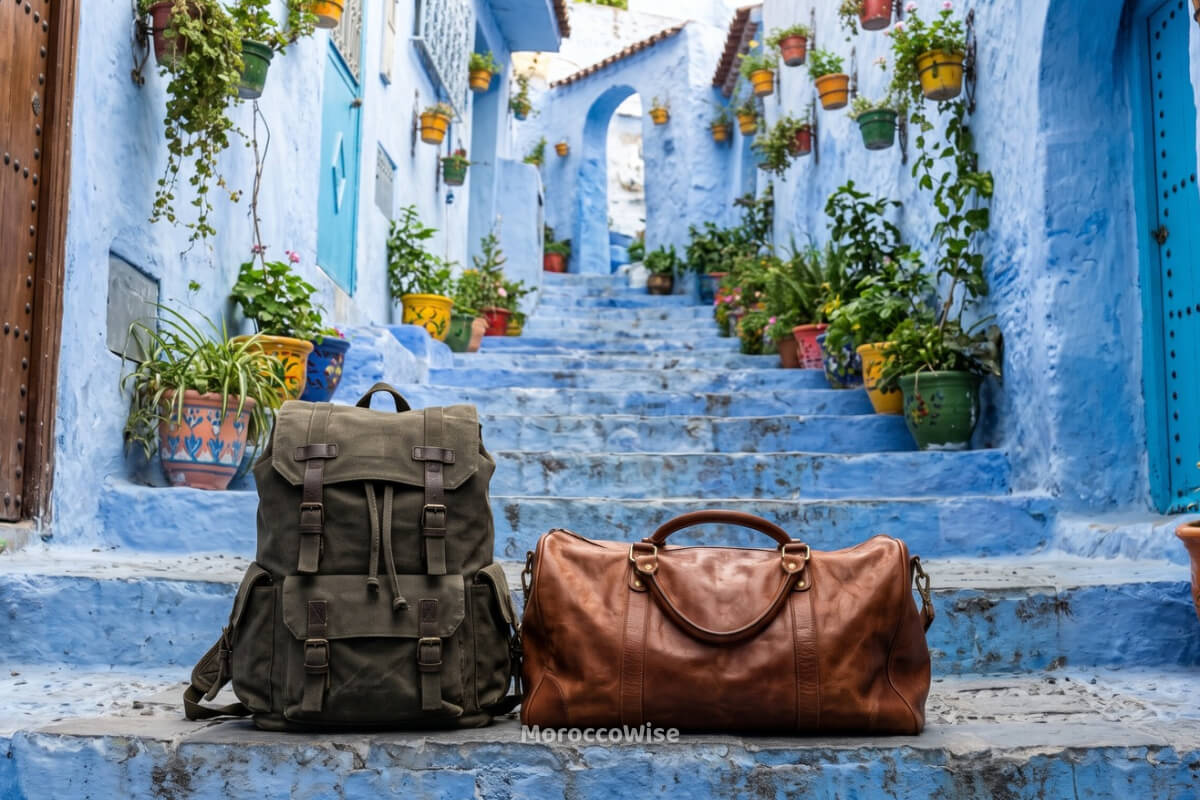
Historic Moroccan medinas—such as Fes el-Bali, Chefchaouen, and the old quarters of Marrakech and Tangier—are car-free zones. Taxis will drop you at the outer city gates (Babs), and you will have to walk anywhere from 5 to 20 minutes over rough cobblestones, steep stone staircases, and narrow alleys to reach your riad.
- Best Choice: A 40L–55L travel backpack or a soft-sided duffel bag with convertible shoulder straps.
- What to Avoid: Oversized, heavy hard-shell spinner suitcases. Small plastic wheels jam constantly on uneven stone paving, and dragging a noisy suitcase through mud or steep stairs in Chefchaouen is exhausting.
- Daypack Essential: Bring an anti-theft crossbody bag or a small zippered daypack that rests in front of your body when walking through crowded souks.
What to Wear in Morocco as a Woman (Morocco Packing List Women)
One of the most searched questions by female travelers is what to wear in Morocco as a woman. First, a reassuring clarification: Morocco does not legally enforce a dress code for foreign tourists, and women are not required to wear a headscarf (hijab).
However, Morocco is a culturally modest country. In local neighborhoods and traditional souks, showing excessive skin (such as booty shorts, low-cut tank tops, or mini-skirts) attracts intense staring and unwanted verbal attention. Dressing modestly is not about restriction; it is a practical strategy that earns local respect, keeps the scorching North African sun off your skin, and allows you to explore with far greater peace of mind.
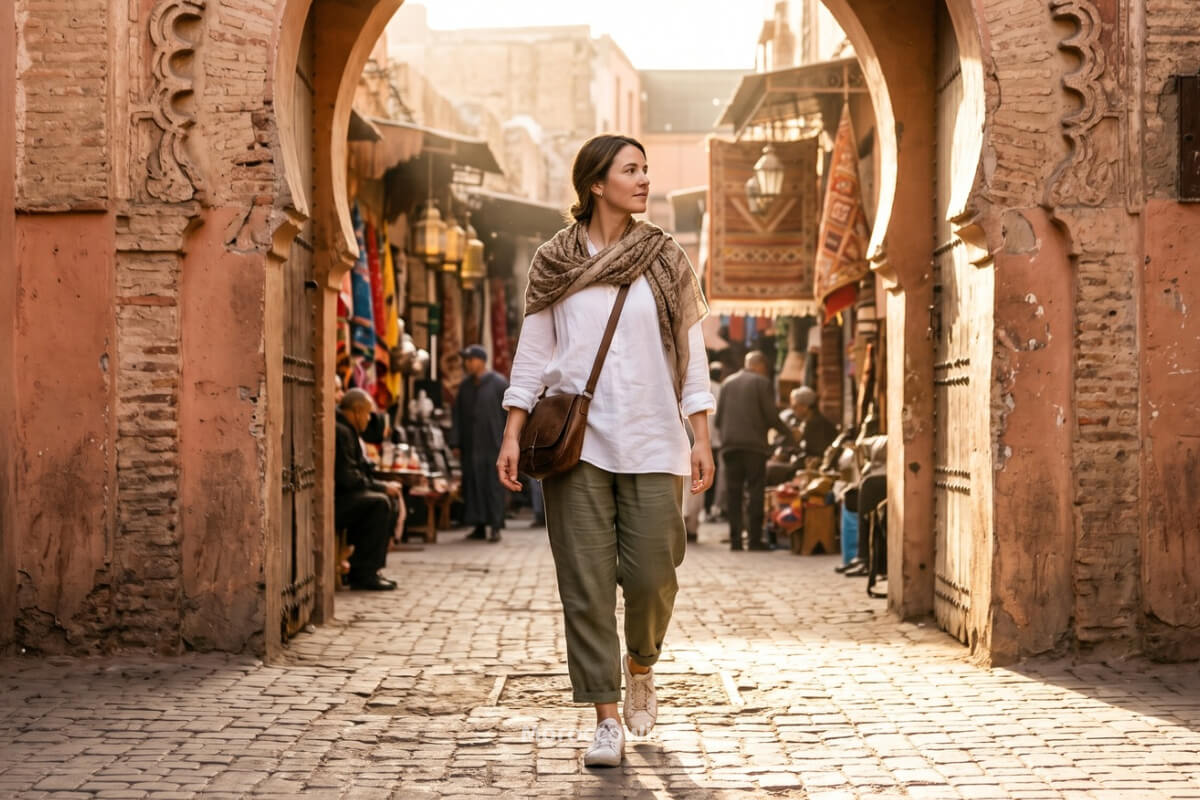
Complete Morocco Packing List for Women:
- Tops (5–7 pieces): Loose-fitting linen or cotton button-down shirts, lightweight tunics, and breathable T-shirts that cover your shoulders and cleavage. Three-quarter length sleeves are ideal for both sun protection and modesty.
- Bottoms (3–4 pieces): Wide-leg linen trousers, lightweight palazzo pants, or ankle-length culottes. Avoid tight, heavy blue jeans during warmer months—they trap heat and feel restrictive on long driving days.
- Dresses & Skirts (2–3 pieces): Flowing maxi dresses or midi skirts that fall below the knee. If a dress is sleeveless, layer a light linen shirt over it or drape a shawl across your shoulders while walking in the medina.
- The Ultimate Multi-Tool—A Pashmina or Large Scarf (2 pieces): Never leave your riad without a lightweight scarf in your bag. It serves as a shoulder cover when entering conservative areas, a dust shield during a Sahara camel trek, a warm wrap in heavily air-conditioned trains, and a head cover if visiting religious sites.
- Swimwear (1–2 pieces): Standard bikinis and one-piece swimsuits are completely fine at hotel swimming pools, private riad rooftops, upscale beach clubs, and tourist beaches in Agadir. If swimming at a local public beach, consider bringing a pair of board shorts and a T-shirt to wear over your swimsuit.
- Underwear & Sleepwear: Pack breathable cotton or moisture-wicking bras and underwear. If visiting between November and March, bring warm thermal pajamas and thick socks—traditional riads are built with thick stone walls designed to keep heat out, making them surprisingly cold at night.
(Planning your first itinerary? Check out our survival guide on Visiting Morocco for the First Time).
What to Wear in Morocco as a Man (What to Pack for Morocco Men)
While men face fewer cultural sensitivities than women, understanding what to wear in Morocco as a man ensures you don't look out of place. In Moroccan culture, adult men almost always wear full-length trousers in public, even during the height of summer. While tourists can certainly wear shorts, ultra-short athletic or running shorts are viewed by locals as underwear.
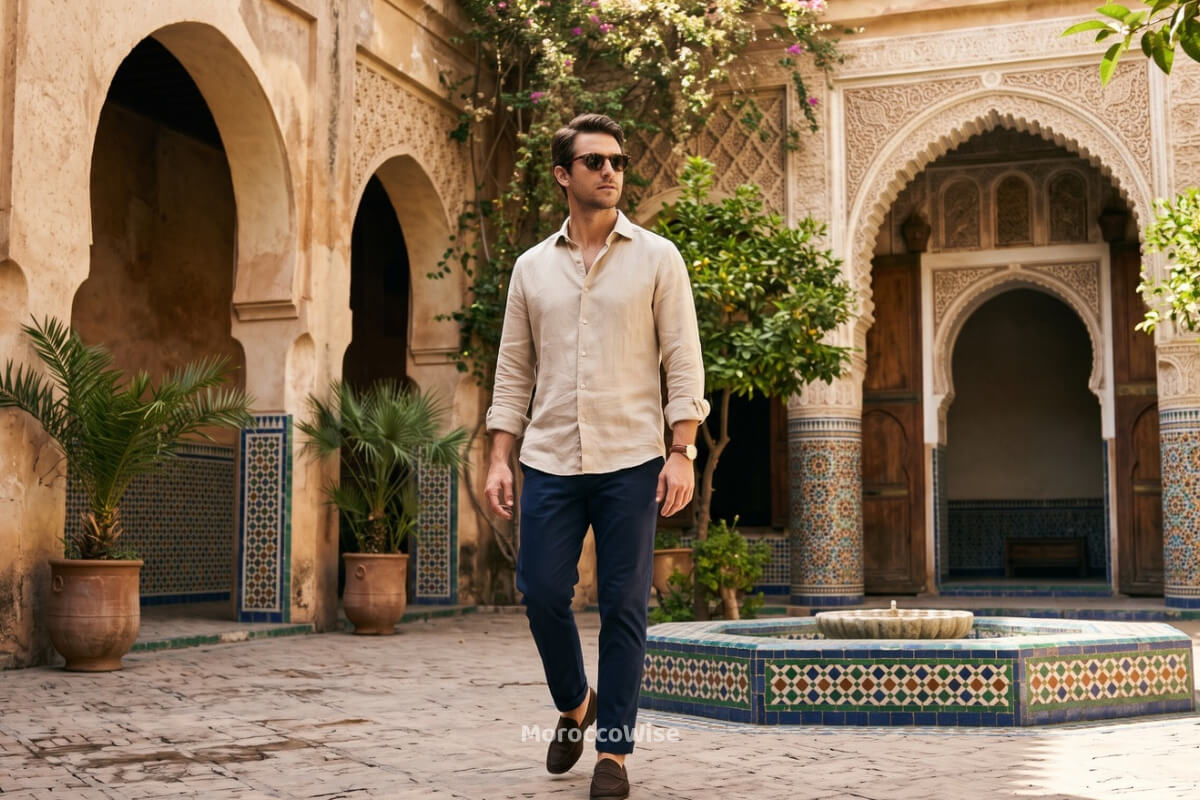
Essential Packing List for Men:
- Trousers (3–4 pairs): Lightweight chinos, breathable linen pants, or technical hiking trousers in neutral tones (khaki, olive, navy, grey) that hide desert dust.
- Shorts (1–2 pairs): Tailored chino shorts that reach the knee for hot afternoons in tourist hubs like Marrakech or coastal walks in Essaouira.
- Shirts (5–7 pieces): Breathable cotton crew-neck T-shirts, polo shirts, and long-sleeve linen button-downs. Sleeveless tank tops (singlets) should be reserved strictly for the beach or hotel pool, never in the medina.
- Light Jacket or Overshirt (1–2 pieces): A denim jacket, chore coat, or fleece zip-up for breezy coastal evenings and mountain passes.
- Swim Trunks (1–2 pairs): For riad plunge pools and hammam visits (men wear swim trunks inside traditional public hammams).
Footwear: The Make-or-Break Item
When deciding what to pack for a trip to Morocco, your footwear deserves special attention. You will easily walk 12,000 to 20,000 steps a day across uneven cobblestones, dusty roads, marble palace courtyards, and steep stairs.
- Broken-in Walking Sneakers or Trail Runners (Mandatory): Bring a pair of supportive, closed-toe sneakers with good grip. Closed toes protect your feet from street dust, motorbike traffic, and dirty puddles near the markets and tanneries of Fes.
- Supportive Walking Sandals: Think Birkenstocks, Tevas, or Chacos with arch support and ankle straps—not cheap rubber flip-flops.
- Flip-Flops / Slides: Pack one thin pair of rubber flip-flops strictly for wearing inside traditional hammams (steam baths) and shared desert camp bathrooms.
- Leave High Heels at Home: Stilettos and narrow wedges are practically unusable on Moroccan streets.
What to Pack for a Trip to Marrakech
Searching specifically for what to pack for a trip to Marrakech [cite: 50]? As Morocco's most cosmopolitan tourist hub, Marrakech blends traditional medina life with high-end European-style dining in the Gueliz and Hivernage districts.
- Daytime Medina Exploring: Stick to loose linen trousers, midi/maxi dresses, T-shirts, sunglasses, and sneakers.
- Upscale Rooftop Dinners & Nightlife: If you plan to dine at trendy venues like Nomad, El Fenn, or Comptoir Darna, pack one or two smart-casual outfits. Stylish jumpsuits, tailored linen sets, or a crisp button-down shirt with loafers fit right in.
- Poolside Relaxation: Pack your favorite swimwear, a stylish kimono or kaftan cover-up, and polarized sunglasses.
(Explore our complete Marrakech Travel Guide for neighborhood breakdowns and restaurant tips).
Seasonal Adjustments: January, May, and October
Morocco's packing requirements shift drastically depending on the month you land:
What to Pack for Morocco in January (Winter)
Many travelers looking up what to pack for Morocco in January [cite: 50] make the mistake of packing only summer clothes because it is Africa. While daytime sun in Marrakech reaches a pleasant 19°C (66°F), temperatures plummet to 5°C (41°F) as soon as the sun sets, and approach 0°C (32°F) in the Sahara Desert and Atlas Mountains.
- Pack: A packable down puffer jacket, a fleece mid-layer, thermal base layers (Uniqlo Heattech or merino wool), a beanie and gloves for desert sunrises, warm fleece pajamas, and a waterproof rain jacket (especially if visiting Tangier or Chefchaouen).
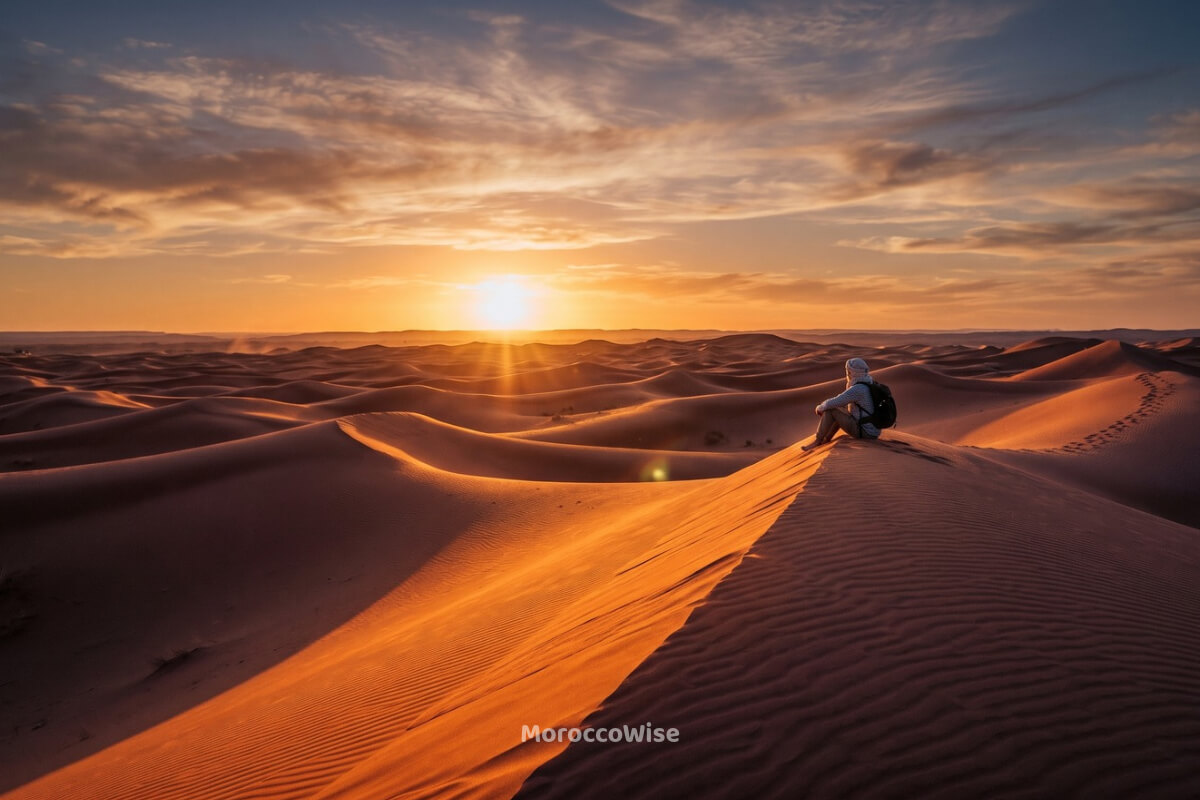
Packing for Morocco in May (Late Spring)
When packing for Morocco in May [cite: 50], prepare for warm, glorious sunny days (26°C–32°C) and mild evenings.
- Pack: 80% warm-weather breathable clothing (linen, light cotton), a wide-brimmed sun hat, high-SPF sunscreen, allergy medication (spring blooms are at their peak), and one light sweater or denim jacket for evening rooftop dinners and desert camps.
What to Pack for Morocco in October (Autumn)
October is peak travel season. When deciding what to pack for Morocco in October [cite: 50], versatility is key. Early October still feels like summer in the south, while late October brings crisp autumn nights and occasional brief rain showers in the north.
- Pack: Layerable pieces—T-shirts and linen pants for 28°C afternoons, paired with a light cardigan, pashmina scarf, and a light windbreaker or fleece for 12°C desert nights.
Health Supplies, Prescriptions & Travel Pharmacy
A critical part of what to pack for a trip to Morocco is a personal medical kit. While Moroccan cities have plenty of pharmacies (marked with a glowing green crescent/cross) staffed by French- and Arabic-speaking pharmacists, brand names differ and language barriers can make explaining symptoms stressful.
Remember to pack extras of important health supplies in case of travel delays [cite: 50]:
- Prescription Medicines: Bring all your prescriptions
[cite: 50]in their original, clearly labeled pharmacy packaging, along with a copy of the doctor's prescription. Pack at least an extra week's supply in your carry-on bag[cite: 50]. - Stomach & Digestive Care: Changes in water minerals, spices, and street food can trigger "Marrakech Belly." Pack a travelers' diarrhea antibiotic
[cite: 50](prescribed by your travel clinic before departure), Loperamide (Imodium) for long bus/train days, Bismuth subsalicylate (Pepto-Bismol), and plenty of Oral Rehydration Salts (electrolyte packets). - Pain & Fever Relievers: Ibuprofen or Paracetamol, plus motion sickness tablets (essential for the winding Tizi n'Tichka mountain pass and the roads to Chefchaouen).
- Blister Plasters (Compeed) & Antiseptic Cream: For long days of medina walking.
- Toilet Paper, Pocket Tissues & Wet Wipes: Public toilets at roadside stops, rural gas stations, and train stations rarely stock toilet paper or soap. Always carry travel-sized tissue packs and hand sanitizer in your daypack.
- Sun & Lip Protection: High-SPF facial sunscreen and SPF lip balm (buying authentic international sunscreen brands in Morocco is very expensive).
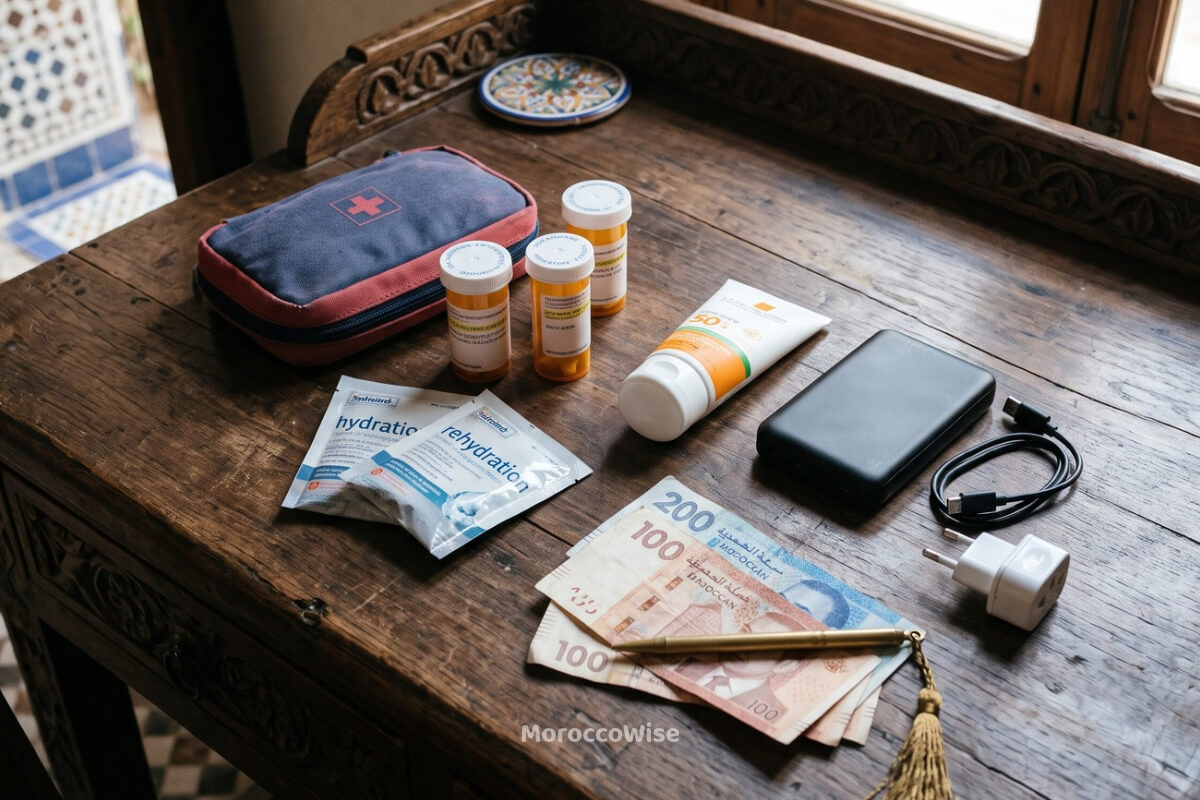
Electronics, Money & Essential Documents
To round out your Morocco packing list, make sure these logistics items are in your carry-on:
- Power Adapter (Type C & Type E): Morocco uses standard European two-round-pin sockets operating at 220V / 50Hz. Travelers from the US, UK, Canada, and Australia will need an adapter.
- High-Capacity Power Bank (10,000mAh–20,000mAh): Navigating labyrinthine medinas using offline maps (Maps.me or Google Maps) and taking photos all day drains phone batteries rapidly.
- Small Coin Purse / Secondary Wallet: Morocco is heavily cash-based. You will constantly need 5, 10, and 20 Dirham coins and notes for tipping, petit taxis, and street vendors. Keep small bills in an accessible pouch so you never flash a thick wad of cash in public. (Read our guide on Common Scams in Morocco for money safety tips).
- Physical Copies of Passport & Visa/AEVM: Keep printed backups separate from your originals. (Check our Morocco Visa Guide to confirm your entry documents).
What NOT to Pack for Morocco (Strict Customs Rules)
- Drones (Strictly Prohibited!): It is illegal for tourists to bring drones into Morocco without a commercial aviation permit issued in advance by Moroccan authorities. Airport scanners screen all luggage upon arrival, and customs officers will immediately confiscate your drone, leading to hours of police questioning. Leave it at home.
- Bibles in Arabic (More than personal use): Bringing a personal Bible is fine, but bringing multiple copies or religious materials in Arabic intended for distribution is strictly illegal.
- Expensive Flashy Jewelry: Leave heirloom rings and luxury watches at home to avoid attracting pickpockets.
Do's and Don'ts: Morocco Packing Summary
| Do Pack | Don't Pack |
|---|---|
| Breathable linen and cotton clothing covering shoulders and knees | Short shorts, mini-skirts, or low-cut tops for medina sightseeing |
| Broken-in closed-toe sneakers and supportive sandals | High heels or brand-new unwalked shoes |
| A soft backpack or duffel bag for medina stairs | Giant, heavy hard-shell suitcases |
| Warm layers (fleece/down jacket) for winter nights and the Sahara | Only summer clothes if traveling between November and March |
Prescription medicines, travelers' diarrhea antibiotics, and electrolytes [cite: 50] |
A drone (it will be confiscated at Moroccan customs) |
| Pocket tissues and hand sanitizer for public restrooms | Expensive jewelry or flashy valuables |
Frequently Asked Questions (FAQ)
Can female tourists wear shorts or tank tops in Morocco?
Legally, yes—you will see foreign tourists wearing shorts in Marrakech and Agadir. However, culturally, wearing short shorts or bare shoulders in traditional medinas draws intense staring and unwanted attention. For a much more comfortable experience, opt for loose linen trousers, midi skirts, or knee-length shorts paired with a T-shirt.
Do I need to pack a headscarf to visit Morocco?
Foreign women are not required to wear a headscarf in Morocco. However, packing a lightweight scarf or pashmina is highly recommended—it protects you from sun and Sahara sand, keeps your shoulders warm in the evening, and shows respect if you visit religious landmarks like the Hassan II Mosque in Casablanca.
Do riads in Morocco provide hairdryers and towels?
Yes, almost all mid-range and luxury riads and hotels provide bath towels and basic toiletries, and most have hairdryers available upon request. However, if you are staying in budget hostels or basic Sahara desert camps, pack a quick-dry microfiber travel towel.
Can I buy toiletries and feminine hygiene products in Morocco?
Shampoo, soap, and sanitary pads are widely available in supermarkets (like Carrefour and Marjane) and local pharmacies. However, tampons and specific contact lens solutions can be difficult to find outside major modern city centers, so pack enough for your entire trip.
Official and Practical Reference Links
Before finalizing your bags and heading to the airport, verify the latest health, weather, and customs regulations through these authoritative resources: