
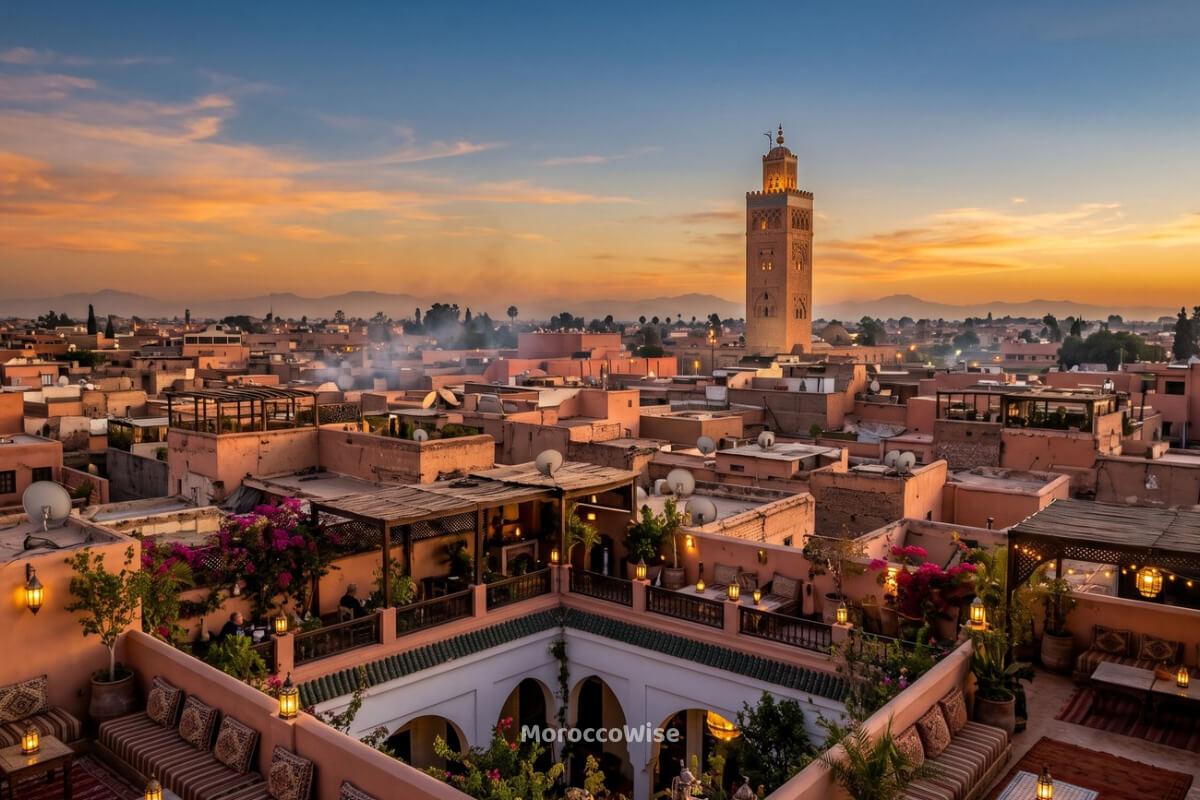
Marrakech is a city of red-clay walls, winding alleyways, fragrant spice stalls, and rooftop terraces overlooking the High Atlas Mountains. But beyond the postcard images, understanding how the city works makes the difference between a stressful first visit and an unforgettable Moroccan adventure. This Marrakech travel guide covers the practical details that matter: where to stay, how to navigate the Medina, what to book in advance, which scams to recognize, and how to plan four days without rushing.
First, a quick spelling clarification: Marrakech is the standard French and internationally used Moroccan spelling, while Marrakesh is an established English-language alternative. Both refer to the exact same Red City in central Morocco.
Whether you are travelling as a couple, visiting Morocco for the first time, or exploring independently, here is what you need to know before arriving in 2027.
Quick-Answer Factsheet
| Travel Question | Practical Answer |
|---|---|
| Best months | March to May and September to November (mild days, cool evenings) |
| Ideal duration | 3 to 4 full days in the city (plus 1–3 days for desert/mountains) |
| Airport code | Marrakech Menara Airport (RAK) |
| Local currency | Moroccan Dirham (MAD) |
| Languages spoken | Moroccan Darija, Amazigh, and French; English widely spoken in tourist zones |
| Accommodation | Traditional inward-facing riads (Medina) or modern hotels (Gueliz/Hivernage) |
| Transport | Walking on foot, yellow petit taxis (demand the meter), and Bus 19 |
| Daily spending | Approx. 400–1,000 MAD per person/day (excluding accommodation) |
| Key booking rule | Jardin Majorelle & YSL Museum sell tickets strictly online in advance |
| Safety rating | High safety; primary issues are street touts, scams, and motorbike traffic |
Marrakech at a Glance: The Honest First-Timer Reality Check
The historic Medina is not an open-air museum staged for tourists; it is a dense, working residential neighborhood where families live, children commute to school, and artisans hammer brass.
Delivery handcarts, stray cats, and pedestrians share lanes barely two meters wide. Most notably, motorbikes and mopeds (mobylettes) zoom through these pedestrian alleys without slowing down. The golden rule of walking in the Medina: pick a side of the lane, walk in a predictable straight line, listen for approaching engines, and never step backward without looking. If someone calls out "Balak! Balak!" (watch out/make way), step smoothly against the nearest wall.
GPS drift is frequent inside the covered souks and narrow alleys (derbs). Street signs are sparse. Download an offline map (Google Maps or Maps.me) before you land. Getting temporarily disoriented is part of the experience; when in doubt, reorient by walking toward Jemaa el-Fnaa or identifying the towering Koutoubia minaret above the rooftops.
The Rhythm of the Red City
- Early Morning (8:00 AM – 10:30 AM): The quietest hours. Shuttered souks, gentle sunlight, and empty courtyards make this the best time to visit Bahia Palace or Ben Youssef Madrasa before tour groups arrive.
- Mid-Afternoon (1:00 PM – 4:00 PM): Peak heat and heavy foot traffic. Follow the local rhythm: retreat to a shaded riad courtyard, enjoy a relaxed lunch, or visit a traditional hammam.
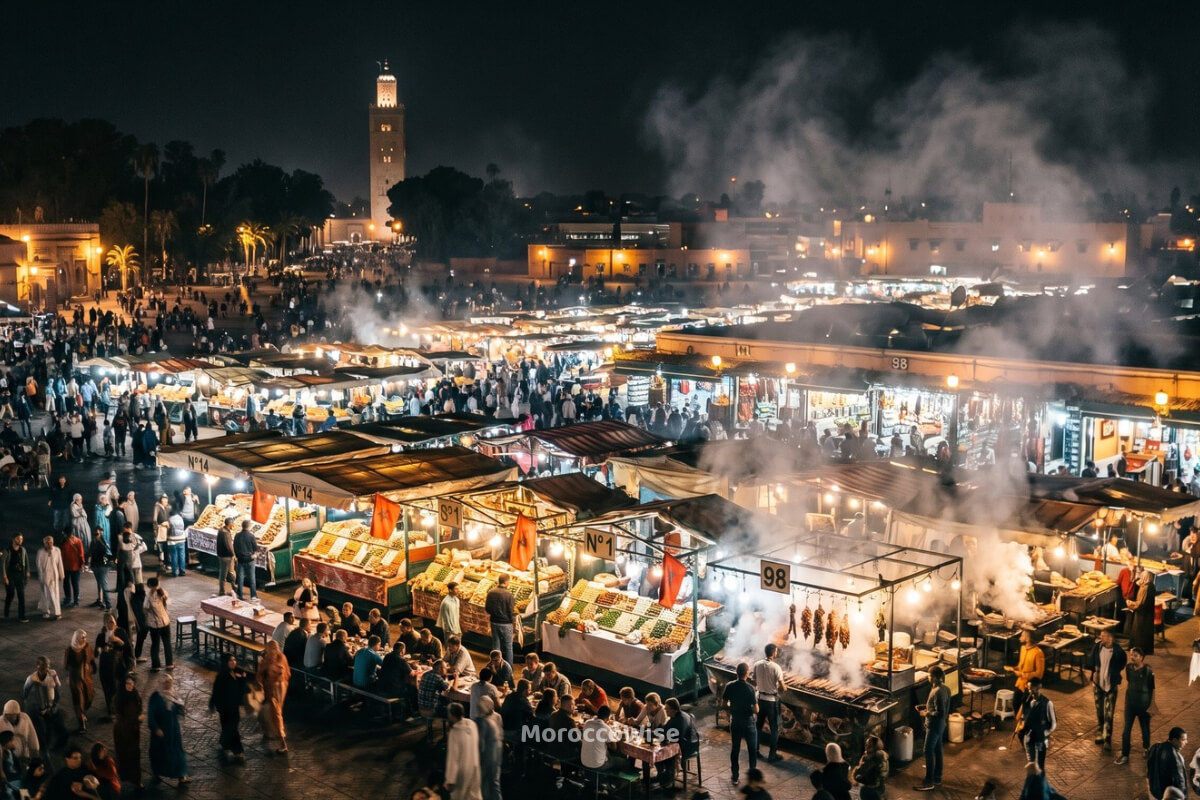
- Golden Hour & Evening (5:30 PM onwards): Sunset bathes the clay rooftops in deep amber. Jemaa el-Fnaa activates with street food stalls, acoustic musicians, and storytellers.
Getting In: Marrakech Menara Airport (RAK) to the City Center
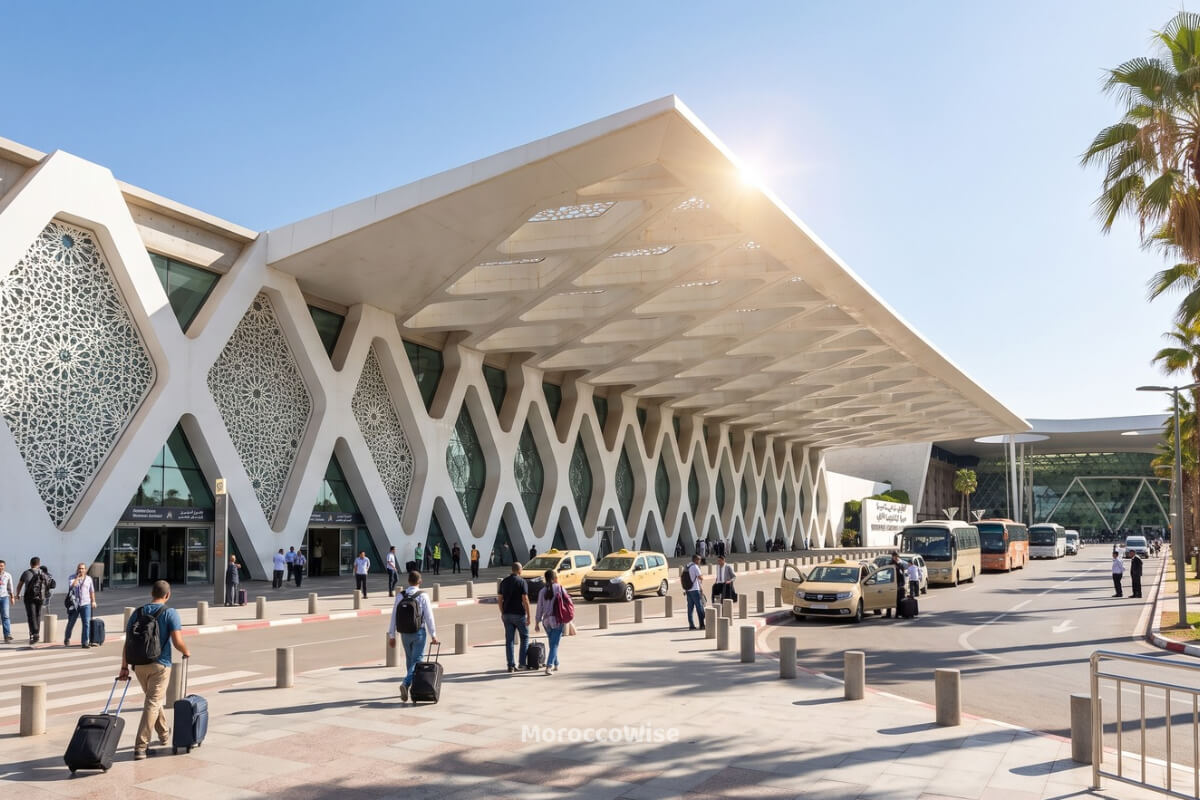
Marrakech Menara Airport sits approximately 6 km southwest of the city center. Clearing passport control and baggage claim typically takes 30 to 45 minutes.
Arrange your connectivity before leaving the terminal hall: purchase a local physical SIM or activate your roaming eSIM as detailed in our Morocco Tourist SIM Card & eSIM Guide.
Airport Transfer Comparison: Bus vs. Taxi
| Transport Option | Price | Best For | The Catch |
|---|---|---|---|
| Airport Bus 19 Express | 30 MAD one-way / 50 MAD return | Solo travelers, couples with light backpacks | Drops off at Jemaa el-Fnaa or Gueliz; you walk to your riad |
| Official Airport Taxi | 70–100 MAD (Day) / 100–150 MAD (Night) | Families, late arrivals, heavy rolling luggage | Must insist on the posted official tariff inside the terminal |
| Curb-side Touts | 200–300 MAD | Nobody | Aggressive markups outside the doors; decline and walk past |
Note on Bus 19: Marrakech transitioned to an updated urban transit operator. Fares remain benchmarked at 30 MAD one-way; verify stopping points directly at the airport bus shelter outside Terminal 1.
Airport Taxi Survival Tips
- Locate the official tariff board inside the terminal before stepping outside.
- Clearly name the Medina gate (Bab) nearest your riad (e.g., Bab Doukkala, Bab Aylen, Bab Laksour) rather than the riad name. Taxis cannot drive into pedestrian medina alleys.
- If a curb driver demands 200 MAD, point calmly to the tariff board, say "La, shukran" (no, thank you), and walk to the next registered cab or take Bus 19.
- Have small 20 and 50 MAD notes ready to pay the exact fare.
Where to Stay: Neighborhood Guide (Medina vs. Gueliz vs. Hivernage)
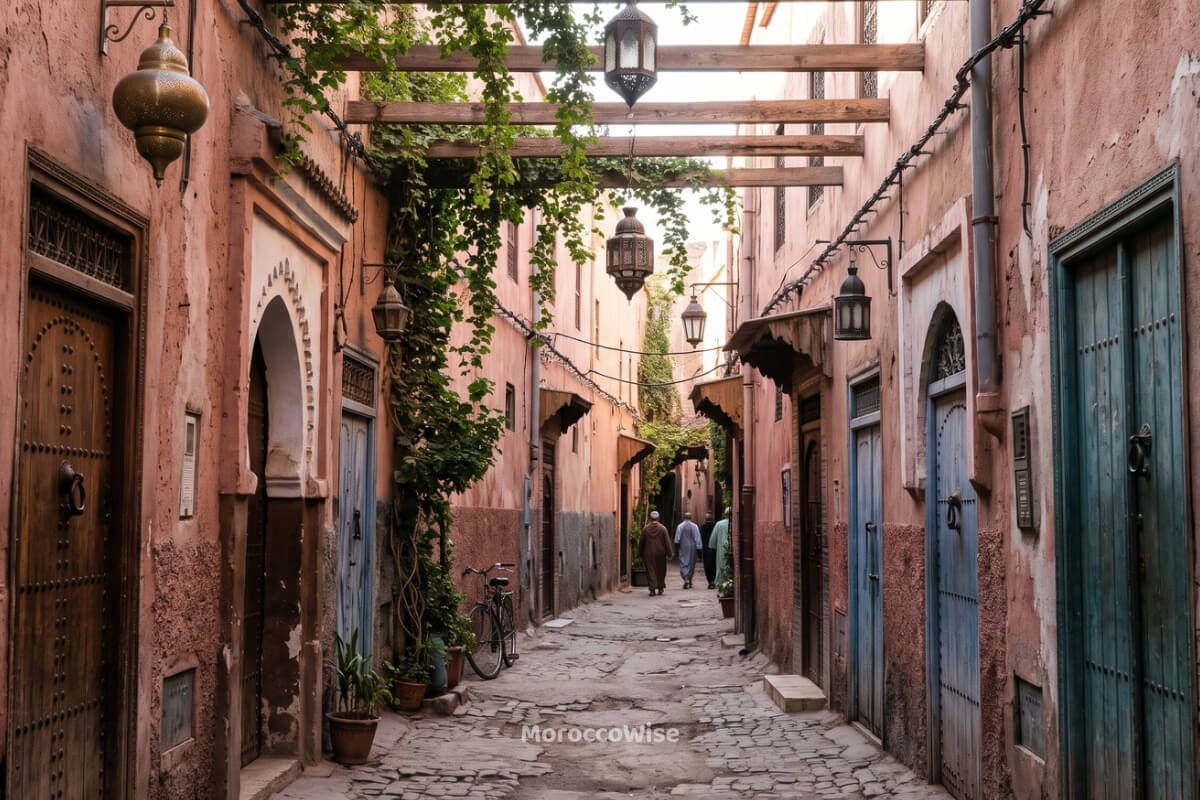
1. The Medina (Historic Core)
Best for cultural immersion, romantic riads, and walking access to Jemaa el-Fnaa, souks, and palaces.
- Atmosphere: Vibrant, historic, and sensory-rich.
- Downsides: Inaccessible by car; requires walking through alleys with luggage; can be confusing at night.
2. Gueliz (The New City / Ville Nouvelle)
Planned during the French protectorate, Gueliz features wide avenues, outdoor café terraces, contemporary bistros, and high-street shops.
- Atmosphere: Cosmopolitan, walkable, and relaxed.
- Downsides: Lacks traditional Moroccan architectural charm; requires a short 10-minute taxi ride to the medina gates.
3. Hivernage & Palmeraie
Hivernage borders the medina and hosts international 5-star hotels, sprawling swimming pools, and upscale cocktail lounges. The Palmeraie is an expansive palm oasis on the northern outskirts offering secluded resort villas.
- Atmosphere: High-end luxury, serene poolside lounging.
- Downsides: You are dependent on taxis or shuttles for every cultural excursion.
| Neighborhood | Vibe | Best For | Accessibility | Noise Level |
|---|---|---|---|---|
| Medina | Historic & bustling | Riads & cultural sightseeing | Pedestrian only; luggage on foot | High by day, quiet late at night |
| Gueliz | Modern & chic | Dining, cafés, & shopping | Direct vehicle access; wide sidewalks | Moderate city traffic |
| Hivernage | Upscale & green | 5-star hotels & nightlife | Direct taxi access | Low around hotel grounds |
| Palmeraie | Secluded oasis | Relaxed resort stays & villas | Requires car/taxi for every trip | Very quiet |
The Riad Experience vs. Modern Hotels: Costs, Logistics, and Sound
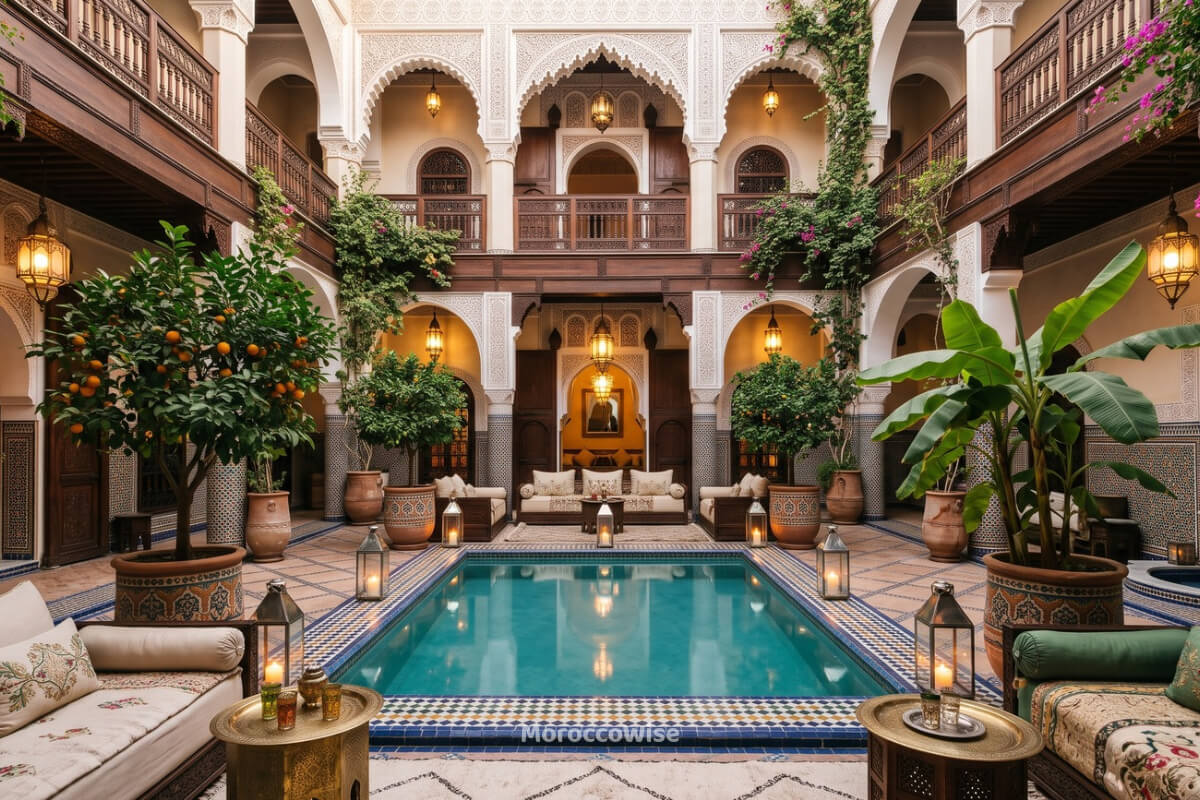
A traditional riad is an inward-facing Moroccan manor built around a central open-air courtyard, typically featuring orange trees, a bubbling fountain, carved plasterwork, and intricate geometric zellij tiles. The architecture is designed to maintain privacy and cool temperatures.
Riad vs. Modern Hotel: Direct Factor Comparison
| Factor | Traditional Riad | Modern Hotel (Gueliz / Hivernage) |
|---|---|---|
| Acoustics | Courtyard architecture carries sound between rooms easily | Sound-insulated modern walls, private corridors |
| Accessibility | Narrow winding staircases; strictly no elevators | Elevators, step-free access, luggage bellhops |
| Swimming Pools | Small courtyard plunge pools (often unheated in winter) | Large heated outdoor pools, sun loungers |
| Hospitality | Intimate, family-run feel; custom homemade breakfasts | Professional, standardized corporate service |
| Dining & Drinks | Pre-ordered home-cooked dinners; alcohol rarely licensed | Multiple on-site restaurants, fully licensed bars |
| Vehicle Access | None (taxis drop at medina gates; walk the rest) | Direct curbside drop-off and pickup |
Accommodation Prices & The Mandatory Cash Tourist Tax
- Budget Riad / Guesthouse: 400–800 MAD (~$40–$80 USD) per night.
- Mid-Range Boutique Riad: 900–1,800 MAD (~$90–$180 USD) per night.
- Luxury Palace Riad (e.g., La Mamounia, Royal Mansour): 2,500–15,000+ MAD per night.
The Cash Tourist Tax (Taxe de Séjour): Moroccan law requires accommodations to levy a municipal tourism tax ranging from 25 to 35 MAD (~$2.50–$3.50 USD) per person, per night. Riads almost universally collect this tax strictly in cash Dirhams (MAD) at checkout. Keep cash aside so you are not scrambling for an ATM before catching your flight.
Medina Luggage Logistics: The Handcart Porters (Kroussa)
When your taxi drops you at the medina gate (Bab), handcart porters (kousha or karrossa) will offer to transport your luggage through the alleys.
- Standard price: 20 to 30 MAD per cart for a short haul.
- Crucial rule: Agree on the total price before your bags are loaded. Walk immediately behind the porter rather than letting them run ahead.
- Whenever possible, message your riad 30 minutes before arrival so a staff member meets you at the gate.
The 10 Must-See Marrakech Attractions & 2027 Booking Rules
1. Jardin Majorelle & Yves Saint Laurent Museum
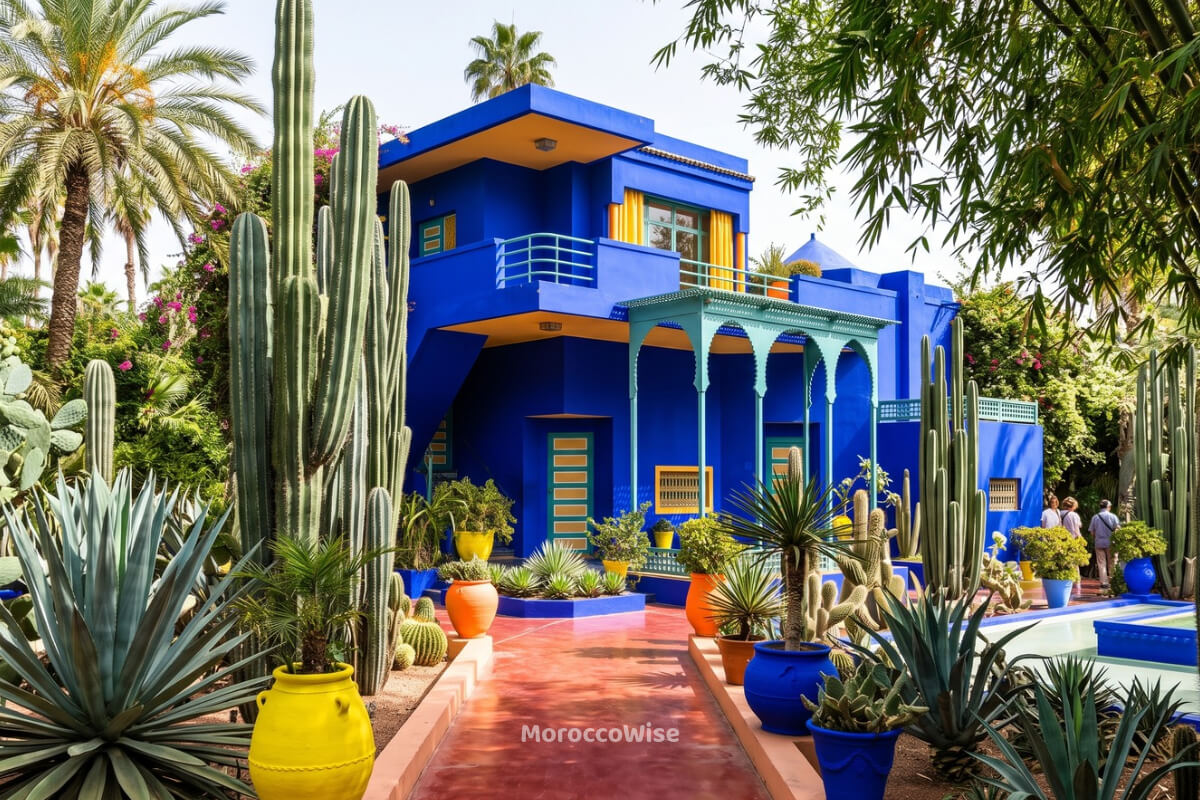
Created by French painter Jacques Majorelle and later rescued by Yves Saint Laurent and Pierre Bergé, this garden showcases striking cobalt Majorelle-blue architecture surrounded by towering exotic cacti and bamboo groves.
- Strict Booking Mandate: Tickets MUST be purchased online in advance via the official Jardin Majorelle portal. There are no on-site ticket booths. Travelers without a pre-purchased digital QR code are turned away at the gate. Book at least 3–5 days ahead during peak season.
2. Ben Youssef Madrasa
Once the largest Islamic theological college in North Africa, this 14th-century marvel features an expansive marble courtyard, carved cedarwood, sculpted stucco calligraphy, and intricate zellij tilework.
- Admission: 50 MAD for adults. Visit between 8:30 AM and 10:00 AM for crowd-free photography.
3. Bahia Palace
Built in the late 19th century for Grand Vizier Si Moussa and expanded by his son Ba Ahmed, this sprawling palace features painted wood ceilings, stained glass, and tranquil interior jasmine courtyards.
- Admission: 100 MAD for foreign adult visitors (updated official rate on the Ministry of Culture ticket portal).
4. Jemaa el-Fnaa
Marrakech’s central square transforms through the day: freshly squeezed orange juice stalls (Stalls #1–#40) by day give way to open-air grills, Gnaoua musicians, and traditional circle storytellers (halqa) at dusk. Keep your wallet secure and decline unsolicited performers.
5. Koutoubia Mosque Gardens
The 77-meter sandstone minaret of the Koutoubia is Marrakech’s architectural anchor and primary navigational compass. While non-Muslim visitors cannot enter active mosques, the public surrounding rose gardens and palm groves offer serene shaded walking paths.
6. El Badi Palace
Commissioned by Saadian Sultan Ahmad al-Mansur following his victory in the Battle of the Three Kings, these massive rammed-earth ruins evoke the sheer scale of 16th-century imperial Morocco. Look up to see wild storks nesting along the ancient ramparts.
- Admission: 100 MAD for foreign visitors.
7. Saadian Tombs
Sealed for centuries until rediscovered by aerial photography in 1917, these mausoleums house the remains of the Saadian dynasty. The Chamber of the Twelve Pillars, sculpted in Italian Carrara marble and gilded honeycomb plasterwork, is an architectural masterpiece.
- Admission: 100 MAD for foreign visitors.
8. The Artisan Souks
The covered markets north of Jemaa el-Fnaa are divided into specialized guild quarters:
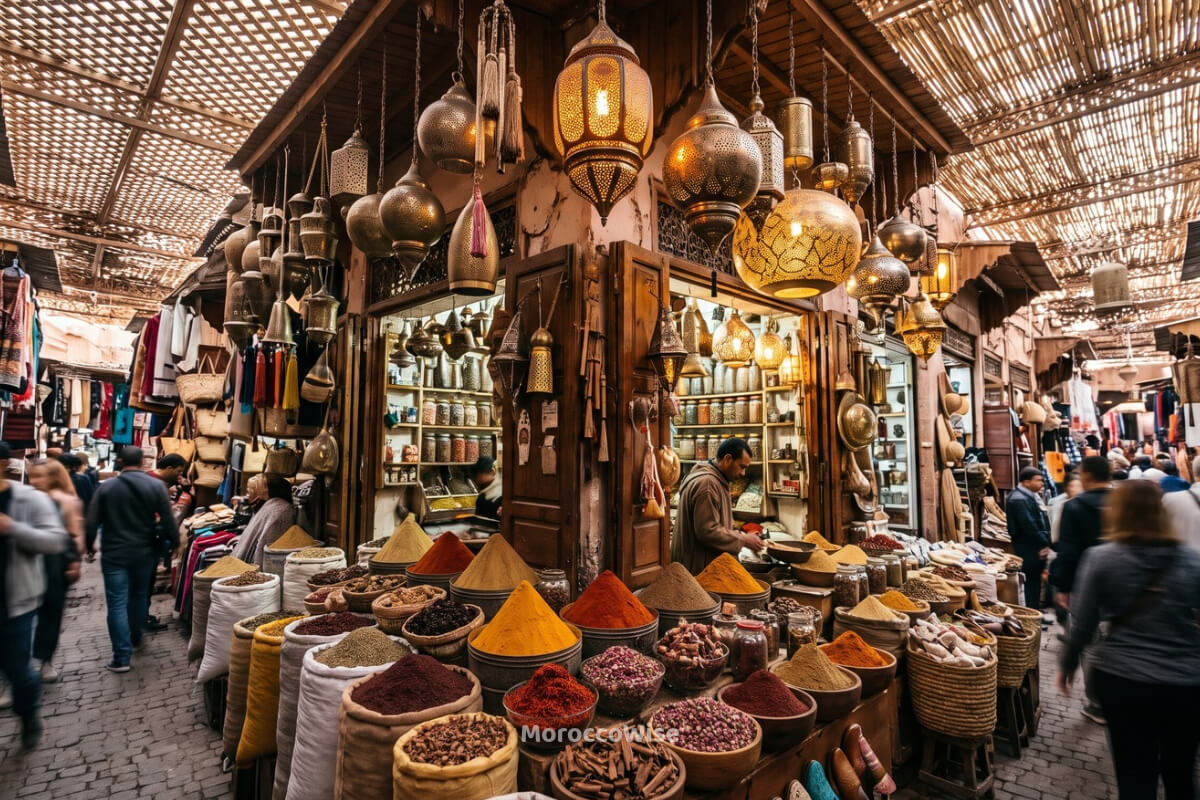
- Souk Semmarine: Textiles, pottery, and brass lanterns.
- Souk des Teinturiers: Dyers' souk featuring hanging skeins of dyed wool.
- Souk Haddadine: Blacksmiths and ironworkers shaping raw metal.
- Rahba Kedima (Spice Square): Cones of ras el hanout, argan oil, and handwoven raffia baskets.
9. Musée Yves Saint Laurent Marrakech
Located steps from Jardin Majorelle, this modern museum celebrates Saint Laurent’s couture collections and his deep creative passion for Morocco. Same online advance booking requirement applies.
10. A Traditional Moroccan Hammam
An integral ritual of Moroccan hygiene and wellness:
- Neighborhood Public Hammam: Authentic, steam-filled, gender-separated. Bring your own towel, flip-flops, savon noir (eucalyptus black soap), and a kessa scrubbing mitt (~20–50 MAD).
- Private Luxury Spa: Guided treatment in a private marble room with aromatherapy oils and quiet post-scrub tea salons (400–1,200 MAD).
2027 Monument Entrance Fees Summary
| Attraction | Official Foreign Adult Rate | Ticket Booking Method |
|---|---|---|
| Ben Youssef Madrasa | 50 MAD | On-site counter or official site |
| Bahia Palace | 100 MAD | On-site counter or Ministry portal |
| El Badi Palace | 100 MAD | On-site counter or Ministry portal |
| Saadian Tombs | 100 MAD | On-site counter or Ministry portal |
| Jardin Majorelle | Dynamic pricing (~165+ MAD) | Strictly online in advance (No desk) |
| YSL Museum | Dynamic pricing (~135+ MAD) | Strictly online in advance (No desk) |
Food, Rooftops, and Street Dining in Marrakech
Essential Dishes You Must Try
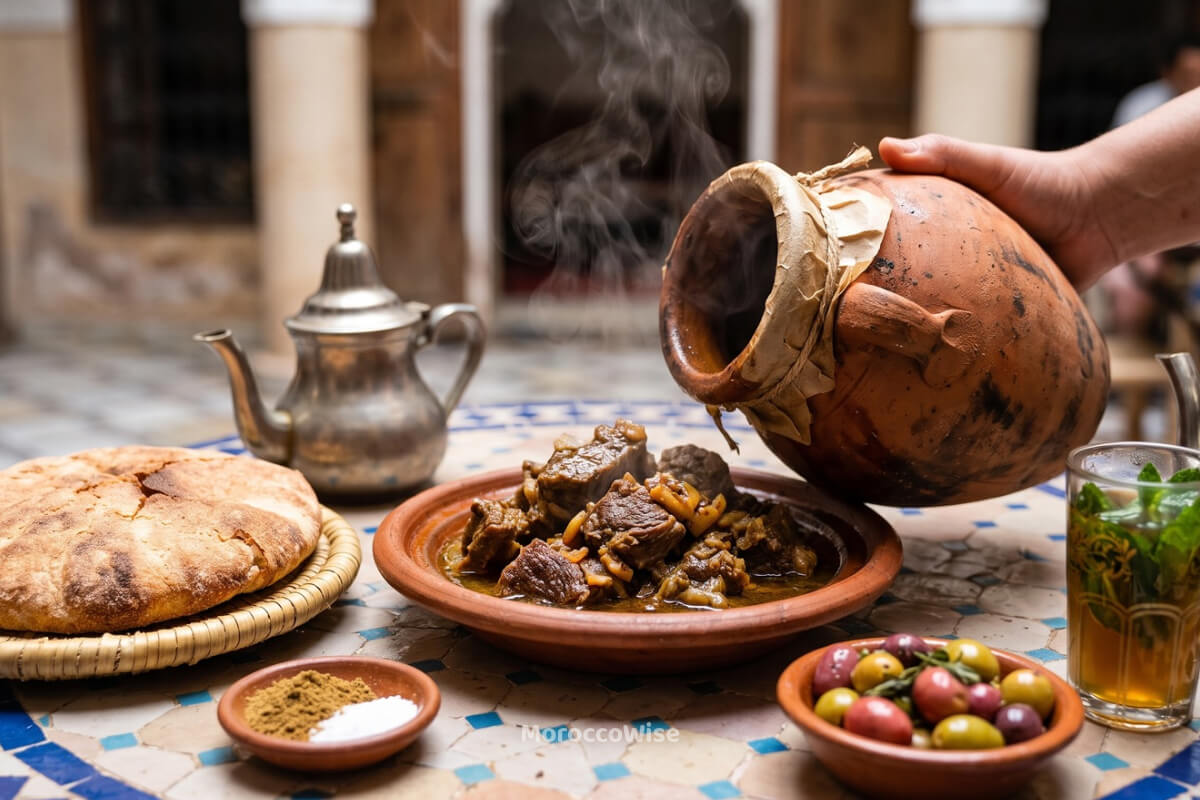
- Tanjia Marrakchia: The authentic culinary soul of the city. Beef or lamb shanks spiced with preserved lemon, garlic, cumin, and smen (aged butter), sealed inside a clay urn (tanjia) and slow-cooked in the ash chambers (farnatchi) beneath a local public hammam for hours until spoon-tender.
- Mechoui: Whole lamb roasted in an underground pit. Head down the historic Mechoui Alley near Jemaa el-Fnaa (such as Chez Lamine); order it by weight (250g is ideal for one person), served with cumin, sea salt, and fresh crusty khobz.
- Moroccan Salads: Small cooked vegetable dishes—zaalouk (smoky eggplant), taktouka (roasted peppers and tomatoes), and marinated spiced carrots.
Eating at Jemaa el-Fnaa Night Market
The night market stalls are numbered. To enjoy the experience without stomach issues:
- Choose stalls packed with local Moroccan families; high turnover guarantees freshly grilled meat.
- Watch the food being grilled over charcoal in front of you; eat hot, thoroughly cooked items.
- Check the printed menu prices before sitting to avoid inflated bills.
- If you have a sensitive stomach, stick to piping-hot grilled skewers and avoid pre-cut raw salads.
Rooftop Dining Culture
Rooftop terraces are Marrakech’s social pressure valve. Escaping the alley noise to sip sweet mint tea (atay) while watching the sun sink behind the Atlas Mountains is quintessential Marrakech. Many riads and rooftop bistros welcome non-staying guests for drinks and dinner; reserve sunset tables at least one day ahead.
Alcohol Laws and Availability
Alcohol is not served in standard medina eateries. It is restricted to licensed hotels, modern rooftop bars, and international restaurants located primarily in Gueliz and Hivernage. Supermarkets (like Carrefour) sell wine and beer in dedicated annexes, but close alcohol sales during religious holidays. Review our guide on Drinking Alcohol in Morocco: Rules, Laws and Cultural Etiquette before planning a night out.
Practical Safety, Scams, and Areas to Avoid
Marrakech is politically stable and violent crime against foreign visitors is rare. However, petty property theft, opportunistic scams, and high-pressure street sales are common.
Common Medina Scams & How to Handle Them
- The "Road Closed" (Tariq Masdoud) Scam: A young man approaches saying your alley is closed for prayer or maintenance, offering to guide you. It is almost always a lie to divert you to an isolated tannery or a cousin's rug shop. Politely say "La, shukran" (no, thank you) and walk forward. Check your offline map.
- The Bab Debbagh Tannery Trap: Touts around the northern medina claim a "Berber auction" or "Berber market" is taking place only today. They lead you through the tanneries and demand an aggressive 100–200 MAD "guide fee" at the exit.
- Aggressive Henna Artists in Jemaa el-Fnaa: Women will grab your hand, start drawing rapid henna designs, and demand 200–400 MAD. Keep your hands in your pockets or close to your chest when crossing the square.
- Snake Charmers & Monkeys: Placing a snake on your shoulders or taking an uninvited photo of a monkey triggers aggressive payment demands. Agree on an exact fee (e.g., 20 MAD) before touching your camera, or steer clear entirely.
For an exhaustive breakdown of prevention tactics, read 10 Common Scams in Morocco: How to Avoid Them and Is Morocco Safe for Tourists? An Honest Guide to Scams, Safety, and Common Sense.
Can You Brush Your Teeth with Marrakech Tap Water?
- Drinking: Avoid drinking unboiled tap water. Drink sealed bottled water or use a certified UV/purifier bottle.
- Brushing Teeth: Healthy adults can brush teeth with tap water without issue. However, travelers with sensitive digestive systems should use bottled water for teeth brushing as a sensible precaution.
- Ice: Reputable restaurants in Gueliz, Hivernage, and established riads use commercial filtered ice. Be cautious with ice from informal street stalls.
Solo Female Travelers in Marrakech
Solo female visitors can travel comfortably, but should expect occasional verbal catcalls ("Gazelle", "Where you from?").
- Wear sunglasses to deflect eye contact with street hawkers.
- Walk with confident posture and purposeful strides.
- At night, stick to illuminated medina thoroughfares; avoid unlit dead-end side alleys (derbs).
- Learn cultural modesty standards in our guide to Respecting Local Culture in Morocco: Dress Codes, Greetings, and Etiquette.
Money, Tipping, and the Art of Medina Bargaining
Cash is king across the medina. Credit cards are accepted at luxury hotels, Gueliz boutiques, and formal restaurants, but souk vendors, taxi drivers, and tip recipients deal strictly in cash.
- ATMs: Withdraw Dirhams at bank branches with security guards (Attijariwafa Bank, Banque Populaire, BMCE). Decline the ATM’s dynamic currency conversion (DCC) to let your home bank calculate the exchange rate. For complete financial prep, consult Cash vs Credit Card in Morocco: How Much to Bring & ATM Tips.
- The Art of Bargaining: Bargaining in the souks is a friendly social dialogue, not a hostile battle. Vendors expect a negotiation. Offer roughly 40–50% of the initial quoted price as a counter-offer, and meet around 60–70%. Smile, remain polite, and never hesitate to walk away with a friendly "Shukran"—often the vendor will call you back with their real bottom price.
- Tipping Norms:
- Cafés: Round up the change (2–5 MAD).
- Restaurants: 10% for good table service.
- Luggage Cart Porters: The agreed 20–30 MAD base fee plus a 5–10 MAD tip for steep stairs.
- Riad Housekeeping: 20–50 MAD per day left at checkout.
Beyond the Red City: Top Day Trips from Marrakech
| Excursion | Drive Time (One-Way) | Recommended Duration | Best For |
|---|---|---|---|
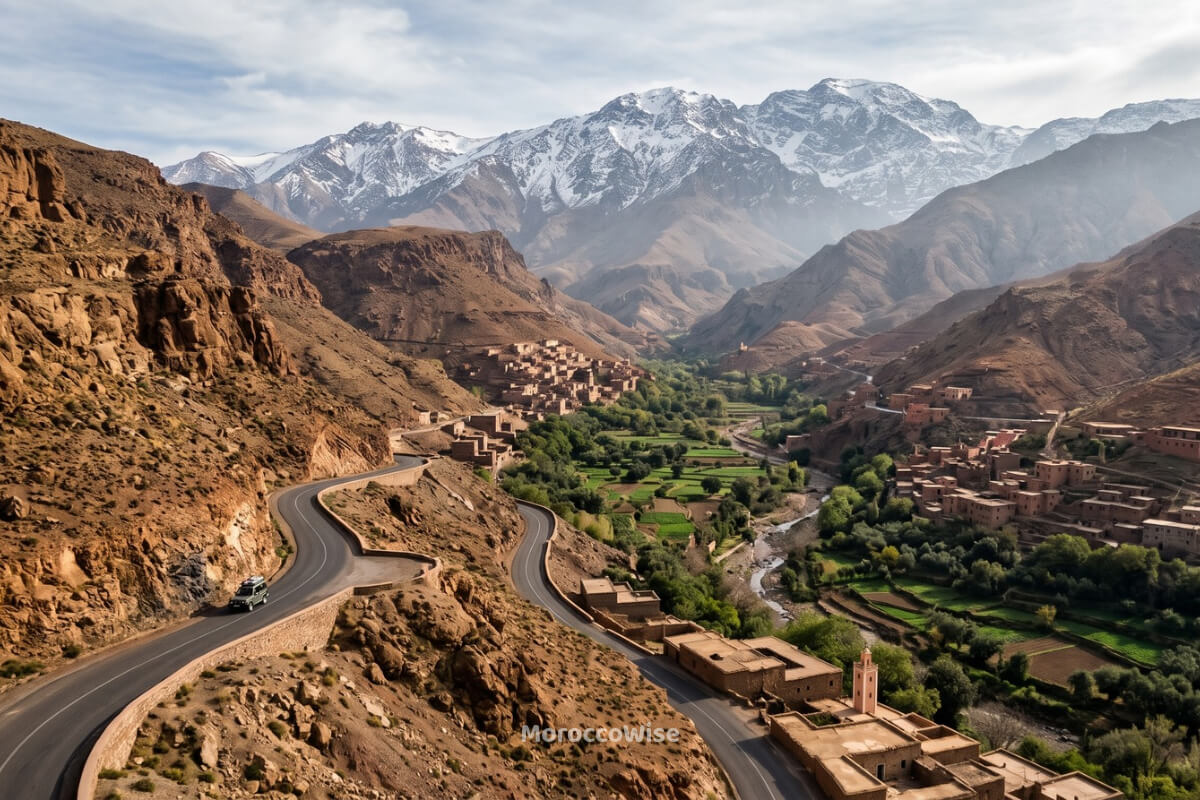
| Ourika Valley & Setti Fatma | 1 to 1.5 hours | Full Day | Mountain rivers, walnut groves, Berber village walks |
| Agafay Desert | 40 to 50 minutes | Half Day (Late afternoon) | Sunset camel rides, rocky desert dining, luxury glamping |
| Essaouira (Atlantic Coast) | 2.5 to 3 hours | Full Day or Overnight | Coastal sea breezes, fresh fish markets, quiet historic ramparts |
| Merzouga (Erg Chebbi Sahara) | 9 to 10 hours | 3 to 4 Days Minimum | Vast golden sand dunes; NOT possible as a day trip |
Sahara Trip Warning: Do not attempt to visit the real golden Sahara sand dunes (Erg Chebbi or Erg Chigaga) on a quick day trip. The drive requires crossing the High Atlas through the Tizi n'Tichka pass and takes a minimum of 3 days round-trip. If your schedule is tight, opt for an evening dinner under the stars in the Agafay rocky desert. For desert planning, read our complete guide on Planning a Sahara Trip from Marrakech: Routes, Drive Times, and Packing Guide.
To navigate intercity trains and buses, see Getting Around Morocco: The Ultimate Guide to Trains, Buses, and Taxis.
The Perfect 4-Day Marrakech Itinerary
| Day | Morning | Afternoon | Evening | Local Tip |
|---|---|---|---|---|
| Day 1: Imperial History & Medina Core | Bahia Palace at 9:00 AM opening; walk to Saadian Tombs | Tour El Badi Palace; wander Mellah (Jewish Quarter) | Jemaa el-Fnaa street food dinner (Mechoui Alley) | Arrive at Bahia Palace right at opening to beat tour coaches |
| Day 2: Modern Art, Majorelle & Gueliz | Pre-booked 9:00 AM slot at Jardin Majorelle | Pierre Bergé & Yves Saint Laurent Museum; lunch in Gueliz | Modern dining & drinks at a licensed Gueliz terrace | Must book Majorelle online days prior; no tickets sold on-site |
| Day 3: Atlas Escape or Desert Sunset | Day trip into Ourika Valley or High Atlas foothills | Relaxed riverside tagine lunch in Setti Fatma | Transfer to Agafay for sunset tea and camp dinner | Bring a warm layers jacket; desert nights drop in temperature |
| Day 4: Deep Souks, Hammam & Farewell | Ben Youssef Madrasa; deep souk artisan craft shopping | Traditional Moroccan hammam & scrub session | Farewell rooftop dinner overlooking Koutoubia minaret | Leave souvenir shopping for your final day after comparing prices |
Do's and Don'ts in Marrakech (Summary Cheat Sheet)
| Category | Do | Don't |
|---|---|---|
| Attractions | Book Jardin Majorelle & YSL Museum online days ahead | Show up at the Majorelle gates hoping for a physical ticket desk |
| City Taxis | Insist that yellow petit taxis turn on the meter (compteur) | Accept inflated flat quotes at the curb without negotiation |
| Airport Transit | Use Bus 19 (30 MAD) or official terminal taxi tariff boards | Follow informal curb touts demanding 200–300 MAD |
| Luggage | Pack duffel bags and agree on porter fees (20–30 MAD) before moving | Let a handcart porter roll away without setting the total price |
| Water & Health | Drink sealed bottled water; brush teeth with bottled if sensitive | Assume unverified street ice and raw unwashed salads are safe |
| Scams | Say "La, shukran" with a firm hand gesture and keep walking | Follow strangers claiming the street or monument is closed |
| Photography | Ask permission ("Momkin soura?") and agree on tips for performers | Point cameras directly at medina residents or street artists uninvited |
| Money | Keep small 10, 20, and 50 MAD notes for everyday transactions | Rely on foreign credit cards inside the medina souks |
Frequently Asked Questions (FAQ)
Is Marrakech safe for first-time visitors and solo female travelers?
Yes. Violent crime is rare. The primary challenges are sensory overload, persistent street touts, petty scams, and motorbikes in the souks. Solo female travelers should walk with confidence, dress modestly in traditional quarters, and stick to well-lit main streets after dark.
How many days are ideal for visiting Marrakech?
Four days provides a balanced pace: two full days for medina monuments, gardens, and souks; one day for an excursion to the High Atlas or Agafay; and one day for hammams and leisurely rooftop dining.
Can you drink or brush your teeth with tap water in Marrakech?
Drink sealed bottled water. Brushing your teeth with tap water is generally fine for healthy adults, but travelers with delicate stomachs should use bottled water for teeth brushing to prevent upset.
Is it better to stay in a riad or a modern hotel?
Choose a riad if you value traditional Moroccan architecture, rooftop views, and personal hospitality inside the medina. Choose a modern hotel in Gueliz or Hivernage if you require elevators, step-free access, heated pools, licensed bars, and direct taxi curbside drop-off.
Where should tourists avoid in Marrakech?
Avoid unlit, empty peripheral medina alleys late at night. Steer clear of unauthorized touts near Bab Debbagh offering spontaneous "tannery tours," and decline unsolicited offers of directions.
Do you need cash everywhere in Marrakech?
Yes, cash is necessary for everyday purchases. Souk vendors, street food stalls, taxis, luggage porters, and the mandatory checkout tourist tax (taxe de séjour) operate exclusively in cash Dirhams (MAD).
Final Verdict: Embracing the Magic and Chaos of Marrakech
Marrakech will challenge your senses in the first hour and captivate your imagination by the second day. The motorbikes, the calls of the muezzin, the bargaining, and the narrow earthen corridors are the city's living heartbeat. Once you stop treating it like a quiet museum and embrace its dynamic energy, it reveals its warmth.
Secure your online tickets for Jardin Majorelle before departure, carry small cash Dirhams, and ask your riad to meet you at the gate. With a little preparation and room in your itinerary to explore at your own pace, the city's energy becomes part of the adventure.