
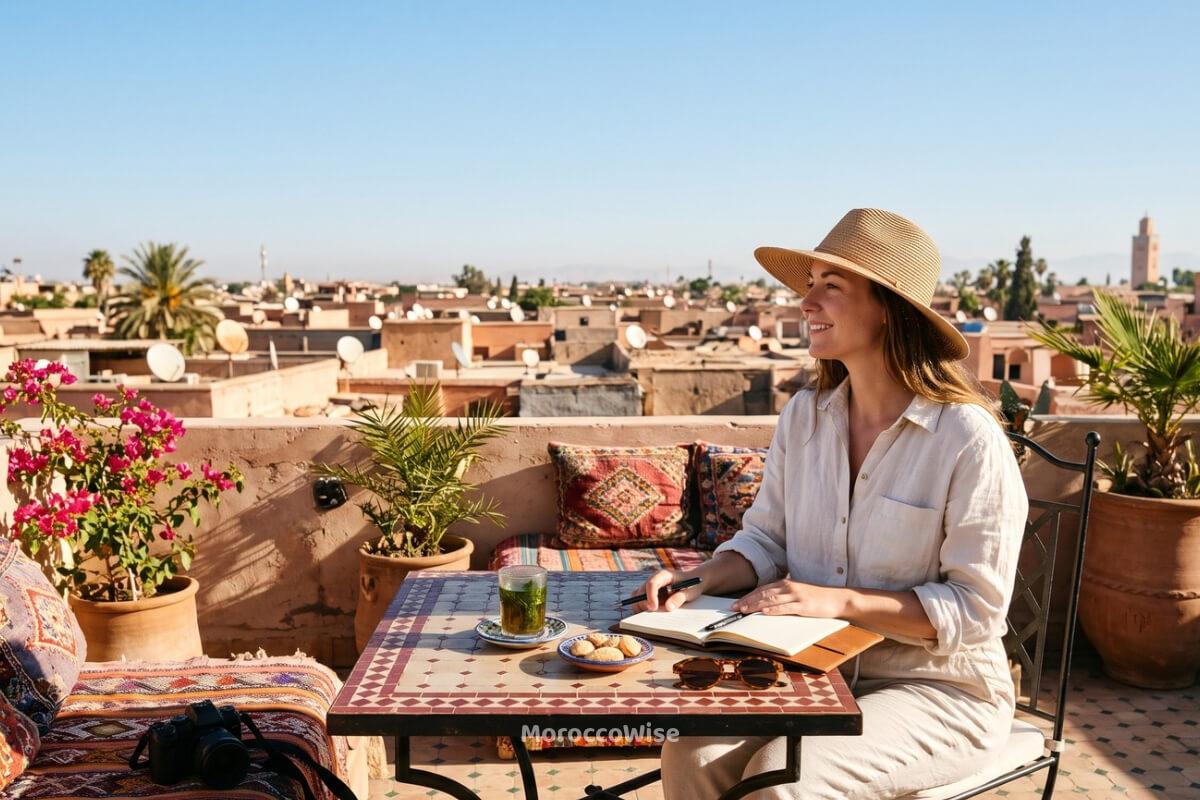
If you are planning an independent North African adventure and asking yourself, "Is it safe for women to travel alone in Morocco?", the honest, ground-level answer is yes—Morocco is physically safe for solo female travelers, provided you prepare for a male-dominated street culture and travel with street-smart boundaries. Every year, hundreds of thousands of independent women explore Morocco's historic medinas, Atlantic surf towns, and Sahara dunes without experiencing violent crime. In fact, violent crime against foreign tourists in Morocco is statistically lower than in many major American and European cities, and the country's specialized Tourist Police (Brigade Touristique) enforce strict zero-tolerance laws against anyone who harms or intimidates a visitor.
However, when evaluating is Morocco safe for women solo travel, it is vital to separate physical safety from verbal street attention. While your personal safety from violent harm is high, solo women—especially in crowded, intense medinas like Marrakech and Fes—frequently encounter staring, persistent sales pitches, and unsolicited catcalling ("Bonjour gazelle", "Where are you from?"). Understanding which cities are most relaxed for beginners, how to dress to blend in respectfully, and how to use Morocco's modern transport network transforms a potentially overwhelming trip into an empowering, unforgettable journey.
This definitive 2027 guide to solo travel Morocco female safety answers every major question from real travelers—including the safest cities ranked by ease, whether Casablanca is safe for women, honest experiences for young women and Black women, what Reddit solo travelers advise, and the exact cultural rules for women in Morocco.
Quick-Answer Matrix: Safest Cities in Morocco for Solo Female Travelers (Ranked)
Not all Moroccan cities feel the same when you are a woman walking alone. Coastal towns and northern mountain medinas are remarkably laid-back, while the ancient inland imperial capitals require thicker skin. If you are planning women travelling in Morocco for the first time, use this city-by-city safety and comfort ranking:
| Moroccan City / Town | Solo Female Comfort Rating | Street Hassle Level | Why It Works (or What to Watch Out For) |
|---|---|---|---|
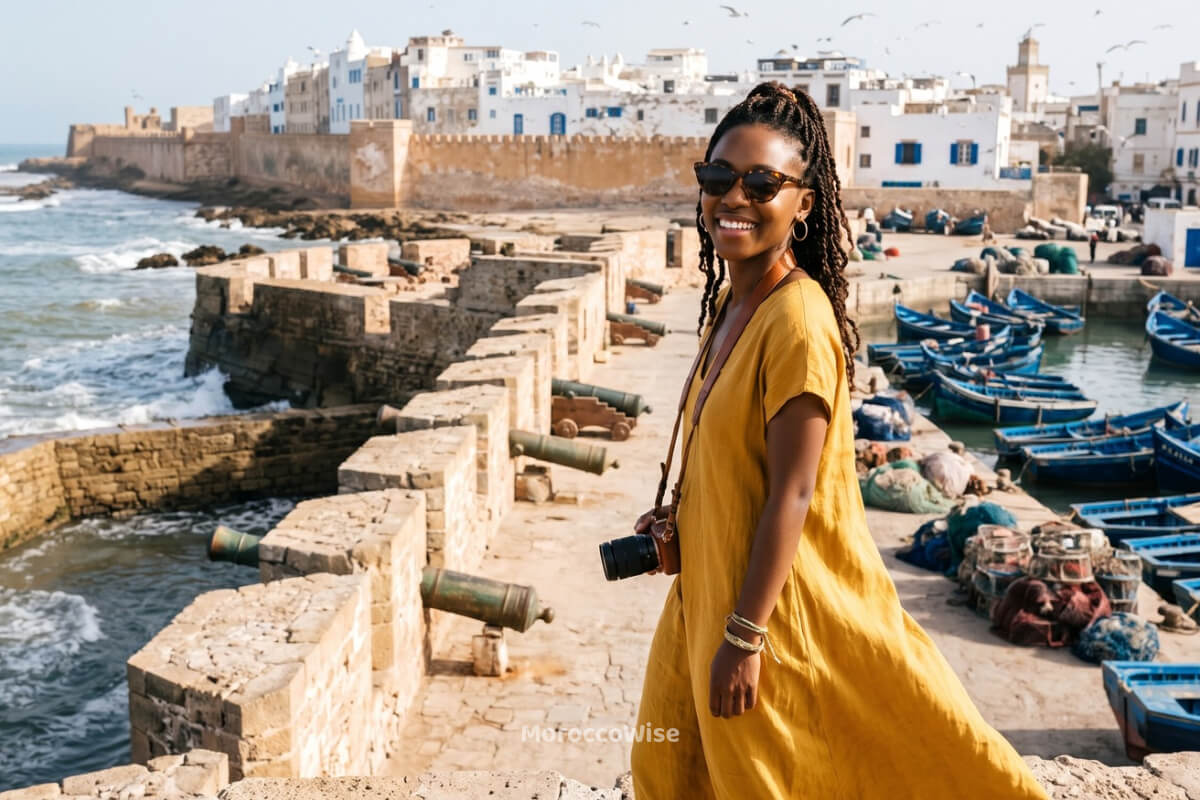
| 1. Essaouira (Atlantic Coast) | 10/10 (Best for Beginners) | Very Low | Compact, breezy, artistic port town with a wide pedestrian medina. Zero aggressive touts and a relaxed coastal vibe. |
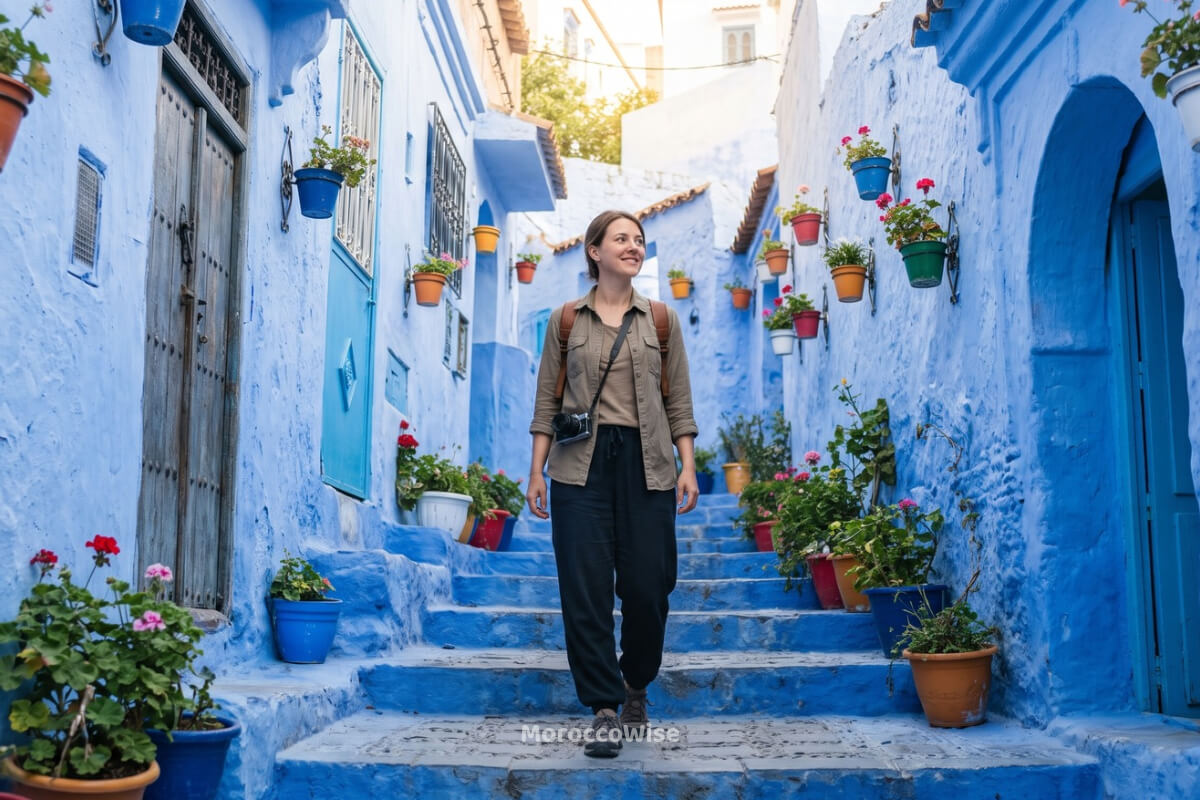
| 2. Chefchaouen (Rif Mountains) | 9.5/10 (Highly Relaxed) | Very Low | Small, tranquil blue-washed mountain town where locals are accustomed to independent female hikers and photographers. |
| 3. Rabat (The Capital) | 9/10 (Clean & Polite) | Low | Morocco's administrative and diplomatic capital. Wide boulevards, modern trams, polite souks, and zero tourist-trap pressure. |
| 4. Taghazout & Tamraght | 9/10 (Surf Community) | Low | Laid-back surf villages north of Agadir filled with international solo female surfers, yoga hostels, and beach cafés. |
| 5. Tangier (Northern Gateway) | 8/10 (Cosmopolitan) | Low to Moderate | Modernized coastal hub connected by the Al Boraq high-speed train. Stick to the Kasbah, Petit Socco, and Corniche. |
| 6. Marrakech (The Red City) | 7/10 (Safe but Intense) | High in Medina Souks | Heavy police presence and world-class riads, but sensory overload, motorbike alleys, and persistent shopkeepers require confidence. |
| 7. Casablanca (Economic Hub) | 7/10 (Big City Rules) | Moderate | A sprawling working metropolis rather than a cozy tourist town. Safe by day around Hassan II Mosque and Maarif; take taxis at night. |
| 8. Fes (Medieval Labyrinth) | 6.5/10 (Hire a Female Guide) | High in Fes el-Bali | A breathtaking 9,000-alley car-free medieval maze. Easy to get lost, which attracts fake street guides. Book a licensed guide on Day 1. |
(First time visiting North Africa? Pair this guide with our complete primer on Visiting Morocco for the First Time).
Is Morocco Safe for Women Solo Travel? Physical Safety vs. Street Attention
When researching "is Morocco safe for women solo travel", the biggest misconception online is confusing annoying street chatter with physical danger. Here is the ground truth of how Moroccan street dynamics work:
1. Why Violent Crime Against Female Tourists Is So Rare
In Morocco, tourism is a cornerstone of the national economy, and hospitality (Karam) is a deeply held cultural and religious obligation. Furthermore:
- The Brigade Touristique (Tourist Police): Plainclothes and uniformed officers patrol every major medina, train station, and square in Marrakech, Fes, Tangier, and Chefchaouen. In Morocco, harassing or stealing from a foreign tourist carries far harsher legal penalties than ordinary offenses, which acts as a massive deterrent.
- No Public Drinking Culture: Because public alcohol consumption is illegal in Morocco, you do not encounter the aggressive, unpredictable late-night street drunkenness common in many European or North American city centers.
- Community Watch in the Medinas: Inside historic medinas, neighbors know everyone on their street. If a solo woman ever looks distressed or raises her voice saying "Hshouma!" ("Shame on you!"), local shopkeepers and older men will immediately step in to scold the troublemaker and help you.
2. Understanding Verbal Attention (And How to Shut It Down Instantly)
In traditional Moroccan areas, public streets and sidewalk cafés have historically been male spaces, while family life happens inside courtyards. When a foreign woman walks alone through a souk, merchants and young men often try to catch her attention.
- 90% of It Is Commercial or Performative: Comments like "Hello my friend, look at my shop", "Shakira!", or "Beautiful eyes" are designed to get you to stop, smile, or engage.
- The Golden "Sunglasses & Stride" Technique: Wear dark sunglasses (which prevent men from making eye contact to initiate a conversation), walk with a brisk, purposeful stride, and if someone speaks to you unsolicited, offer one firm, unsmiling "La, shukran" (No, thank you) without slowing down. Never stop to argue or politely explain where you are from.
Is Morocco Safe for Young Women & Is Morocco Safe for Black Women?
Two of the fastest-growing search queries on Google are "is Morocco safe for young women" and "is Morocco safe for Black women". Because solo female travelers are not a monolith, here is specific, honest advice tailored to your experience:
1. Is Morocco Safe for Young Women (Under 25 / College & Gap-Year Travelers)?
Yes, Morocco is safe for young women, and cities like Marrakech, Essaouira, Chefchaouen, and Taghazout are packed with solo female backpackers in their late teens and twenties. However, young women—especially those with blonde or light hair, or those who look visibly uncertain while checking their phones—do receive more verbal attention from young local men hoping to strike up a romance or act as an unofficial guide.
- Smart Strategies for Young Female Travelers:
- Stay in Social Boutique Hostels or Family-Run Riads: If you want instant female travel companions for evening dinners or desert tours, book top-rated hostels that offer female-only dorms or private rooms (such as Rodamon Riad Hostel in Marrakech, Hostel Waka Waka, or surf camps in Taghazout). Alternatively, small family-run riads treat young solo female guests like daughters—walking you to taxis and checking that you get home safely.
- Use the "Fake Husband" Ring & Line: Wearing a simple band on your wedding finger and casually mentioning "I'm just walking to meet my husband at the café" immediately ends 99% of unwanted romantic persistence from male touts or waiters.
- Never Accept Invitations to "See a Family Carpet Shop" or "Have Mint Tea in a Private House": Keep all friendly interactions with local men in public cafés and licensed tour settings.
2. Is Morocco Safe for Black Women? (Honest Nuance & Local Context)
If you search "is Morocco safe for Black women", you will find thousands of Black female solo travelers sharing glowing reviews of Morocco—alongside important cultural nuances to be aware of before you land.
- The Positive Reality (Blending In & Warmth): Morocco is an African country with a richly diverse population, including dark-skinned Southern Moroccans, Sahrawis, and Gnawa communities. Many Black and brown female travelers report that when they dress in modest linen outfits or maxi dresses, locals initially assume they are Moroccan or North/West African—allowing them to walk through medinas with less tourist-pricing harassment until they speak English!
- Cultural Nuances to Know:
- Curiosity About Braids & Natural Hair: In smaller towns, local women and children are often fascinated by intricate box braids, locs, or natural curls and may compliment your hair (though you should firmly decline if anyone tries to touch your hair without asking).
- Anti-Migrant Bias vs. Foreign Tourist Status: In major transit hubs like Casablanca, Rabat, or Tangier, some ignorant individuals harbor prejudices against sub-Saharan African migrants. Occasionally, Black travelers report receiving slower service at a café or stares until staff hear an American, British, Canadian, or French accent and realize you are a tourist. Carrying yourself with confidence, greeting staff with a crisp "Bonjour" or "Salam Alaikum", and staying in well-reviewed boutique riads ensures warm, respectful treatment across the country.
Is Casablanca Safe for Women? (Navigating Morocco's Largest City)
Many female travelers flying into Mohammed V International Airport (CMN) search specifically: "Is Casablanca safe for women?"
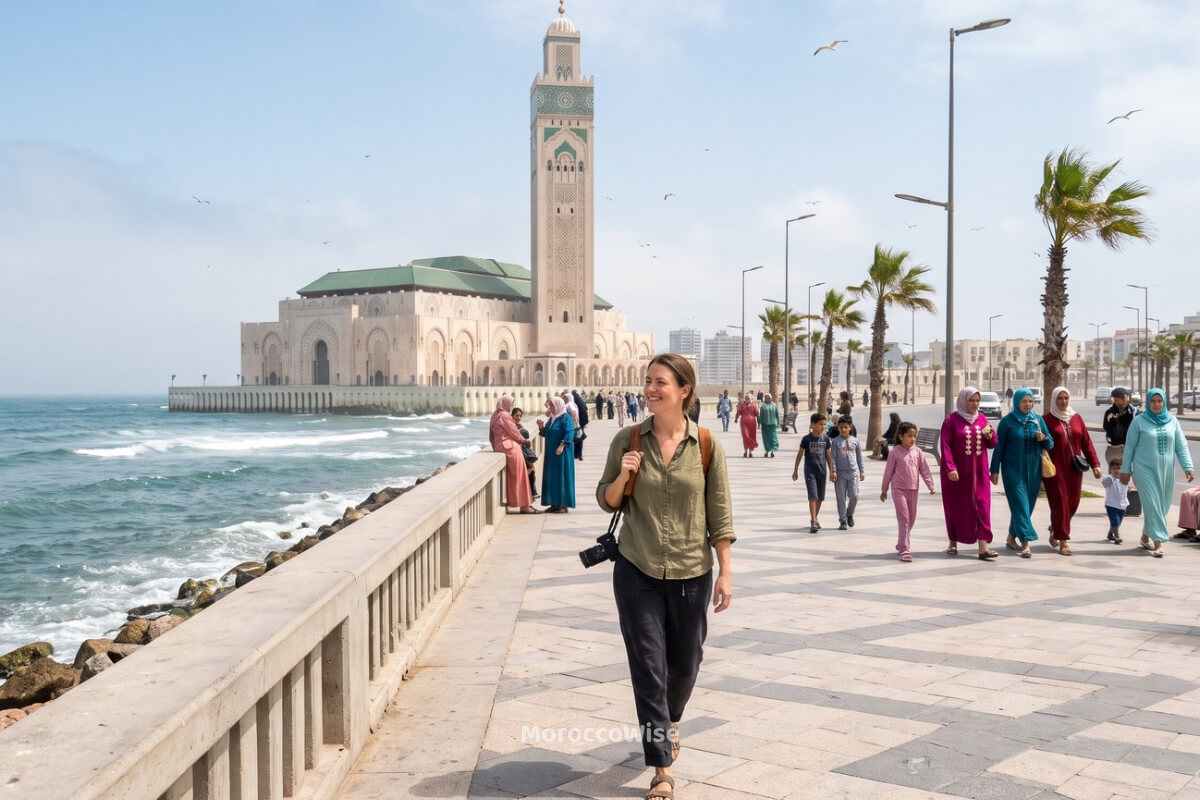
Yes, Casablanca is safe for women, especially during the day, when thousands of Moroccan professional women commute to offices, banks, and universities across the city. However, you must treat Casablanca differently from cozy tourist towns like Essaouira or Chefchaouen:
- Casablanca Is a Gritty Business Metropolis: Unlike Marrakech, Casablanca is not primarily a tourist resort city—it is a massive, fast-paced port metropolis of 4 million people.
- Safest Areas for Solo Women in Casablanca:
- The Hassan II Mosque & La Corniche (Ain Diab): Wide oceanfront promenades, upscale beach cafés (Rick's Café is nearby on Place du Jardin Public), and heavy security.
- Maarif, Gauthier & Racine: Modern, cosmopolitan neighborhoods filled with French-style brasseries, Zara/Mango boutiques, and safe, well-lit streets.
- Habous Quarter (New Medina): Built in the 1920s with wide, clean arcades—much calmer and easier for a solo woman to browse for olives, pastries, and books than the chaotic Old Medina.
- Areas to Avoid Alone at Night in Casablanca: Do not wander alone after dark through the Old Medina (Ancienne Médina) near the port or the dimly lit side streets around Casa-Voyageurs train station.
- Getting Around Casablanca Safely as a Woman: Use the clean, modern Casablanca Tramway (which has CCTV and security attendants at every stop) or book rides via the InDrive or Careem app rather than haggling with grumpy red petit taxis late at night.
What to Wear in Morocco as a Woman (And Do Women Have to Cover Themselves?)
Two of the most common questions on Google's People Also Ask are "do women have to cover themselves in Morocco?" and "what to wear in Morocco as a woman".
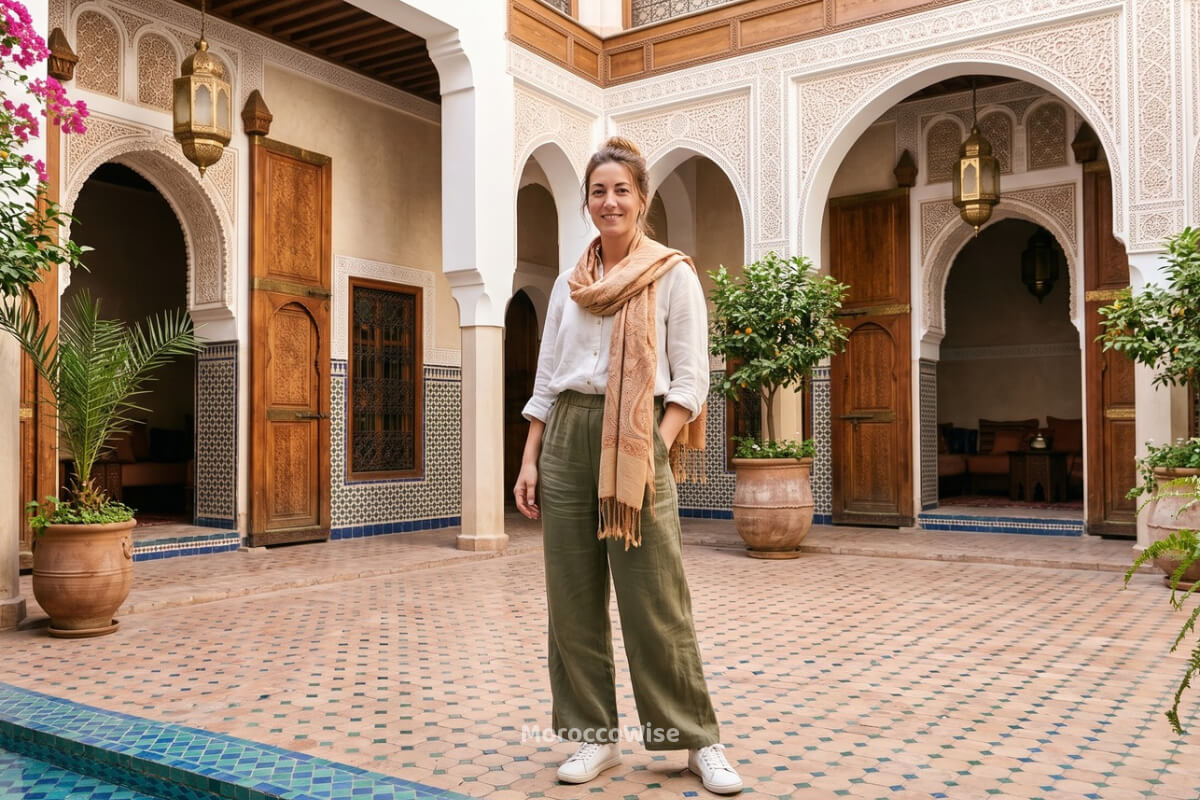
1. Do Women Have to Cover Themselves in Morocco?
Legally, no. Morocco does not have morality police or mandatory dress laws for women. Foreign female tourists are not required to wear a headscarf (hijab) or an abaya, and Moroccan women themselves dress in everything from traditional djellabas to modern jeans and blazers.
However, culturally, yes—dressing modestly is the #1 secret to a stress-free solo female trip in Morocco. In Moroccan culture, showing thighs, cleavage, or bare midriffs in public streets is unconventional and draws intense male staring. Covering your shoulders and knees is not about suppressing your style; it acts as "invisibility armor" that signals cultural respect and cuts street catcalling by 80%.
2. The Solo Female Capsule Wardrobe for Morocco
When planning what to wear in Morocco as a woman, pack these breathable, photogenic pieces:
- Loose Linen or Cotton Trousers & Palazzo Pants: Keep you cooler in 35°C heat than shorts by shading your skin from the sun while covering your legs.
- Flowing Maxi Dresses & Midi Skirts: Choose ankle- or calf-length styles with short or three-quarter sleeves (or layer an unbuttoned linen shirt over a sleeveless dress).
- Lightweight Tunics & Loose Button-Down Shirts: Avoid skin-tight bodycon tops or low-cut tank tops when exploring traditional souks.
- A Lightweight Pashmina or Cotton Scarf: Keep one in your daypack at all times—use it to drape over your shoulders in conservative neighborhoods, block Sahara wind, or cover up when visiting the Hassan II Mosque.
- Closed-Toe Sneakers or Supportive Sandals: Essential for navigating uneven medina cobblestones and stepping quickly out of the way of motorbikes. (See our complete seasonal checklist in What to Pack for a Trip to Morocco).
People Also Ask: Rules for Women & Public Affection in Morocco
Let's directly address the exact cultural and legal questions travelers ask on Google before flying:
What Are the Rules for Women in Morocco?
Foreign women traveling in Morocco enjoy full freedom of movement:
- Hotels & Riads: Solo women can check into any hotel, riad, hostel, or desert camp in Morocco without restriction.
- Transport: Women can sit anywhere on ONCF trains, CTM buses, and trams, rent and drive cars, and take taxis alone. (Note: In shared 6-passenger intercity Grand Taxis, solo women often prefer paying for two seats—about $6 extra—or sitting by the rear window next to another female passenger so they aren't squeezed tightly between male strangers).
- Mosques: Regardless of gender, non-Muslims cannot enter active mosques in Morocco, with the exception of the Hassan II Mosque in Casablanca (where female tourists must cover shoulders and knees, though a headscarf is optional).
- Cafés: Traditional working-class street-corner cafés with rows of chairs facing the pavement are predominantly male spaces. Solo women are always welcome, but you will feel far more relaxed reading a book or working on a laptop at rooftop cafés, garden courtyard restaurants, patisseries, or modern cafés in Gueliz, Rabat, or Tangier. (For a full breakdown of laws, read Morocco Rules for Tourists).
Can I Kiss My Wife in Public in Morocco?
If you are traveling with a partner and wondering, "Can I kiss my wife in public in Morocco?", here is the cultural rule: avoid kissing on the lips in public streets, medinas, or parks.
- Morocco is a socially modest society where physical intimacy is kept strictly behind closed doors—even among married Moroccan couples.
- What is fine: Holding hands, walking arm-in-arm, or a quick cheek-kiss greeting is completely normal for married or unmarried foreign opposite-sex couples.
- What to avoid: Passionate kissing, prolonged embracing, or heavy public displays of affection (PDA) in public view is considered offensive to local standards of modesty (Hshouma) and can attract scolding from locals or police attention. Save affection for the privacy of your riad or hotel.
Is Morocco Safe for Women Reddit: 10 Real-World Solo Female Survival Tips
When you comb through hundreds of firsthand trip reports under "is Morocco safe for women Reddit", experienced female solo travelers consistently credit these 10 practical habits for making their trip smooth and enjoyable:
- Start Your Trip in a "Soft Landing" City (Not Fes or Deep Marrakech): If you are nervous about culture shock, start your itinerary in Essaouira, Rabat, or Chefchaouen for your first 2 days to build confidence before tackling the bustling souks of Marrakech or Fes. (Check our route suggestions in How Many Days Do I Need to Explore Morocco?).
- Book 1st-Class ONCF Train Tickets: When traveling between Tangier, Rabat, Casablanca, Fes, and Marrakech, pay the extra $5–$8 for a 1st-Class ONCF train ticket. You get a quiet, assigned seat in a 6-seat compartment or spacious Al Boraq coach surrounded by families and business travelers.
- Use CTM or Supratours Buses (Never Random Local Buses): For routes without trains (like Marrakech to Essaouira or Fes to Chefchaouen), book official CTM or Supratours coaches, which have assigned seating, air conditioning, and tagged luggage compartments.
- Arrive in New Cities Before Sunset: Never schedule your arrival in a labyrinthine medina like Fes or Marrakech for 10:30 PM on your first night. Arriving in daylight makes finding landmarks easy and prevents disorientation.
- Always Book Airport Pickup Through Your Riad: For your very first arrival, pay your riad the extra $15–$20 to send their trusted driver to meet you at the airport exit with a name sign, who will walk you all the way to the riad's front door inside the car-free medina.
- Ask Female Shopkeepers or Families for Directions: If your offline map (Maps.me or Organic Maps) glitches inside the medina, never stop in the middle of the alley looking lost, and never ask young men loitering against walls for directions. Step inside an open shop run by a woman, a pharmacy, or a family restaurant to ask the way. (Read our dedicated evening guide: Is Marrakech Safe to Walk Around at Night?).
- Hire a Licensed Female Tour Guide in Fes and Marrakech: Morocco now has an incredible generation of licensed, university-educated female national tour guides. Hiring a female guide for your first morning in Fes or Marrakech ($40–$60 for a half-day) shields you from 100% of street touts and lets you ask candid questions about Moroccan women's lives.
- Get a Local Moroccan eSIM or SIM Card at the Airport: Never rely solely on riad Wi-Fi. Having live mobile data (Maroc Telecom or Orange) lets you WhatsApp your riad host at any moment, check live translation, and share your location with family back home.
- Keep Small Dirham Notes in an Accessible Pocket: Keep 10, 20, and 50 MAD bills in a front pocket so you can pay petit taxi drivers exact change and step right out without waiting or arguing over change. (Learn how local money works in What Currency Is Used in Morocco?).
- Experience a Traditional Hammam Safely: Hammams (traditional steam baths) are strictly gender-segregated (or have separate female hours), making them a wonderful, safe female sanctuary! Whether you choose a neighborhood hammam surrounded by local mothers and grandmothers or a luxury tourist spa, it is one of the highlights of women travelling in Morocco.
Do's and Don'ts for Solo Female Travelers in Morocco
| Do | Don't |
|---|---|
| Dress modestly in medinas and villages (loose trousers or maxi dresses covering shoulders and knees) | Walk through traditional souks in short shorts or low-cut tops if you want to avoid constant staring |
| Wear sunglasses and walk with a confident stride, using a firm "La, shukran" to decline touts | Stop to politely chat with or follow street touts who ask "Where are you from?" or say "Street is closed" |
| Book riads located within a 2–3 minute walk of a main vehicle-accessible medina gate | Wander alone down dark, deserted dead-end residential alleys (derbs) after 10:00 PM |
| Step inside a shop, pharmacy, or restaurant to check your phone map or ask a woman for directions | Stand at a medina intersection looking visibly lost while holding your phone out |
| Book 1st-class ONCF trains and official CTM/Supratours buses for intercity travel | Accept rides from unlicensed cars or follow strangers offering "private tours" |
| Have your riad arrange a night escort to meet your taxi at the city gate if returning late | Leave your drink unattended in nightlife venues or walk back to your riad visibly intoxicated |
Frequently Asked Questions (FAQ)
Is it safe for women to travel alone in Morocco in 2027?
Yes, it is physically safe for women to travel alone in Morocco. Violent crime against tourists is very rare, and major cities are heavily patrolled by the Tourist Police (Brigade Touristique). While solo female travelers may experience verbal catcalling or persistent sales pitches in busy souks like Marrakech and Fes, dressing modestly, walking with confidence, and choosing well-located riads ensures a safe and rewarding trip.
What is the safest city in Morocco for a solo female traveler?
Essaouira (on the Atlantic coast), Chefchaouen (the Blue City in the north), and Rabat (the capital) are widely rated as the safest and most relaxed cities in Morocco for solo female travelers. They feature calm, walkable streets, minimal merchant pressure, and a laid-back atmosphere compared to Marrakech or Fes.
Do women have to cover their hair in Morocco?
No. Foreign women are not required to cover their hair or wear a headscarf (hijab) anywhere in Morocco. However, carrying a lightweight scarf in your daypack is recommended so you can drape it over your shoulders in conservative rural areas or shield yourself from sun and desert dust.
Can solo women take taxis and trains alone in Morocco?
Yes. Morocco's ONCF rail network (including the high-speed Al Boraq train) and CTM/Supratours buses are safe, modern, and heavily used by Moroccan women traveling alone. When taking city petit taxis, sit in the back seat, insist on the meter (compteur) or agree on the fare before getting in, and carry small 10 and 20 MAD notes.
Official and Practical Reference Links
Before departing on your solo trip to Morocco, bookmark these official government travel advisories, transport portals, and women's safety resources:
- UK Foreign, Commonwealth & Development Office (FCDO) – Morocco Safety & Solo Female Travel Advice
- Government of Canada – Official Morocco Travel Advice & Women's Safety Guidelines
- US Department of State – Official Morocco Travel Advisory & Emergency Numbers
- ONCF Moroccan Railways – Official 1st-Class & Al Boraq Train Bookings
(Continuing your trip preparation? Check our daily cost breakdown in How Much Money Should I Budget Per Day in Morocco? and learn how to spot street hustles in Common Scams in Morocco!)